What is whistleblowing in health and social care? It means a worker speaks up when something is unsafe, wrong or not proper in care. The main goal is to protect patients, service users and staff from harm.
It happens in care homes, NHS services, childcare settings and safeguarding work. Staff may notice neglect, abuse, unsafe treatment or poor hygiene. They may also see unsafe working conditions. When this happens, they report it through the right channels to keep people safe.
Also, UK law supports this action. The Public Interest Disclosure Act 1998 (PIDA) protects workers who raise concerns in good faith. This means they can speak up without fear of losing their job or facing unfair treatment. That is why whistleblowing in care matters so much.
Now let’s look deeper and understand how whistleblowing works in real life.
What Is Whistleblowing in Health and Social Care Settings?
Whistleblowing in health and social care means raising concerns to protect others from harm. In simple terms, a worker reports serious risks they notice at work. This is known as a public interest disclosure. It focuses on safety and quality, not personal issues.
Now, there is an important point to understand. Whistleblowing is not the same as a complaint or grievance. A complaint is personal, like pay or working hours. A grievance is also linked to a worker’s own problem. However, whistleblowing focuses on risks that affect others. Anyone can raise a concern, including employees, agency staff, trainees or even members of the public.
In real care settings, this happens in many ways. A worker may notice unsafe patient care or a medication error. They may see poor hygiene or unsafe practice. In serious cases, they may identify abuse or neglect. When concerns are raised early, care teams can act quickly and prevent harm.
What Is Whistleblowing in Care and Childcare Settings?
Whistleblowing in care and childcare means speaking up when something feels unsafe, wrong or not right. It includes adult care settings such as care homes and home care. It also includes childcare settings such as nurseries, preschools, and schools. Staff raise concerns to protect people who depend on care every day. They also follow safeguarding rules and their duty to keep people safe.
Now, let’s look at real-life situations. In care settings, staff may see poor hygiene, low staffing or a lack of training. These problems can lead to infections, delays in care, or mistakes. In childcare settings, concerns may include unsafe supervision, poor staff behaviour, broken equipment or safeguarding failures. These issues can put children at risk if no one speaks up.
So, when staff report concerns early, services can act quickly. Problems get fixed faster. Most importantly, it helps protect vulnerable adults and children and keeps care safe for everyone.
What Is Whistleblowing in Safeguarding?
Whistleblowing in safeguarding means speaking up when someone may be at risk of harm or unsafe care. It links closely with safeguarding. Safeguarding means keeping people safe from abuse, neglect and exploitation. Whistleblowing helps report problems early so action can happen quickly.
Now, this is very important for children, older people and disabled people. These groups often depend on others for daily care. So, they face a higher risk if something goes wrong. When staff see danger or poor care, they must report it without delay. This helps stop harm early and protects lives.
In the UK, laws like the Care Act 2014 and safeguarding guidance support this duty. They show staff what to report and how to report it. So, what is whistleblowing in safeguarding really about? It means noticing risk, speaking up quickly and protecting people who need care the most.
What Laws Protect Whistleblowers in the UK?
The UK has strong laws that protect whistleblowers. These laws help workers speak up without fear. The main law is the Public Interest Disclosure Act 1998 (PIDA). It protects workers who report serious concerns at work. It also works with the Employment Rights Act 1996 which provides additional protection against unfair treatment.
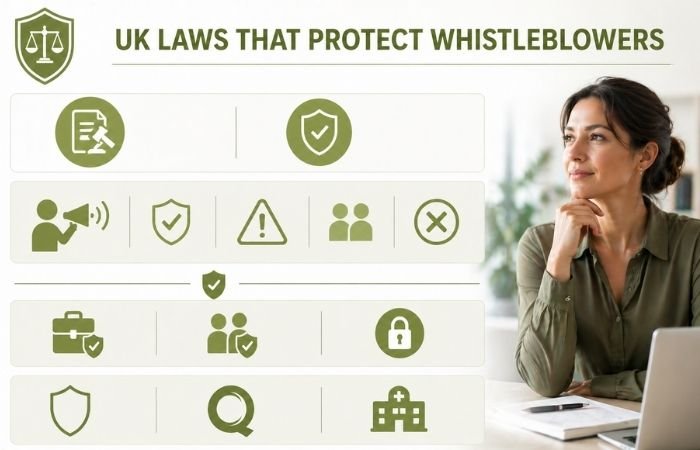
Now, there is an important idea called a qualifying disclosure. This means a worker reports a real concern in good faith. It must be about safety, harm, or wrongdoing that affects other people. It should not be about personal issues like pay or work hours.
When a worker raises a proper concern, the law protects them at work. Employers cannot punish them for speaking up. This includes:
- Job protection so they do not lose their employment
- Safety from bullying or unfair treatment at work
- Security from reduced hours or pressure at work
On top of that, regulators help keep services safe. The Care Quality Commission (CQC) checks care services. The NHS England also supports safe reporting in NHS workplaces.
What Happens If a Whistleblower Is Wrong?
Many people worry about this, but the law addresses it fairly. A whistleblower does not get punished just because the concern later turns out to be wrong. What matters most is the reason they spoke up.
Now, if someone reports a concern honestly, the law protects them. Even if the issue later turns out to be wrong, they stay safe. The key idea is reasonable belief. This means the person truly thought something was wrong at that time.
At the same time, protection has limits. If someone acts in a dishonest or harmful way, action can follow.
- Honest concerns raised in good faith stay protected
- Genuine mistakes do not lead to punishment
- False or harmful reports can lead to disciplinary action
On top of that, whistleblowing must support public safety. It should focus on harm, risk, or wrongdoing that affects others. So, what happens if a whistleblower is wrong? The answer is simple. Honest mistakes stay protected but misuse of the system can lead to action.
What Is a Whistleblowing Policy?
A whistleblowing policy is a clear guide that tells staff how to raise concerns at work. It shows what to do when someone sees unsafe care, poor practice or risk of harm. The main aim is simple. It helps people speak up safely and correctly.
Now, this policy includes a few important parts that keep the process clear.
- Reporting channels so staff know where to report concerns
- Confidentiality rules so the person who speaks up stays safe and protected
- Investigation steps so the organisation can check the concern properly
On top of that, every care organisation must have a whistleblowing policy. It helps protect patients, service users and staff. It also helps stop problems from staying hidden. When staff understand the process, they feel more confident to speak up.
So, what is a whistleblowing policy really about? It builds trust, supports safe reporting and creates a workplace where people feel safe to raise concerns without fear.
How Does the Whistleblowing Process Work?
A whistleblowing process starts when a worker notices something unsafe or wrong at work. This may be poor care, unsafe practice or risk of harm. The aim stays clear. Stop harm and protect people as early as possible.
Now, the worker follows simple steps to report the concern.
- The worker first notices the problem and writes down what they see
- They then report it inside the organisation to a manager or safeguarding lead
- If things do not improve, they report it outside the organisation
At this point, outside organisations may get involved. The Care Quality Commission (CQC) checks health and social care services. The Health and Safety Executive (HSE) deals with safety at work.
Now, reporting can happen in different ways.
- Anonymous reporting means the worker does not give their name
- Confidential reporting means the name stays protected but known to the organisation
On top of that, clear records are very important. Notes, dates and facts help support the concern. They also help investigators understand the issue and take the right action.
Why Is Whistleblowing Important in Health and Social Care?
Whistleblowing helps keep care safe. It gives staff a proper way to share concerns when something is not right. This small step can protect people and improve care services.
Now, the main benefit is clear. It protects service users from harm. When staff report concerns early, they can stop problems before they get worse. It also helps prevent abuse and neglect. This keeps vulnerable people safe in their daily care.
At the same time, it improves how care services work.
- Reduces fraud and dishonest behaviour in care settings
- Builds trust between staff, service users and organisations
- Protects the reputation of care homes and health services
On top of that, UK evidence shows a clear link. When staff feel safe to report concerns, patient safety improves. Early reporting leads to faster action. It also reduces serious incidents and improves the overall quality of care.
What Are the Challenges of Whistleblowing?
Whistleblowing is important, but it is not always easy. Many staff feel worried about speaking up. The biggest worry is the fear of retaliation. They may fear losing their job or facing pressure at work. Some also fear bullying or unfair treatment.
Now, workplace culture also has a big impact. In some places, staff do not feel safe to raise concerns. So, they stay quiet even when they see problems. On top of that, many workers do not fully understand the whistleblowing policy. This lack of knowledge makes it harder for them to report issues properly.
There are also personal challenges. Speaking up can feel stressful and emotionally hard. It may also affect work relationships and confidence. As a result, some staff delay reporting concerns. This can allow unsafe situations to continue for longer than they should.
How Can Organisations Encourage Whistleblowing?
Organisations can support whistleblowing by creating a safe and open workplace. When staff feel respected and listened to, they feel more confident to speak up. This helps problems get reported early before they get worse.
Now, training is very important. Staff need to understand what whistleblowing means and how to report concerns. Regular training builds confidence and clears confusion. It also helps staff know what to do in real situations.
On top of that, anonymous reporting systems give extra safety. Some staff may feel afraid to speak openly, so this option helps them report without stress.
Leadership also plays a big role. Managers must listen carefully and act quickly when someone raises a concern. This builds trust in the team.
- Strong leadership encourages staff to speak up
- Clear training helps staff understand the process
- Anonymous systems allow safe reporting
- Digital tools make reporting quick and easy
Overall, organisations that support staff well see more open reporting.
How Technology Supports Whistleblowing in Care?
Technology now plays a big role in whistleblowing in care settings. It helps staff report concerns quickly and safely. Digital care systems also keep all information in one secure place.
Now, one major benefit is the audit trail. It shows every action step by step. This helps track what happened and when. At the same time, technology supports evidence collection. Staff can save clear notes, records and details. On top of that, it improves transparency, which builds trust in care services.
In the UK care sector, many organisations now use safe digital reporting systems and online safeguarding tools. These tools let staff report concerns straight away, in real time.
So managers can respond faster and deal with issues early. It also makes investigations easier because all records stay in one place. On top of that, it helps services follow care rules properly and improves safety for everyone.
Key Tips for Safe and Effective Whistleblowing
Here are the key things to follow for safe and effective whistleblowing:
- Be honest – Share only what you see or know. Stick to facts. Do not guess or add extra details.
- Follow policy – Use your workplace whistleblowing rules. They guide you step by step. This keeps you on the right path.
- Keep records – Write down dates, names and what happened. Clear notes help support your concern later.
- Ask for advice – Speak to someone if you feel unsure. You can contact Citizens Advice for free help and guidance.
- Follow the law – Report concerns in the correct way. This protects you and keeps the process fair.
Know when and how to speak up? Take our Whistleblower Training and learn how to raise concerns the right way.
Conclusion
Whistleblowing means speaking up when something in care feels unsafe, wrong or not right. In simple terms, what is whistleblowing in health and social care is about raising concerns to protect people and improve care services.
It protects patients, service users and vulnerable people from harm. It also supports safeguarding by stopping abuse, neglect and unsafe practice early. When staff speak up, care problems get fixed faster. This helps keep care safe for everyone.
However, speaking up is not always easy. Fear and pressure can stop people from sharing concerns. That is why organisations must build a safe and open culture. Staff should feel supported and respected when they speak up.
So, care services need to focus on awareness, regular training and strong whistleblowing policies. When they do this well, they build trust and create a safer place for everyone.
FAQs About What Is Whistleblowing in Health and Social Care
1. What is whistle blowing in health care?
- It means speaking up when something is unsafe or wrong in care services. Staff report concerns to protect patients, service users and staff from harm.
2. What is the definition of whistleblowing?
- Whistleblowing is when a worker raises a concern about risk, harm, or wrongdoing at work in the public interest.
3. What is an example of whistleblowing in health and social care?
- Examples include reporting poor care, medicine mistakes, abuse, neglect, or unsafe working conditions in a hospital or care home.
4. What is whistle blowing in safeguarding?
- It means raising concerns when someone is at risk of harm. This can include abuse, neglect, or unsafe care for children or vulnerable adults.
5. What exactly is whistleblowing?
- It is simply speaking up about serious problems at work that affect the safety, care, or well-being of others.
6. What are the 3 C’s of safeguarding?
- The 3 C’s are Confidentiality, Consent and Communication. They guide safe sharing of information to protect people.
7. What is the ABC of safeguarding?
- The ABC stands for Action, Behaviour and Concern. It helps staff notice problems and take the right steps to protect others.

Whistleblower Training
Course Description :
- Certificate: Yes(Free)
- Accreditation: CPD Accredited
- Access: Lifetime