No products in the cart.
A career as a dental nurse lets you help people every day. Learning how to become a dental nurse leads to a stable and rewarding job. Dental nurses work closely with dentists. They help during treatments, care for patients, prepare tools, take impressions, and give advice on oral health. They also make sure patients feel calm and comfortable. Most dental nurses are women. Over 90 % of them are female, so it is one of the largest female-led jobs in healthcare.
In the UK, you need a General Dental Council-accredited qualification. A Level 3 Diploma in Dental Nursing is the most common. You must also register with the GDC. Most dental nurses start as trainees. They learn while working in an apprenticeship that lasts about fifteen to twenty-four months.
Let’s explore the role of a dental nurse and why it’s vital in dentistry.
What is a Dental Nurse?
A dental nurse is a caring and skilled professional who helps dentists take care of patients. Learning how to become a dental nurse gives you the chance to do an important job every day.
Dental nursing is not just about helping during treatments. First, dental nurses get tools ready and take impressions. Then, they support patients and give simple tips to keep teeth healthy. Also, they help patients feel calm and comfortable, especially if someone is nervous. In addition, they make sure the clinic is clean and organised. Finally, dental nurses work closely with dentists, hygienists, and other staff to keep everything running smoothly. Without them, patients would not get the best care.
Why Should I Choose a Career as a Dental Nurse?
A career as a dental nurse gives you a stable and rewarding job. You can grow into special roles like radiography or orthodontics. Moreover, you work in a patient-focused environment and often enjoy a good work-life balance. Because you help people every day, it is a job that brings real satisfaction. This career is ideal if you are kind, enjoy talking to people, and want to make a difference in oral health.
Key Reasons to Choose Dental Nursing
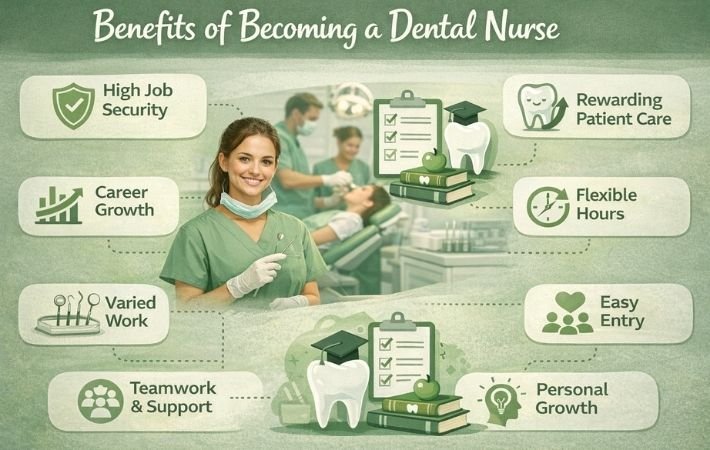
- High Job Security: Dentists always need dental nurses. As a result, you can have long-term job stability.
- Rewarding Patient Care: You help patients feel calm, improve their teeth, and boost their confidence. For example, you may guide nervous patients through treatments.
- Career Growth: After qualifying, you can specialise in dental sedation, oral health education, radiography, implant nursing, or move into practice management. In addition, you can take courses to increase your skills and pay.
- Flexible Hours: Many dental practices offer regular, friendly hours. This means it is easier to balance work with family or personal life.
- Varied Work: Every day is different. For instance, you may assist in treatments, sterilise tools, help with admin work, or talk to patients about oral care.
- Easy Entry: You can start through apprenticeships or training while working. Therefore, you can earn money while learning.
- Teamwork and Support: Dental nurses work closely with dentists, hygienists and other staff. Also, you often help train new nurses or students.
- Personal Growth: The role builds confidence, patience, and communication skills. Finally, it gives you the chance to make a real impact on patients’ lives.
Skills and Personal Traits
To succeed, you should be kind, careful, and enjoy working with a team. You also need to speak clearly to help patients feel comfortable. Good hands-on skills, attention to detail, and being organised are very important. Additionally, being patient and calm makes you a better dental nurse.
How to Become a Dental Nurse Step By Step Guide
To become a dental nurse in the UK, you need a General Dental Council (GDC) approved qualification, like a diploma or apprenticeship. You also must register with the GDC. You can start as a trainee even without experience. At the same time, you work in a dental practice while studying. Training usually takes 18 to 24 months.
Step 1: Find a Trainee Dental Nurse Job
Many dental practices hire trainees who are eager to learn.
- First, you learn on the job by working in a dental surgery and earning money.
- Next, look for jobs on NHS Jobs or local dental practice adverts.
Step 2: Join a GDC-Approved Course
You must study a course approved by the GDC to become a qualified nurse.
- For example, you can take the NEBDN Diploma, which is well-known and recognised.
- Also, a Level 3 apprenticeship lets you earn while you learn.
- In addition, college courses can be part-time or full-time and usually take 12 to 18 months.
Step 3: Meet Entry Requirements
Most courses ask for:
- GCSEs (Grade 4/C or above) in English and Maths or Science.
- Sometimes, schools accept similar qualifications or previous healthcare experience.
Step 4: Get Practical Experience
During training, you make a Record of Experience (RoE). This way, you show your work and learning in the dental clinic.
Step 5: Register with the GDC
After you finish, you must register with the General Dental Council to work legally.
- Finally, you need to show proof of your qualification and follow professional rules.
- Beforehand, make sure all your documents are ready for registration.
How Much Do Dental Nurses Earn in the UK?
Dental nurses in the UK earn different salaries based on their experience, skills, and workplace. In general, most qualified dental nurses earn between £24,000 and £32,000 per year. Their hourly pay is usually around £12 to £17 per hour. At the start, trainee dental nurses earn less because they are still learning the job. However, salaries increase as you gain experience and new skills. Over time, dental nurses can move into senior or specialist roles and earn more money. For example, nurses who work in specialist areas or leadership positions often receive higher pay. Therefore, career growth can lead to better earning opportunities.
Average Dental Nurse Salary
- Trainee Dental Nurse: £14,000 – £22,000 per year
- Qualified Dental Nurse: £24,000 – £30,000 per year
- Senior or Head Dental Nurse: £32,000 – £45,000 per year
- Specialist Dental Nurse: £39,000 or more per year
What Can Affect a Dental Nurse’s Salary?
A dental nurse’s pay can change depending on several factors. Knowing these can help you plan your career and earn more over time.
- Location
Pay can change depending on where you work. For instance, dental nurses in London and other large cities often earn higher salaries than those in smaller towns. - Workplace
Some dental nurses work in NHS clinics, while others work in private practices. In many cases, private practices offer slightly higher pay. Meanwhile, NHS jobs usually provide strong benefits and job stability. - Experience and Skills
Salary often increases with experience. In addition, extra qualifications in areas like dental radiography, sedation or oral health education can raise your pay. - Working Hours
Most dental nurses work about 35 to 40 hours per week. Sometimes, clinics offer extra pay for overtime or weekend shifts.
With experience, training, and dedication, dental nurses can increase their salary and build a strong career in dental healthcare.
What Skills do You Need as a Dental Nurse?
Being a dental nurse is more than just helping the dentist. You need a mix of people skills, practical abilities, and organisation to do the job well. Here are the key skills you will need.
- People Skills
Being friendly and calm helps patients feel relaxed, especially those who are nervous or anxious. Good communication is important for talking to patients and the dental team. Handling private information carefully is also essential. You must show patience and kindness every day. - Clinical and Technical Skills
Dental nurses must follow strict hygiene rules to keep tools and the clinic clean. During treatments, they assist the dentist by passing tools, suctioning, and supporting procedures. Accurate record-keeping is required to track treatments. Knowledge of teeth, mouth anatomy and tooth charting helps you work safely and confidently. - Organisational and Physical Skills
Paying close attention to details ensures that materials are prepared correctly and the workspace is organised. Managing time well is important because multiple tasks, such as cleaning, prepping and assisting, happen at once. The role can be physically demanding, so stamina and the ability to stay on your feet are necessary. Steady hands and good hand-eye coordination make procedures easier and safer. - Admin and Learning Skills
Using computers well is important for keeping patient records and booking appointments. Also, being willing to learn helps you stay up-to-date with new dental techniques and treatments. In addition, continuing training improves your skills. This way, you can take on more responsibilities in the clinic.
What Career Progression Opportunities Exist for Dental Nurses?
A career as a dental nurse can grow in many ways. First, you can move into more advanced roles. Also, you can take management positions or work in specialist areas. With training, you can learn new skills and work in different places. For example, some nurses retrain to become dental hygienists or therapists. In addition, you can work in hospitals, community clinics, or even the armed forces. Finally, flexible jobs as agency staff let you choose where and when you work.
Key Progression Opportunities
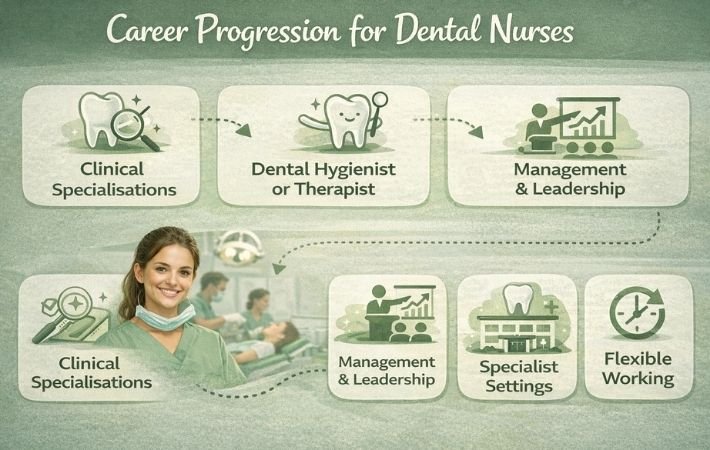
- Clinical Specialisations
Dental nurses can train in special areas like orthodontic nursing, dental radiography, conscious sedation, or oral health education. This way, you gain more skills and can take on new responsibilities. - Dental Hygienist or Therapist
Qualified dental nurses can retrain to become dental hygienists or dental therapists. As a result, you can work more independently and treat patients within your scope.
- Management and Leadership
Experienced dental nurses can move into leadership roles. For instance, you could become a senior dental nurse, lead nurse, clinical trainer, or practice manager.
- Specialist Settings
Opportunities exist to work in special places like community dental services, hospital maxillofacial units, or the armed forces. In these settings, you gain unique experience and skills. - Flexible Working
Some dental nurses choose to work as agency staff. Therefore, you have the freedom to work in different practices or settings according to your schedule.
How Can I Find My First Dental Nurse Job?
Finding your first dental nurse job can feel exciting but also a little challenging. Many dental clinics look for people who are friendly, reliable and ready to learn. Showing your interest in dental care and helping patients can make a strong impression.
Start Your Job Search
- Check job websites like NHS Jobs and local dental clinic adverts. You can also visit dental practices near you and ask about trainee roles.
- Look for apprenticeship opportunities because they allow you to work and study at the same time.
- Some clinics prefer people who show interest in person, so visiting a practice can sometimes help you stand out.
Create a Strong CV and Cover Letter
- Write a clear CV that shows your education and useful skills. Customer service or healthcare experience can help as well.
- A short cover letter should explain why you want to become a dental nurse.
- Employers like to see enthusiasm and kindness, therefore show your interest in helping patients and learning new skills.
Build Connections and Network
- Talking to people in the dental field can open new opportunities.
- You can speak with dentists, dental nurses, or tutors during training, for example.
- Joining online groups or dental events can help too, in addition, because people often share job tips and advice there.
Keep Learning and Improving
- Keep building your knowledge while you search for a job.
- Reading about dental care or watching training videos can help you understand the job better.
- Small efforts show your motivation, finally, and they can help you get your first dental nurse role.
What Common Challenges Might I Face as a Dental Nurse?
Starting as a dental nurse feels exciting. At the beginning, the job can also bring some challenges. New nurses learn many skills while working in a busy clinic. Sometimes, the workload can feel overwhelming. For instance, you may help the dentist while also caring for patients. At the same time, you must stay organised and focused. Because of this, many trainees need time to adjust. Over time, practice makes the work easier. Eventually, confidence grows as you gain more experience.
Common Challenges
Handling Stressful Situations
- Dental clinics can become busy during the day. Sometimes, patients feel nervous about treatment.
- You must stay calm and work carefully. Meanwhile, the dentist may need quick support during procedures.
Balancing Work and Study
- Many trainee dental nurses work while studying. At the same time, they prepare for exams and practical assessments.
- Because of this, managing time can feel difficult in the beginning.
Learning New Skills Quickly
- Dental nurses must learn many tools and procedures. For example, you need to understand equipment and patient care.
- In the beginning, the amount of new information may feel like a lot.
How Can You Overcome These Challenges?
Facing challenges is normal in any new career. However, you can handle them with the right approach. First, focus on learning one step at a time. Next, ask questions when something feels confusing. In addition, practice your skills regularly in the clinic. This way, your confidence grows every day. Also, support from your team can make difficult moments easier. As a result, you start to feel more comfortable in your role. Finally, patience and a positive attitude help you grow into a skilled dental nurse.
Stay Calm and Ask for Help
- Focus on one task at a time when the clinic feels busy.
- Talk to experienced nurses or dentists for advice.
Plan Your Time Well
- Create a simple study routine after work.
- Review notes regularly to remember important topics.
Practice Your Skills Often
- Hands-on practice helps you improve faster.
- Listening to advice helps you avoid mistakes.
Stay Positive and Patient
- Learning takes time in the beginning.
- Confidence grows with experience and daily practice.
Final Thought
Becoming a dental nurse is a good and stable job. First, you help people and work with dentists every day. Also, you learn new skills that make you better at your work. Sometimes it can be hard, for example, balancing study and work. However, if you practise, stay patient, and ask for help, it becomes easier. In addition, you can grow into higher roles and earn more money. Finally, if you like caring for people and working in a team, dental nursing is a great choice for your future.
Frequently Asked Questions (FAQs)
1. How long does it take to become a dental nurse?
- It usually takes 18–24 months to complete training while working as a trainee dental nurse.
2. Is a dental nurse well paid?
- Dental nurses earn £24,000–£32,000 per year on average. Specialist or senior nurses earn more.
3. What qualifications do I need for a dental nurse?
- You need a GDC-approved qualification, usually a Level 3 Diploma in Dental Nursing, and GDC registration.
4. Is becoming a dental nurse hard?
- It can be challenging at first, but with practice, patience, and support, it becomes easier.
5. Is 40 too old to train as a nurse?
- No, it is never too late. Many people start nursing careers in their 40s.
6. Is 30 too late to become a dentist?
- No, age is not a barrier, but dental training takes several years, so plan ahead.
7. What NHS band is a dental nurse?
- Most dental nurses in the NHS are Band 3 or 4, depending on experience and responsibilities.
8. Is there a demand for dental nurses?
- Yes, there is high demand because dentists always need skilled nurses.
9. How much do dental nurses make per hour UK?
- Hourly pay is usually £12–£17 per hour, depending on experience and workplace.

Dental Nurse Course
Course Description :
- Certificate: Yes(Free)
- Accreditation: CPD Accredited
- Access: Lifetime