No products in the cart.
A life can change in seconds. One accident happens. One person falls. One body stops moving. Everything feels confusing in that moment. In situations like this, the 3ps of first aid matter most. Now you may start thinking, what are the 3Ps of first aid?
Primarily, it is a simple guide that helps you act fast in an emergency. It shows you what to do before help arrives. As a result, you stay focused when panic starts to rise.
The 3Ps mean Preserve life, Prevent the condition from getting worse, and Promote recovery. Together, these three steps give you a clear way to act in any emergency. Overall, the main purpose of the 3Ps is very clear. It helps you stay calm under pressure. At the same time, it gives you a simple order to follow. Because of this, you can make quick and right decisions when every second matters.
Now let’s break it down and see what are the 3ps of first aid in a simple and practical way.
What Are the 3Ps of First Aid?
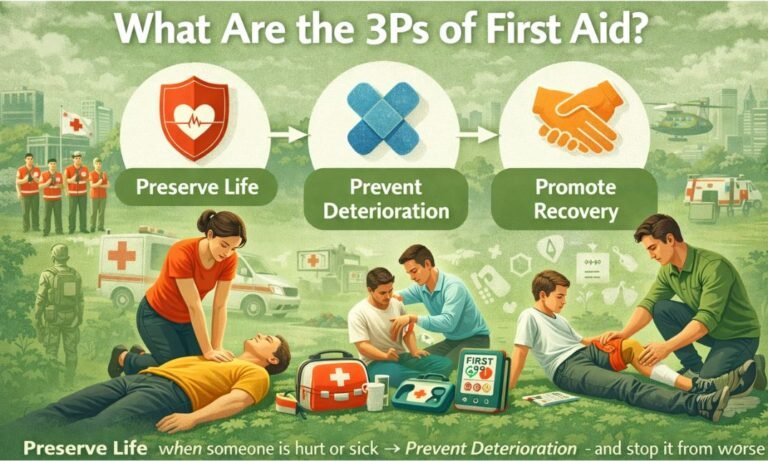
The “what are the 3ps of first aid” question explains a simple rule used in first aid training across the world. First of all, it tells you what to do when someone gets hurt or becomes sick very quickly.
The 3Ps stand for Preserve Life, Prevent Deterioration, and Promote Recovery. To begin with, you focus on saving the person’s life. Next, you stop the injury or illness from getting worse. After that, you help the person move towards recovery until medical help arrives. This rule is used everywhere for a clear reason. It is easy to remember, even when you feel shocked or scared. At the same time, it works in many types of emergencies. For example, you can use it in road accidents, workplace injuries, or home accidents like cuts, burns, or falls.
This idea did not come from one person. Instead, it developed over time through medical training systems. First aid organisations shaped it step by step. Groups like the Red Cross helped spread and teach it worldwide. Military medical training also influenced it a lot.
Now, let’s move step by step and understand each P in a simple and clear way.
First P – Preserve Life
Main Goal of Preserve Life
The first rule is very simple. You save life first. Nothing is more important than this step. First of all, every second matters in an emergency. At the same time, you must stay safe. You cannot help anyone if you get hurt. So first, protect yourself. Then help the person.
Quick Safety Check
Before you go near, stop and look around. Check the area for fire, traffic, live electric wires, or gas leaks. If you see danger, do not go in. Instead, step back straight away. After that, call emergency services. Safety always comes first in every situation.
ABC Method Introduction
Next, you follow the ABC steps. ABC stands for Airway, Breathing, and Circulation. Airway means you check if the person can breathe easily. Then Breathing means you check if air moves in and out. After that, Circulation means you check pulse and blood flow. Because of this order, you stay calm and act in the right way.
Basic Actions
If the person is not breathing, you start CPR to help keep them alive. At the same time, you press hard on the heavy bleeding to slow blood loss. If something blocks the airway, you try to clear it with care so air can pass again. As a result, you help keep the person stable until help arrives.
Key Point
Finally, always remember this rule. Never risk your own life. A safe first aider can help others better. If you take risks, you may create two victims instead of one.
Second P – Prevent Deterioration
Meaning in Simple Terms
The second part of the 3Ps of first aid is Prevent Deterioration. It means you stop the injury from getting worse. First of all, you do not try to treat everything. Instead, you focus on control and protection. You keep the person stable until medical help arrives.
Immediate Actions
Next, you act fast to reduce harm. You press on bleeding wounds to slow blood loss. After that, you keep broken bones still and avoid movement. You also help the person stay in a safe and steady position. As a result, you stop the injury from getting more serious.
Environment Safety
Then, you check the area around the person. You remove danger like glass, fire, or sharp objects. After that, you ask people to move away from the scene. This gives you space to work safely. At the same time, it protects the injured person from more harm.
Medical Risk Control
After that, you avoid actions that can cause more damage. You do not move the person if you think there is a neck or spine injury. Instead, you wait for emergency help unless there is direct danger. You also use simple bandages or dressings on wounds. Because of this, you protect the injury and lower the chance of infection.
Emotional Stability
Finally, you help the person stay calm. You speak in a soft and clear voice. You reduce fear and panic step by step. This is very important in first aid. A calm person stays more stable and deals with pain in a better way.
Third P – Promote Recovery
What It Really Means
The third part of the 3Ps is Promote Recovery. It means you support the person until medical help arrives. First of all, you do not try to act like a doctor. Instead, you give simple care that keeps the person safe and stable.
Monitoring Condition
Next, you keep checking the person’s condition. You watch their breathing closely. You also check how they respond when you speak to them. After that, you look for changes like confusion, pain, or weakness. Because of this, you can act quickly if their condition gets worse.
Comfort Care
Then, you focus on comfort. You keep the person warm to help prevent shock. At the same time, you speak in a calm and clear voice. This helps the person feel safe. As a result, fear and stress start to go down.
Practical Support
After that, you give simple help. You have cool burns with clean running water. You support injured arms or legs to stop movement and reduce pain. Next, you make space for the ambulance to reach the person easily. This helps emergency workers act fast when they arrive.
Key Point
Finally, always remember this. Promote Recovery is not medical treatment. It is simple care and support. Small actions can make a big difference until professional help takes over.
ABC Method in First Aid
The ABC method is the basis of first aid. First of all, it gives you a clear order in an emergency. It helps you act step by step without panic. As a result, you stay calm and make better decisions in a stressful moment.
To begin with, Airway means you check if the breathing path is open. You make sure nothing blocks the mouth or throat. Next, Breathing means you check if the person breathes normally. You look at chest movement and listen for air. After that, Circulation means you check the pulse and look for heavy bleeding. This shows if blood moves properly in the body.
At this point, the ABC method links directly to Preserve Life in the 3Ps of first aid. It helps you focus on saving life before anything else. If the person is not breathing, you may need CPR. CPR helps restart breathing and supports blood flow until medical help arrives.
Finally, always remember a simple rule. You check ABC first. Then you take action.
Common Emergency Situations Where 3Ps Apply
Cardiac Arrest
Cardiac arrest is a serious emergency. The heart stops, and breathing may also stop. First of all, you focus on Preserve Life. Then you start CPR straight away if the person does not respond. CPR keeps blood and oxygen moving in the body. As a result, you give the person a better chance of survival until help arrives.
Heavy Bleeding
Heavy bleeding needs fast action. First, you press firmly on the wound to slow blood loss. After that, you keep steady pressure without stopping. This links to Prevent Deterioration because you stop the injury from getting worse. Because of this, you reduce danger before medical help arrives.
Burns
Burns need simple and quick care. To begin with, you cool the burn with clean running water. Next, you keep the area clean and protected. This supports Promote Recovery by reducing pain and further damage. At the same time, it helps the skin heal better.
Choking
Choking blocks the airway and becomes dangerous very quickly. First of all, you act at once to clear the blockage so the person can breathe. Then you continue to help without delay. Quick action protects the airway and helps save a life.
Fractures
Fractures need calm and careful handling. First, you keep the broken bone still and avoid movement. After that, you support the injured area to prevent more damage. This follows Prevent Deterioration and keeps the injury stable until medical help arrives.
Why the 3Ps of First Aid Matter
These points show why it really matters:
- The 3Ps of first aid give a simple guide for quick action in emergencies.
- Knowing them helps you decide what to do first when time is very short.
- The NHS says early first aid can save lives.
- The HSE (Health and Safety Executive) says many serious injuries get worse without fast help.
- Quick action lowers the risk of the injury becoming worse.
- It also helps reduce long-term damage.
- The 3Ps support basic life-saving steps like CPR, stopping bleeding, and burn care.
- These steps help anyone act with confidence when someone needs help fast.
Role of First Aid Kit in 3Ps
A first aid kit is very important in the 3Ps of first aid. It helps you act quickly when someone gets hurt. First, it supports preserving life. You can stop bleeding and protect the wound right away. This quick action can help save a life.
Next, it helps prevent deterioration. The clean items in the kit reduce infection and stop the injury from getting worse. You can use bandages to cover cuts and wounds. Wear gloves to keep yourself safe while helping. You can also use antiseptic wipes to clean the injury. Because of this, the person stays in better condition until help arrives.
Finally, it supports promoting recovery. It helps you give basic care while waiting for doctors or an ambulance. A ready first aid kit saves time in an emergency. You do not waste time looking for things. Instead, you stay calm and act fast.
So, simple items like bandages, gloves, and antiseptic wipes are very useful. They help you do the right thing at the right time and give better care in an emergency.
Conclusion
So, what are the 3Ps of first aid? It is a simple rule that helps you act in an emergency. It shows you what to do when someone needs help fast. The three steps are Preserve life, Prevent deterioration, and Promote recovery.
First, you focus on preserving life. Your main job is to keep the person alive and stable. Next, you move to prevent deterioration. You act quickly to stop the injury from getting worse. After that, you support and promote recovery until medical help arrives. This clear order helps you stay calm and choose the right action at the right time.
In real life, emergencies change very quickly. So, quick action matters a lot. Even a small step from you can protect someone from serious harm. You do not need special training to start helping. You only need basic knowledge and a calm mind.
Finally, training makes things easier. It builds your confidence and helps you think clearly. So, instead of panic, you take action. That action can truly help save a life.
FAQs
What does the 3 P’s stand for?
- The 3 P’s stand for Preserve life, Prevent deterioration, and Promote recovery. These are the three main steps in first aid. They guide you to act in the right order during an emergency.
What are the 4 C’s of first aid?
- The 4 C’s usually mean Check, Call, Care, and Continue. First, you check the scene and the person. Then you call emergency help. After that, you give care. Finally, you continue to support the person until help arrives.
What does P stand for in first aid?
- In first aid, P stands for three key actions. Preserve life, prevent worsening, and promote recovery. Each one helps you decide what to do step by step.
What are the 3 P’s of safety?
- The 3 P’s of safety are similar in idea. They focus on protecting people, preventing harm, and preparing for risks. The goal is always to keep people safe before and during danger.
What is 3 P’s in first aid?
- The 3 P’s in first aid are simple rules for emergencies. They help you act fast, reduce harm, and support recovery. Many first aid courses teach this as a basic rule.
What are the 3 P’s symptoms of?
- The 3 P’s often relate to diabetes symptoms. They are polyuria (frequent urination), polydipsia (increased thirst), and polyphagia (increased hunger). These signs can warn about high blood sugar levels.
What are the 3 P’s of hazard management?
- The 3 P’s of hazard management focus on safety control. They mean Predict hazards, Prevent risks, and Prepare for emergencies. This helps reduce danger in workplaces and daily life.