No products in the cart.
You just left the tattoo studio with beautiful new art today. However, your skin feels quite sore and looks very bright red. This feeling makes you wonder, how do you know if a tattoo is infected? Actually, identifying a problem early is very vital for your body. A bad infection can ruin the look of your design forever. Moreover, you might feel very sick if you ignore the signs. In the United Kingdom, tattoo shops must follow very strict rules.
Local councils check these studios to keep all customers safe. Nevertheless, even the best artist cannot control what happens at home. Most skin problems happen because of poor aftercare after your session. Consequently, you must watch your new ink very carefully every day.
Now let’s dive in and explore what happens during normal healing signs.
How do you know if a tattoo is infected?
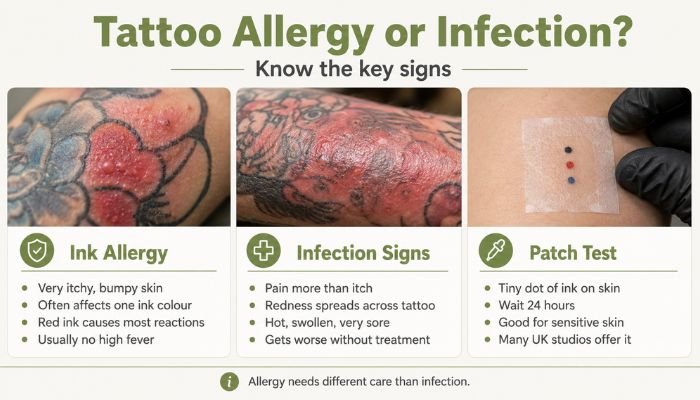
It is easy to confuse a skin allergy with an infection. However, these two problems require very different types of medical care.
Ink Allergies
Some people are allergic to specific types of colourful ink. Interestingly, red ink causes the most problems for people globally. An allergy usually makes the skin feel very itchy and bumpy. This reaction often stays only on one specific colour area. For example, the blue parts might feel perfectly fine and smooth. Meanwhile, the red parts might look raised and very irritated. Crucially, an allergy does not usually cause a high fever.
Infection Signs
An infection usually feels painful rather than just being very itchy. Also, the redness will spread across the entire tattooed area. It does not matter if the ink is red or black. Because infections involve bacteria, they make you feel much worse. Heat and swelling are the most common signs of this trouble. If you touch the area, it will feel very sore. An infection will get worse every hour without any treatment.
The Patch Test
In the UK, many artists offer a small patch test. They put a tiny dot of ink on your skin. Then, you wait for twenty-four hours to see the result. This test helps you know if the ink is safe. If you have sensitive skin, please ask for this test. It can save you from a lot of future pain. Most professional UK studios are happy to provide this check.
What Does a Normally Healing Tattoo Look Like?
You should expect some basic changes in your skin. Your new tattoo is basically a fresh wound on your body. Because of this, the area will stay red for a while. Usually, this redness fades away after the first forty-eight hours. You might also feel a slight stinging sensation when moving. Similarly, the skin around the ink may feel a bit tender. This is just your body starting to fix the small holes.
Then, you will notice some fluid leaking from the tattooed skin. Do not worry because this clear liquid is only natural plasma. In contrast, thick or discoloured fluid is a sign of trouble. After a few days, your tattoo will start to get dry. It will look like you have a very bad case of sunburn. Small flakes of skin will begin to peel off very slowly. You must never pick at these flakes with your fingers.
Furthermore, the tattoo might start to feel very itchy indeed. This itching is a sign that new skin is growing underneath. Instead of scratching, you should pat the area very gently. Applying a tiny amount of unscented cream will also provide relief. If you follow these steps, your tattoo will look great soon. Most people find that the itching stops after the second week.
How do you know if a tattoo is infected: The 5 Warning Signs
Understanding the difference between healing and a serious illness is vital. Therefore, you should check your tattoo in a bright mirror daily. Look for these five signs to keep yourself safe and healthy.
Intense Redness and Heat
Initially, some redness is very common for a new tattoo. However, this red colour should not spread across your arm. If the redness grows wider, it is a bad sign. Additionally, the skin might feel very hot to your touch. This heat feels much warmer than the rest of your skin. Because heat means inflammation, you must watch it very closely.
Pus or Discharge
Healthy tattoos only leak clear plasma for a very short time. Conversely, an infected tattoo might leak thick and cloudy fluid. This fluid is called pus and often looks yellow or green. It might even have a milky white colour in some cases. Because pus is a sign of bacteria, you need help. Healthy healing never involves thick or colourful discharge from your skin.
Foul Odour
Does your new tattoo have a strange or bad smell? Normally, a clean tattoo should not smell like anything at all. A bad scent usually means bacteria are growing very fast. Therefore, a “smelly” tattoo is a major red flag for you. You should clean the affected area gently with mild soap without delay. If the smell stays, you must speak to a professional.
Swelling and Hardness
Sometimes, the skin around the ink becomes very puffy and firm. This swelling should usually go down after the first few days. If the area stays raised and hard, it is dangerous. Also, the pain might feel like a deep, pulsing throb. This deep pain is different from a simple surface sting. Hard skin often means your body is fighting a deep infection.
Systemic Symptoms
Sometimes, a skin infection can travel through your whole body. You might start to feel very cold or begin shivering. Additionally, a high fever is a sign of a serious issue. If you feel generally unwell, your body is fighting hard. These symptoms mean the infection is no longer just on the skin. You might also feel very tired or have a headache.
When to Seek Healthcare Support in the UK
You should never feel afraid to ask for professional help. Because you live in the UK, you have many great options.
- Contacting Your Artist: Send a photo to your tattoo artist first. They see many healing tattoos every single week of the year.
- The 111 Service: Call the NHS 111 line for non-emergency guidance. This service is free and available at any time of day.
- Seeing your GP: Book an appointment with your doctor very quickly. If you see red streaks, you must go immediately.
- Pharmacy Advice: Ask a pharmacist for help with mild skin itching. They can suggest the best unscented creams for your skin.
If you see red lines moving away from the tattoo, hurry. This is a sign of sepsis, which is very dangerous. Doctors in the UK will give you medicine to stop this. You must finish all the pills the doctor gives to you. This ensures that all the bad bacteria are gone for good.
How to Clean Your New Tattoo Safely at Home?
Wash your hands with antibacterial soap before you touch the area. Bacteria live on your fingers and cause problems. Always use lukewarm water to rinse the skin very gently. Moreover, pick mild soap without perfume. Rub the soap in your palms to create soft bubbles. Apply these bubbles to the tattoo with your clean fingertips.
Avoid using a sponge or a rough cloth on your skin. Instead, move your fingers in small circles to remove old cream. Rinse the area well until the skin feels clean and smooth. Consequently, dry the tattoo using a fresh paper towel. Do not rub the skin because rubbing causes pain and damage. Pat the area very softly until the water is gone.
Also, throw the paper towel away immediately after every use. Normal towels often carry many hidden germs and lint. Let the tattoo air for ten minutes before adding any lotion. Then, apply a very thin layer of unscented cream or ointment. Only use a tiny amount of product on the fresh ink. Your skin needs plenty of air to heal well.
Too much cream can trap germs against your open wound. Because of this, the skin might stay wet and soft. Check the tattoo three times every day for cleanliness and safety. Keeping your new art fresh helps the colours stay bright. Plus, proper cleaning prevents many common issues during the first week. Most people find this cleaning routine very easy and fast. Follow these steps to keep your body safe.
What Are the Common Causes of Tattoo Infections?
Why do these infections happen to people with new tattoos? Usually, it is because bacteria enter the small open wounds.
Aftercare Neglect
You must always wash your hands before touching your ink. Dirty fingers carry many germs that can cause an infection. Furthermore, do not let your friends touch the new tattoo. Even if they are curious, their hands might be quite dirty. Keeping the area clean is your most important daily job.
Environmental Factors
Do not go swimming in a gym pool just yet. These places have many bacteria living in the warm water. Similarly, stay away from the salty sea for two weeks. The ocean contains many tiny organisms that can enter your skin. You should also avoid heavy exercise that makes you sweat. Sweat can trap bacteria against your fresh wound and cause issues.
Contaminated Equipment
Always choose a studio that has a local council license. Licensed shops in the UK must use very clean needles. If the shop looks dirty, you should leave the building. Professional artists always wear clean gloves and use single-use tools. This protects you from catching blood-borne diseases during the session.
Pets and Dirty Surfaces
Your cat or dog carries germs on their fur. Because of this, keep animals off your bed. Pet hair can easily enter the open wound today. Also, remember that your mobile phone is quite dirty. Screens hold more bacteria than most household objects. Always wash your hands before you apply any lotion.
Bad Habits to Avoid
- Wearing tight jeans that rub against the art.
- Applying huge blobs of cream to the skin.
- Standing in direct sunlight for a long time.
- Picking at scabs before they fall off naturally.
Conclusion on How Do You Know if a Tattoo Is Infected
Getting a new tattoo is a very exciting life event. However, you must stay vigilant during the first few weeks. If you wonder if a tattoo is infected, look for heat. Remember that pus and spreading redness are never good signs. Therefore, you should always trust your gut feeling about pain.
If something feels wrong, do not wait for tomorrow. The NHS is there to help all UK residents stay safe. Most infections are easy to treat if you act fast. Soon, your skin will be healed and look amazing. Thank you for reading our guide on healthy tattoo care. Finally, remember the golden rule: if in doubt, check it out! Your health is more important than any piece of art. Stay safe and enjoy your beautiful new tattoo journey today.
Frequently Asked Questions (FAQs)
1. Is my tattoo infected or just healing?
- A healing tattoo may be slightly red, itchy, and flaky. An infection often causes increasing redness, swelling, pain, or discharge.
2. What are the first signs of a tattoo infection?
- Common early signs include worsening redness, swelling, warmth, pain, and unusual fluid coming from the tattoo.
3. What does a tattoo look like if it’s infected?
- An infected tattoo may appear very red, swollen, and tender and may leak pus or other discharge.
4. How to tell if skin is rejecting a tattoo?
- Signs may include prolonged irritation, excessive itching, raised skin, or poor healing. Consult a healthcare professional if symptoms persist.
5. Will an infected tattoo be ruined?
- Prompt treatment can help protect the tattoo and reduce the risk of permanent damage.
6. What is the 1/3 rule tattoo?
- The 1/3 rule is a tattoo design guideline where the main artwork covers about one-third of the chosen area to create a balanced appearance.