Pure henna hair dye is a popular natural choice for safe hair colouring. Millions of people now prefer plant-based hair dyes as awareness of chemical-free beauty grows. The global henna market is also valued at over £1.2 billion, showing strong demand for pure and natural products.
However, not all henna products are the same. Some contain hidden additives or chemicals that can affect hair health. That is why knowing what ingredients to look for is important.
In this guide, you will find out the key natural ingredients in pure henna hair dye and how to avoid harmful additives for safer colouring.
What is the primary plant found in pure henna products?
Lawsonia inermis serves as the only real plant for natural hair staining. Specifically, this leaf powder contains the lawsone molecule that binds to your hair’s proteins. To start with, you must always look for this Latin name on the ingredient list.
Why do botanical names ensure product transparency?
Botanical names show the exact plant in your hair dye. They stay the same in every country. So, you can easily check the ingredients. This helps you avoid confusion. Some labels hide chemicals with unclear names. However, botanical names make ingredients clear. This helps you choose safer products.
What kind of colour does pure Lawsonia inermis produce?
True henna only creates a vibrant reddish-orange or copper tint on your hair. Notably, pure henna cannot lighten your hair or make other colours like blonde or blue. The final shade depends mostly on your original hair colour and application time.
Why do you need Indigofera tinctoria for dark shades?
Indigofera tinctoria provides the deep blue pigment necessary for achieving dark hair colours. Specifically, indigo lacks the ability to stick to hair well without a henna base. Mixing these two plants allows you to avoid the harsh chemicals in dark dyes.
Essential plant ingredients for natural colour
- Lawsonia inermis: The core plant for red-orange pigment and hair strength.
- Indigofera tinctoria: The natural blue dye used for brown and black tones.
- Cassia auriculata: A conditioning herb that adds golden highlights to hair.
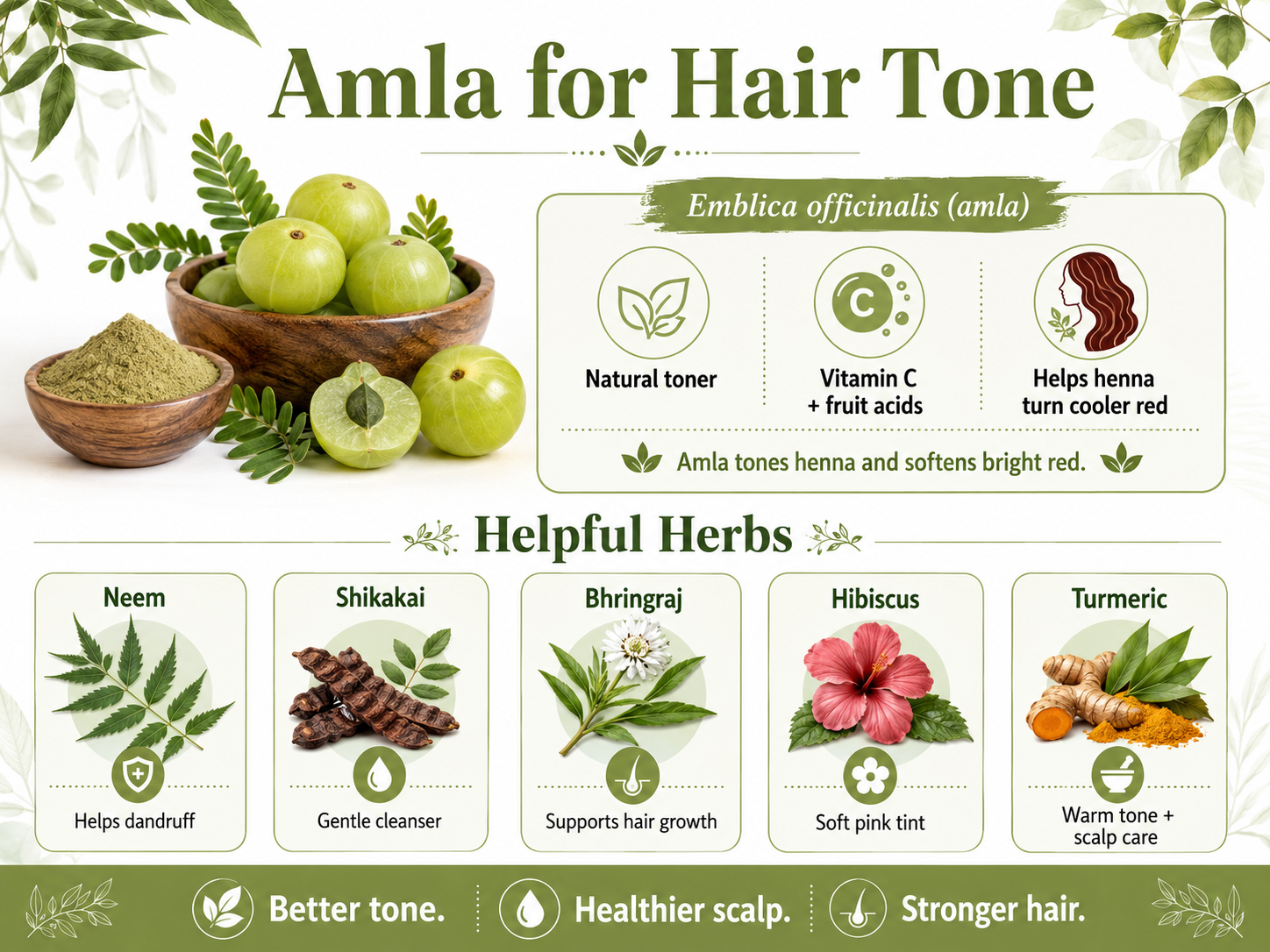
- Emblica officinalis: A fruit powder that tones down red and boosts shine.
- Aloe barbadensis: A soothing plant that keeps hair hydrated during use.
How does indigo create different hair tones for you?
The amount of indigo you use changes the final darkness of your hair. To illustrate, adding more indigo creates a darker brown or a jet-black shade. Following this process keeps your hair healthy while providing a rich and deep colour.
Is Cassia auriculata the same thing as red henna?
Cassia auriculata acts as a conditioning treatment and contains no red dye at all. People frequently call it “neutral henna”, but it comes from a different plant family. As a result, it provides a light yellow tint instead of a red one.
How does Cassia help people with thin hair?
Cassia powder coats the hair shaft and fills in damaged areas of the cuticle. This process makes individual strands feel much thicker and stronger than before. Interestingly, it makes your hair look very glossy and full of volume in the light.
Why is Emblica officinalis vital for controlling your hair tone?
Emblica officinalis acts as a powerful toner in many natural henna mixes. This sour fruit contains a lot of Vitamin C and natural fruit acids. Consequently, amla helps the henna dye develop into a cooler and more muted red.
Beneficial herbs for scalp and growth
- Azadirachta indica: A potent herb that treats dandruff and itchy scalp issues.
- Acacia concinna: A mild cleanser that removes dirt without stripping natural oils.
- Eclipta alba: A traditional plant used to promote thick and fast hair growth.
- Hibiscus rosa-sinensis: Adds a soft pink tint and improves the hair texture.
- Curcuma longa: Provides golden warmth and protects the scalp from bacteria.
How does Amla protect your natural curl pattern?
Henna can sometimes relax the natural curl of your hair because of its weight. Amla powder prevents this relaxation by supporting the natural bonds in your hair strands. This ensures you keep your bounce while enjoying the benefits of natural colour.
Why should you look for Aloe barbadensis on the label?
Aloe barbadensis adds a lot of moisture to the henna paste and your hair. Henna can sometimes leave hair feeling a bit dry after the first rinse. Specifically, aloe vera helps keep it soft and smooth throughout the entire process.
How does Azadirachta indica protect your scalp?
Azadirachta indica offers anti-fungal and anti-bacterial benefits for your sensitive skin. It effectively treats dandruff and keeps the scalp clear of infections or blockages. This herb ensures that your hair colouring session also works like a medicinal treatment.
What role does Acacia concinna play in the mix?
Acacia concinna serves as a natural and gentle hair cleanser for all hair types. It contains plant saponins that create a light lather to remove excess dirt. Following this, the herb leaves the hair feeling soft and very easy to brush.
Common chemical ingredients to avoid
- PPD (Para-phenylenediamine): A harsh chemical dye that causes severe allergies.
- Metallic salts: Harmful minerals that damage hair and react with salon dyes.
- Ammonia: A toxic gas that strips moisture and weakens the hair.
- Sodium picramate: A chemical used to force a faster and darker red colour.
- Silver nitrate: A metallic additive that makes hair extremely brittle and weak.
Why is Hibiscus rosa-sinensis used for extra colour?
Hibiscus rosa-sinensis provides a beautiful burgundy or pinkish tone to your henna mix. This flower contains amino acids that nourish the hair from the roots to tips. Many users combine it with henna to achieve a deeper and more luxurious red.
How do Turmeric and Rhubarb root add warmth?
Curcuma longa and Rheum palmatum act as natural yellow dyes to brighten henna shades. Turmeric adds a sunny, golden glow that makes copper colours look much more vibrant. These plants ensure your hair looks lively and full of warm highlights.
Why is PPD a dangerous ingredient to avoid?
PPD is a harmful chemical often found in fake or low-quality black henna. It creates a dark colour very quickly, unlike pure henna, which takes more time. You must avoid any product that promises instant results or a jet-black colour.
What are metallic salts in low-quality henna?
Metallic salts are chemical compounds like lead or copper that companies add to henna. These minerals stay on the hair and make it feel very stiff and dry. To start with, check the box for these dangerous chemicals before you buy.
Dangerous additives and fillers to watch out for
- Toluene: A toxic solvent that can harm your nervous system.
- Chromium: A heavy metal additive that can cause skin irritation.
- Synthetic fragrance: Artificial scents that often hide other hidden chemicals.
- Sodium bromate: A chemical agent that weakens the hair’s natural strength.
- Sand and stems: Cheap fillers used to add weight to low-quality powders.
Why do metallic salts react with salon dyes?
Metallic salts cause a dangerous chemical reaction with salon bleach or peroxide. This reaction can cause the hair to smoke or even melt entirely. Pure plant-based henna does not have this problem and remains safe for future styling.
What is Sodium Picramate and why is it bad?
Sodium picramate is a synthetic salt used to intensify the red colour in henna. It acts as a shortcut to make the hair dark red very quickly. Stick to pure powders to ensure your beauty routine stays completely non-toxic and safe.
Why should you avoid Ammonia and Peroxide?
Ammonia and peroxide are common in chemical hair dyes found in high-street shops. They can make your hair very dry and permanently damaged after just one use. Pure henna does not need these harsh ingredients to colour your hair strands.
What are harmful fillers like sand and stems?
Cheap henna products often contain extra sand and ground-up plant stems as fillers. Companies use these fillers to add more weight to their low-quality henna powders. Specifically, these ingredients make the paste feel very gritty and hard to rinse.
Key factors for high-quality henna
- Vibrant green colour: A sign that the leaves were fresh and active.
- Sweet herbal scent: Indicates that the natural dyes are still potent.
- Vacuum-sealed: Essential for protecting the powder from moisture and air.
- No added fragrance: Pure henna does not need perfume to smell good.
- Fine texture: The powder should mix into a creamy paste very easily.
How does the pH level of henna protect your hair?
Pure henna has a natural pH level of around 5.5 on the scale. This balance matches the natural acidity of your scalp and skin perfectly today. As a result, henna seals the hair and makes it look incredibly shiny.
How does Lawsone bind to your hair keratin?
The lawsone molecule in henna has a unique affinity for your hair protein. It moves into the outer layer of the hair and forms a bond. This scientific reaction is why hennaed hair often looks so very healthy and thick.
Why is triple-sifted quality important for you?
Manufacturers pass triple-sifted henna powder through a fine mesh screen three times. This removes all the sand, stems, and other small particles from the mix. Following this, the powder feels very smooth and mixes easily with any liquid.
How do you identify fresh henna powder?
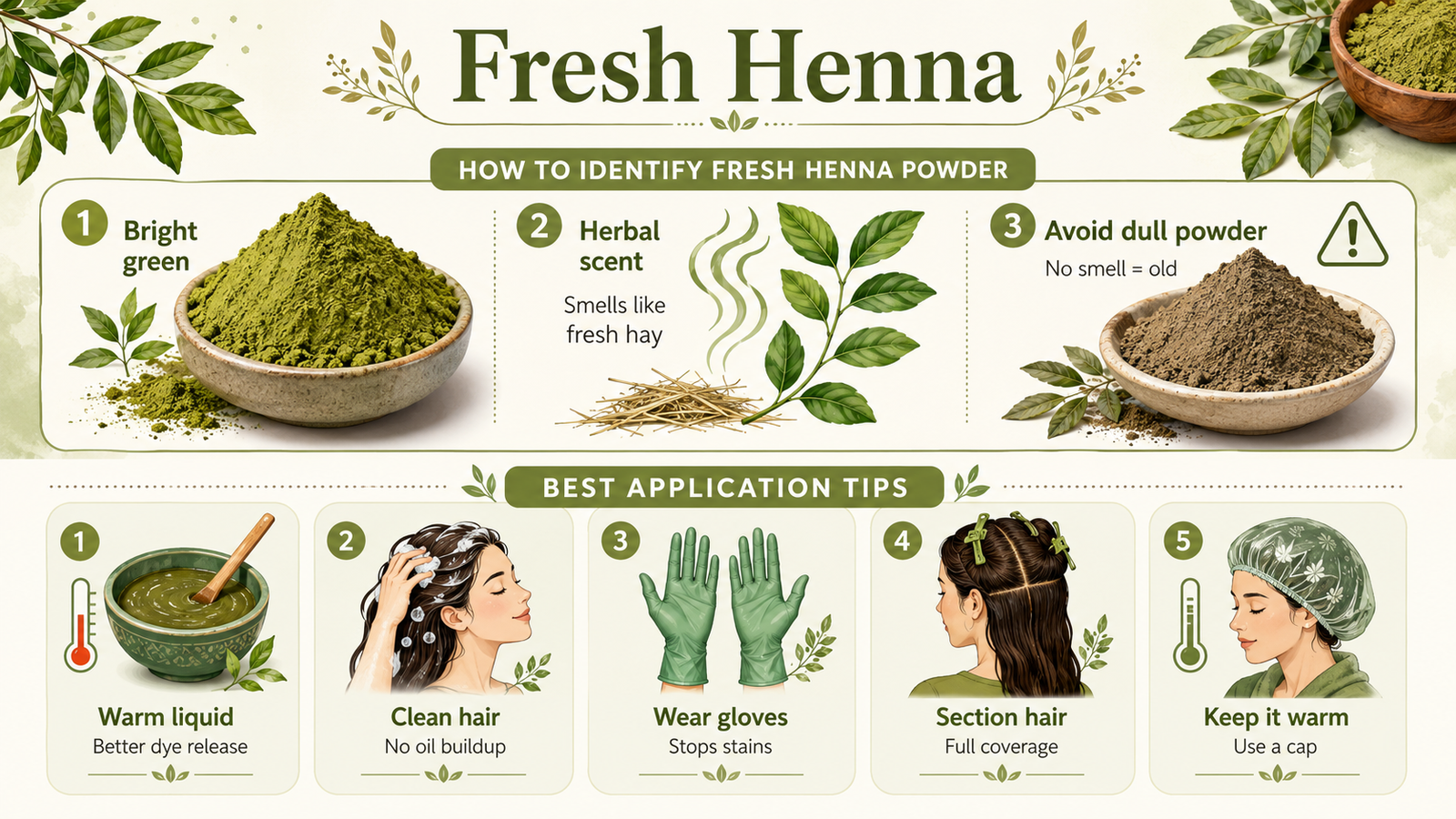
Fresh henna powder always displays a vibrant and bright green colour for users. It should have a strong and pleasant herbal scent like fresh mown hay. To start with, avoid brown or grey powders that have no herbal smell.
Important steps for a perfect application:
- Use warm liquid: Helps the dye release effectively from the plant leaves.
- Clean your hair: Remove oils and styling products before you start.
- Wear gloves: Henna stains skin very quickly and stays for weeks.
- Section the hair: Apply the paste in small sections for full coverage.
- Keep it warm: Use a cap to prevent the paste from drying.
What is the dye release process for pure henna?
Dye release happens when you mix henna powder with liquid and wait patiently. This process releases the natural colour molecule that stains your hair strands effectively. For best results, let the paste sit for 6 to 12 hours before use.
How does oxidation affect your final hair colour?
Oxidation is the natural process where henna colour darkens after the first wash. When you first rinse the paste, your hair may look very bright orange. Afterwards, exposure to the air causes the colour to deepen into a rich red.
Why is a patch test necessary before you dye?
A patch test helps you check for allergic reactions before you start the process. Apply a small amount of henna paste to your inner arm first for safety. This simple step can help prevent scalp irritation and major discomfort later on.
Why should you perform a strand test first?
A strand test helps you see the final colour before you apply everything. Apply the mixture to a small section of hair from your hairbrush. This shows how henna reacts with your natural hair colour or old dye.
What are the UK labelling standards for henna?
UK rules require henna brands to list all ingredients on the label clearly. They must use official botanical names for every plant inside the product box. Always choose brands that provide clear and complete information on their packaging labels.
Why choose organic and cruelty-free henna brands?
Organic henna grows without any harmful pesticides or synthetic fertilisers in the soil. As a result, the powder stays clean and pure for your sensitive scalp. Supporting these brands is a better choice for animals and the entire planet.
Can you use pure henna over chemical hair dye?
Pure plant-based henna is safe to use on hair coloured at a salon. Interestingly, the conditioning properties of henna can make dry hair feel soft again today. It is a fantastic way to move into a natural beauty routine safely.
What are the long-term benefits of using henna?
Regular henna use leads to hair that is much thicker and shinier than before. Each application acts as a permanent conditioning treatment for your hair strands. It provides a natural glow that chemical dyes simply cannot copy for you.
Final Thoughts on Pure Henna Hair Dye
In conclusion, pure henna hair dye is a safe and natural choice for your hair. It comes from plant-based ingredients and offers a gentle colouring option. Ensure that you check the ingredient list on the package before you buy. This helps you avoid harmful additives or chemicals. With the right product, your hair and scalp are healthy, soft and well cared for over time.

Henna Course
Course Description :
- Certificate: Yes(Free)
- Accreditation: CPD Accredited
- Access: Lifetime