No products in the cart.
Natural henna is used for temporary body art. It makes a beautiful stain on the skin. It does not colour the skin permanently. If you are wondering how long does natural henna paste last on skin naturally, the simple answer is that it usually lasts one to three weeks. However, the exact time depends on your skin type, aftercare routine, and where the design is placed on your body.
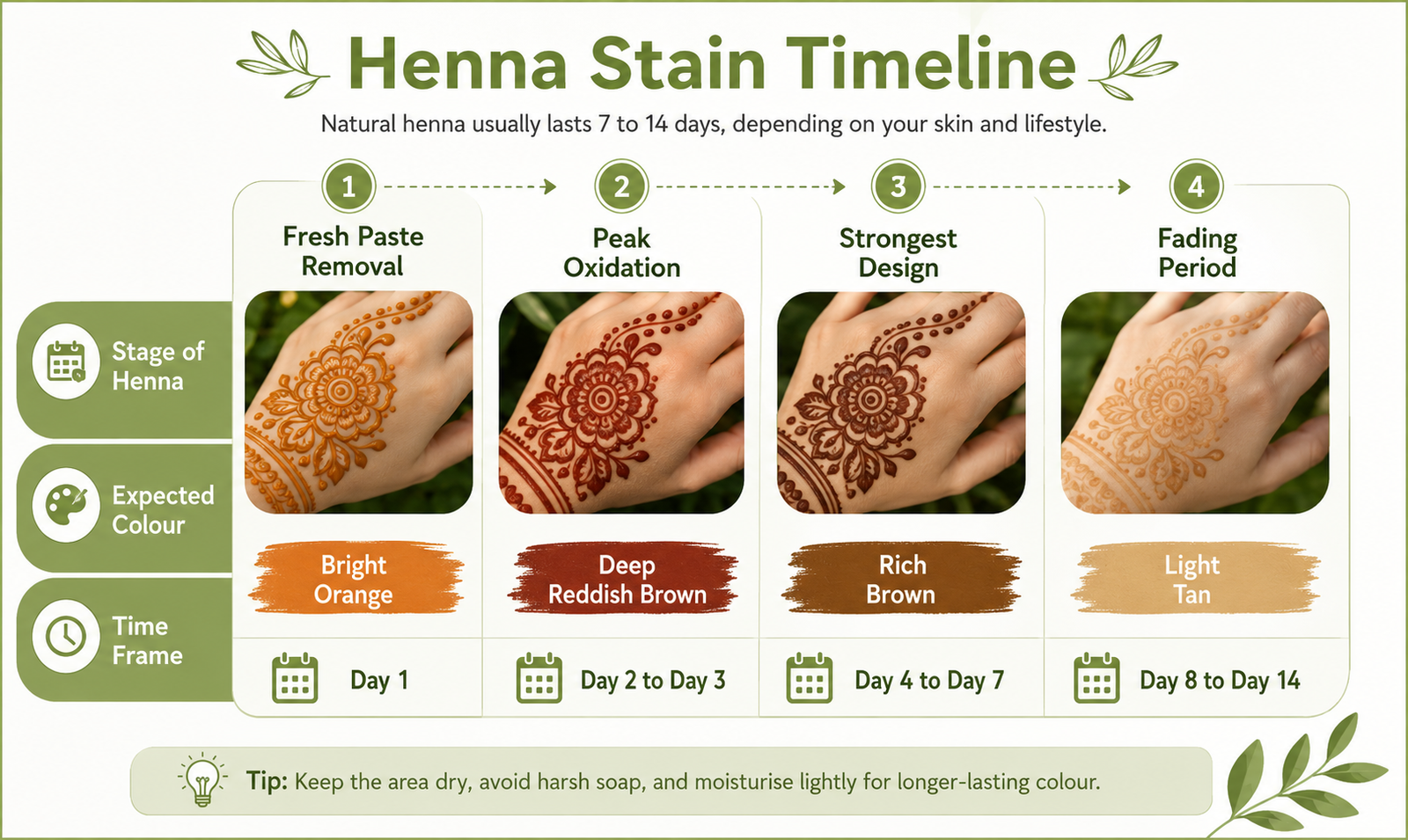
A fresh henna stain changes over time. During the first one to three days, the colour develops from a bright orange shade to a deep reddish-brown or burgundy. The design looks its best between days four and seven. After that, it slowly starts to fade as the outer layers of your skin naturally shed and exfoliate. By days eight to twenty-one, the stain becomes lighter and may look patchy before disappearing completely.
With proper care, such as keeping the area warm, avoiding too much water, and using natural oils, you can help your henna design stay darker for longer.
What is Natural Henna and How Does it Work?
Natural henna comes from a plant called Lawsonia inermis. People crush the leaves into a very fine green powder. Then, they mix this powder with water or essential oils. This mixture creates a thick, dark green paste for drawing. Specifically, the leaves contain a special dye molecule called lawsone. This dye loves to stick to the protein in your skin.
When you apply the paste, the dye slowly moves into your top skin layers. It does not go deep like a permanent tattoo. Instead, it only stains the very surface of your body. Therefore, the design will eventually disappear as your skin cells grow. Actually, this makes henna very safe for most people to use. You can change your designs every few weeks if you want. It is a wonderful way to express your personal style safely.
How Long Does Natural Henna Paste Last On Skin for Most People?
You likely want to know the exact timing for your design. Usually, a natural henna stain lasts between seven and fourteen days. However, many factors can change this specific timeline for you. Some people see their stain fade after only one week. Other lucky people might keep their design for nearly three weeks.
The stain starts as a bright orange colour at first. Over two days, it turns into a deep, rich brown. This beautiful brown colour stays strong for about five days. After that, the design begins to grow lighter and lighter. Eventually, your skin naturally rubs the old dyed cells away. This process happens because our skin always creates new cells underneath. Your lifestyle and skin type will decide the final duration.
Which Parts of the Body Keep Henna the Longest?
Henna usually lasts the longest on the palms of your hands, the soles of your feet, and your fingertips. These areas have thick skin and more keratin, which helps the colour stay longer. Because of this, henna can look dark and clear for about 1 to 3 weeks.
Why skin location matters
Henna only stains the top layer of your skin, called the epidermis. So, how long it lasts depends on two main things: how thick your skin is and how fast your skin sheds old cells.
Also, daily habits matter. Washing, rubbing, and sweat can make henna fade faster. That is why some areas keep the design longer than others.
- Palms and soles (longest lasting): These areas have the thickest skin. So, the henna goes deeper into the skin layers. The design often looks very dark after it dries. It can last around 10 to 21 days. You may still see light stains even after that.
- Fingertips (very strong stain): Fingertips also hold henna well. However, they touch water and things often. So, the colour may fade a little faster than the palms.
- Wrists, ankles, and forearms (medium lasting): These areas have thinner skin. So, the henna does not stay as deep. The design usually lasts about 7 to 14 days. It slowly gets lighter each day.
- Torso, back, and upper arms (shortest lasting): These areas have soft and thin skin. Also, clothes rub on them more. So, the henna fades quickly, often within 7 to 10 days.
In simple words, the thicker and less “busy” the skin area is, the longer your henna will last. That is why palms and feet always show the richest and longest-lasting designs.
How to Prepare Your Skin Before Applying Henna?
Good preparation is the secret to a dark, lasting stain. First, you must clean the area with warm soapy water. This removes any dirt or sweat from your skin surface. Next, you should avoid using any lotions or body oils. These products create a barrier between the dye and your skin. If you use oil, the henna cannot soak in properly.
Moreover, you might want to gently scrub your skin before starting. This removes old, dead skin cells that might fall off soon. By doing this, you give the henna a fresh surface. Always dry your skin completely before the artist begins their work. Moist skin can cause the paste to smudge or run. Following these simple steps ensures the best possible result for you. You will definitely see a big difference in the final colour.
What is The Best Way to Remove Henna Paste Safely?
When the paste dries, you might feel tempted to wash it. Please do not use water to remove the dried henna. Instead, you should gently scrape the crusty paste off your skin. You can use a blunt butter knife or your fingernails. Water stops the darkening process before it can really start.
Actually, you should keep water away for at least twenty-four hours. This wait time allows the dye to settle deep into your skin. If you must touch water, apply a little coconut oil first. The oil acts like a raincoat for your beautiful new design. Many people find that waiting longer results in a much darker brown. Be patient and let nature do its slow, magical work. Your patience will reward you with a stunning, professional-looking stain.
How Long Does Natural Henna Paste Last on Skin if You Exercise?
Active people often wonder about their henna during a workout. Unfortunately, sweat can make your henna design fade much faster than normal. When you sweat, your skin pores open. They release moisture from your body. This moisture can lift the dye molecules away from your skin. Therefore, frequent gym visits might shorten the life of your art.
In addition, your clothes might rub against the design while you move. This friction acts like a slow eraser on your skin. If you exercise a lot, your henna might last seven days. To help it last, try wearing loose clothing during your workout. You could also apply a tiny bit of beeswax over the design. This creates a thin shield against your sweat and rubbing clothes. Just remember that movement and moisture are the enemies of henna.
Can Hot Water Make Your Henna Stain Fade Faster?
Yes, hot water is a major factor in fading henna. When you take a very hot bath, your skin softens. This softness makes it easier for the dyed cells to rub off. Specifically, swimming pools with chlorine are also very bad for henna. Chlorine is a chemical that bleaches the colour right out of your skin.
If you want your henna to stay, take quick, cool showers. Use a gentle soap and avoid scrubbing the area with a sponge. Use a soft towel and press lightly to dry the skin. Do not rub the towel back and forth across the design. These small changes in your daily routine make a huge difference. You can enjoy your beautiful patterns for many extra days this way. Protection is the key to keeping your henna looking its best.
Why Does Natural Henna Turn From Orange to Brown?
This change is the most exciting part of the henna process. When you first remove the paste, the stain looks bright orange. Do not worry because this is completely normal for natural henna. Over the next forty-eight hours, the dye reacts with oxygen. This process is called oxidation, just like an apple turning brown.
The oxygen in the air makes the dye molecules grow darker. As they darken, they turn into a rich, chocolatey brown colour. This slow change proves that your henna is 100% natural. If a henna paste turns black immediately, it contains dangerous chemicals. Always look for that slow orange-to-brown transition for your safety. It is a sign of a healthy and traditional henna experience. Nature takes its time to create the most beautiful things.
What Ingredients Make Natural Henna Safe for Everyone?
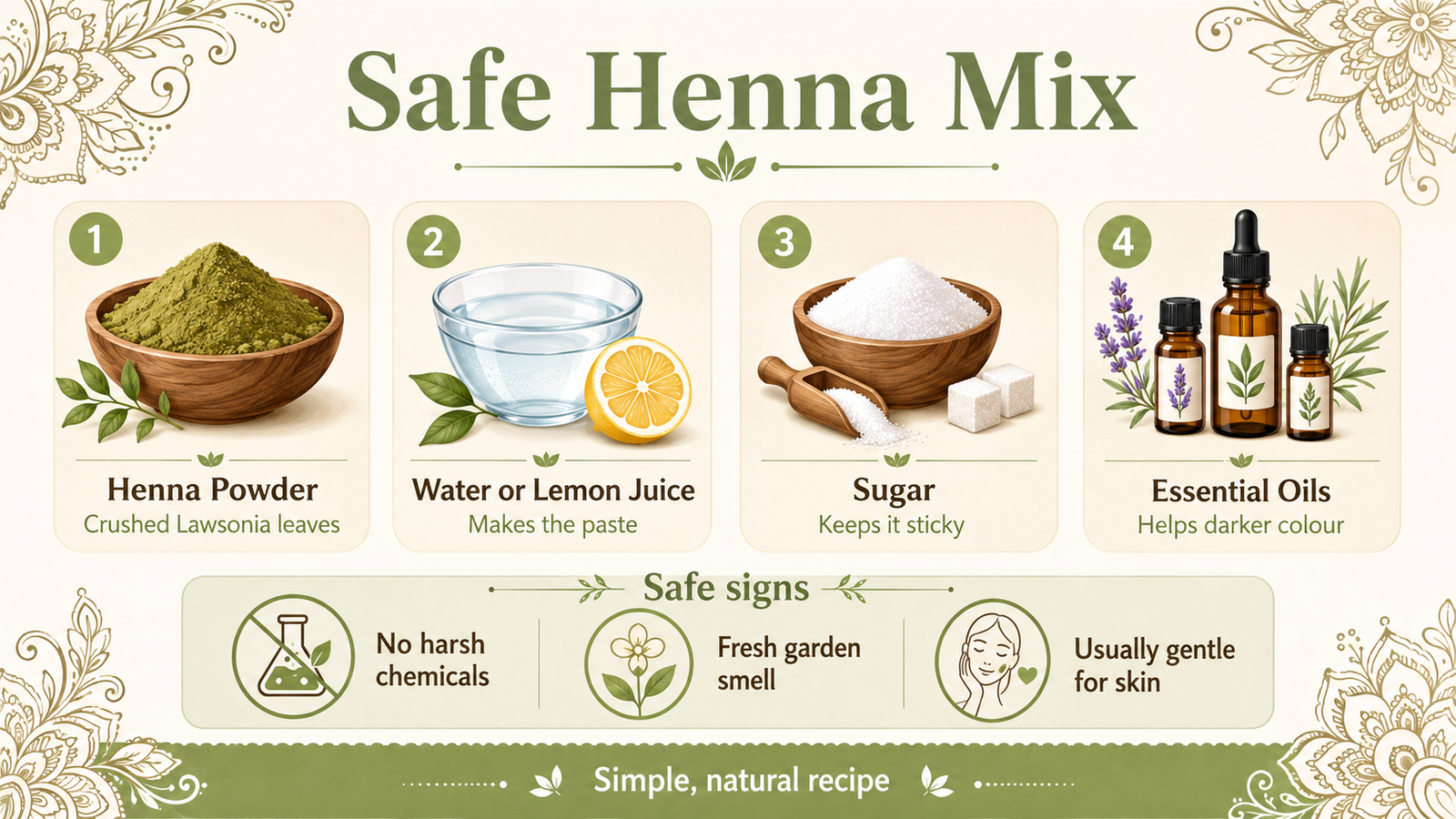
Natural henna paste only needs a few simple and safe ingredients. Usually, the mix contains henna powder, water and some white sugar. The sugar helps the paste stick to your skin without cracking. Most artists also add essential oils like lavender or tea tree oil. These oils help the dye release and make the paste smell lovely.
- Henna Powder: Crushed leaves from the Lawsonia plant.
- Water or Lemon Juice: The liquid that creates the paste.
- Sugar: Keeps the paste flexible and sticky on skin.
- Essential Oils: Help the colour become darker and richer.
You should always ask your artist about their specific ingredients. Real natural henna should never smell like chemicals or gasoline. If it smells like a garden, it is likely very safe. This traditional recipe has been used for thousands of years. It rarely causes any skin problems for healthy people or children.
How to Make Your Henna Design Look Darker and Better?
There are several tricks to get a very dark stain. First, keep the paste on your skin for many hours. Some people even leave it on overnight for the best results. You can wrap the area in medical tape to keep it warm. Heat is a great friend to the henna dye process.
You can also use a blend of lemon juice and sugar. Dab this sticky liquid onto the dried paste with a cotton ball. This prevents the paste from falling off too early in the day. Furthermore, stay away from harsh cleaning chemicals like bleach or dish soap. These chemicals will strip the colour away almost instantly. If you follow these tips, your henna will look bold and beautiful. Everyone will ask you how you got such a fantastic dark colour. Enjoy your art and show it off to all your friends!
Final Thoughts on How Long Does Natural Henna Paste Last On Skin
Natural henna is a simple and beautiful way to decorate your skin. Most results stay visible for 1 to 3 weeks, depending on aftercare. First, skin type and body area affect how long it stays. Next, daily habits like washing, sweating, and rubbing also change the fading speed. Palms and feet keep henna the longest, while soft skin areas fade faster. If you want a darker and longer stain, keep your skin clean, dry, and avoid hot water. In short, take care of your henna, and you will enjoy a rich, beautiful design for longer.
FAQs
1. How long does natural henna last on skin?
Natural henna usually lasts about 1 to 3 weeks. It fades slowly as your skin naturally sheds.
2. Can henna cover vitiligo?
Henna can temporarily cover light vitiligo patches. However, it does not treat or cure the condition.
3. How long does homemade henna paste last?
Homemade henna paste on skin usually lasts 7 to 14 days. It may last longer on thick skin like palms and feet.
4. Is natural henna safe for skin?
Yes, natural henna is generally safe for most people. Still, some people may have mild skin allergies, so a patch test is important.
5. How can I permanently hide vitiligo?
You cannot permanently hide vitiligo with henna or home methods. Treatments like medical creams, light therapy or cosmetic camouflage can help manage it, but only a dermatologist can guide the best option.
6. What happens if I put hair henna on my skin?
Hair henna may stain the skin, but it is not always safe for body art. It can contain additives that may cause irritation or allergic reactions.

Henna Course
Course Description :
- Certificate: Yes(Free)
- Accreditation: CPD Accredited
- Access: Lifetime