No products in the cart.
A noisy central heating pipe can turn a peaceful home into a frustrating one. Strange sounds like banging, whistling, tapping or gurgling often mean your heating system needs attention. The good news is that most heating pipe noises have simple causes and practical fixes.
More than 23 million UK homes use gas boilers for heating and hot water, so heating pipe noise is a common issue. Trapped air, sludge, loose fittings and pipe expansion are often the main causes.
In this guide, you’ll learn what creates these noises and the best ways to fix them and keep your heating system running quietly.
Why is Your Central Heating System Making So Much Noise?
Air bubbles, loose fittings and expanding metal cause most pipe noises. This is a common problem in many homes. When the water in your pipes gets hot, the metal grows a little bit. If the pipes are too close to wood, they rub and click. This creates the sounds you hear throughout the day.
Looking at the bigger picture, these sounds are usually a warning sign. They tell you that something in your heating system needs a little bit of attention. It might be a simple fix like letting out some air. Or, it could mean a part is loose and needs tightening. Understanding these sounds helps you keep your home peaceful and quiet.
What Does a Clicking Sound in Your Pipes Actually Mean?
A clicking sound usually means your copper pipes are expanding and rubbing against your floorboards. Metals grow when they get hot and shrink when they cool down. When the pipe moves, it scratches against the wooden joists. This creates the clicking or ticking sound you hear. The noise usually stops once the pipes heat up fully.
Also, tightly packed pipes can create this sound. If there is no room for the metal to move, it will jump. This jumping makes a sharp noise that travels through the walls. You can fix this by creating a little more space around the pipe. Simple changes can make your heating much quieter very quickly.
Why is Air Trapped Inside Your Radiators and Pipes?
Air enters the system through small leaks or during the initial filling of the pipes. This air gets trapped at the top of radiators because it is lighter than water. It creates a space where water cannot flow smoothly. This leads to cold spots at the top of your radiators and annoying gurgling sounds.
Furthermore, trapped air causes the pump to work harder than it should. When air and water mix, they create bubbles that splash around inside. This splashing is what makes the gurgling or “running water” noise. Bleeding the radiator is the best way to let this air out. It is a simple job that anyone can do at home.
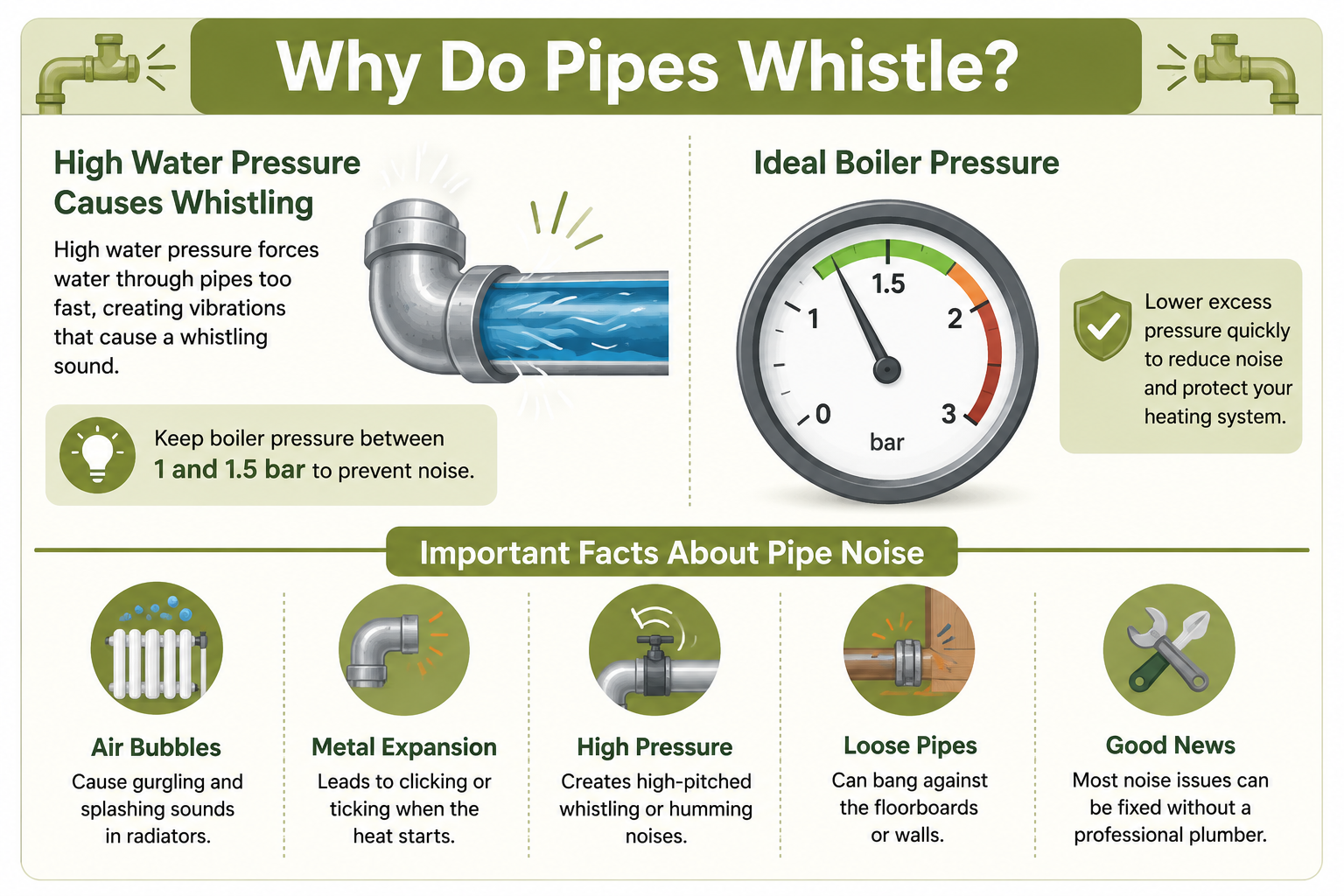
How Does High Water Pressure Cause Pipe Whistling?
High water pressure can cause whistling sounds in pipes. Keeping boiler pressure between 1 and 1.5 bar helps avoid this. Lowering excess pressure quickly reduces noise and protects the system.
Important Facts About Pipe Noise
- Air bubbles cause gurgling and splashing sounds in radiators.
- Metal expansion leads to clicking or ticking when the heat starts.
- High pressure creates high-pitched whistling or humming noises.
- Loose pipes can bang against the floorboards or walls.
- Most noise issues can be fixed without a professional plumber.
How Can You Successfully Bleed Your Radiators to Stop Noise?
You can bleed radiators by using a special key to open the air valve. First, turn off your heating and wait for the radiators to cool down. Insert the key and turn it slowly until you hear a hiss. This hiss is the trapped air escaping the system.
In addition to this, you should have a cloth ready to catch drips. Once water starts to come out, close the valve tightly. This process removes the air that causes gurgling and cold spots. Your radiators will now heat up fully and stay silent. It is a great way to improve your heating efficiency.
What is Water Hammer and Why Does it Cause Banging?
Water hammer happens when a valve closes quickly and stops the water flow. This creates a shock wave that travels through the entire pipe system. The energy has nowhere to go, so it makes the pipes shake. This shaking causes a loud “thud” or “bang” against the wood.
Looking at the bigger picture, this can happen if your taps are turned off too fast. It can also be caused by a faulty valve in the toilet or tank. Installing a shock arrestor is a great way to fix this problem. This small device acts like a spring to absorb the water’s energy. It stops the banging and protects your joints from leaking.
Why Do Loose Pipe Clips Lead to Constant Rattling?
Loose pipe clips allow the metal pipes to vibrate and bounce when water flows. Every time the pump turns on, the pipes move a tiny bit. If they are not held down firmly, they will hit nearby objects. This creates a rattling or vibrating sound that can be very annoying.
Furthermore, builders sometimes miss clips in hard-to-reach places like under the floor. You can add new plastic clips to keep the pipes steady and quiet. Plastic clips are often better than metal ones because they allow for expansion. They hold the pipe firmly but let it slide as it gets hot. This is a very cheap and effective way to stop noise.
How Does Boiler Kettling Create Loud Whistling Sounds?
Kettling is a loud banging or whistling noise from the boiler, similar to a boiling kettle. It happens when mineral build-up blocks water flow in the heat exchanger, causing steam bubbles to form and burst. A chemical cleaner can help remove this sludge and restore smooth water flow. This reduces noise, improves efficiency and helps your boiler run quietly for longer.
Simple Fixes for Your Heating System
- Use a radiator key to let out trapped air pockets.
- Replace old metal clips with modern plastic pipe clips.
- Check your boiler pressure gauge to ensure it is in the green.
- Install a shock arrestor to stop the banging of water hammer.
- Clean the system with chemicals to prevent boiler kettling.
How Can Pipe Lagging Help Quiet Your Central Heating?
Pipe lagging is foam insulation that you wrap around your heating pipes. It acts as a muffler for the sounds of moving water inside. This foam tube fits snugly and keeps the pipes from hitting the floor. It fills the space where noise usually grows and travels.
In addition to this, lagging helps keep your water hot for a longer time. This means your boiler does not have to work as hard to heat the house. It also prevents the pipes from clicking against the wooden joists. You should focus on the lagging pipes in the attic or under the floorboards. It is an easy DIY project that makes a big difference.
Why Should You Use Felt Strips for Ticking Pipes?
Felt strips are small pieces of soft fabric that stop pipes from clicking. When a pipe sits on a wooden beam, it creates friction when it moves. The metal jumps against the wood as it expands with the heat. Placing felt between the pipe and the wood stops this friction.
Looking at the bigger picture, the pipe now slides silently on the soft fabric. You can also use pieces of old carpet or thick cloth for this. This is a very common fix for noises that happen in the morning. It is a permanent solution that costs almost nothing to do. Your house will stay much quieter during the warm-up period.
How Do You Adjust Your Pump Speed to Reduce Noise?
A pump that is set too high will cause a constant humming noise. The pump pushes water through all the pipes and radiators in your home. If it moves too fast, it creates a lot of vibration in the metal. You might hear this hum in every room of the house.
Furthermore, most modern pumps have a small switch to change the speed. You can try turning the speed down to a lower setting to see if it helps. If your house still gets warm, the lower speed is perfectly fine. It uses less electricity and makes the whole system much quieter. This is a very simple fix that requires no tools at all.
What is a Power Flush and When Do You Need One?
A power flush deeply cleans your central heating system using high-speed water and chemicals. It removes sludge, rust and debris from the pipes. This helps water flow smoothly and reduces noise.
It also improves heating efficiency and fixes issues like cold radiator spots and boiler banging. A qualified plumber usually carries out the process, making the system feel clean and almost new again.
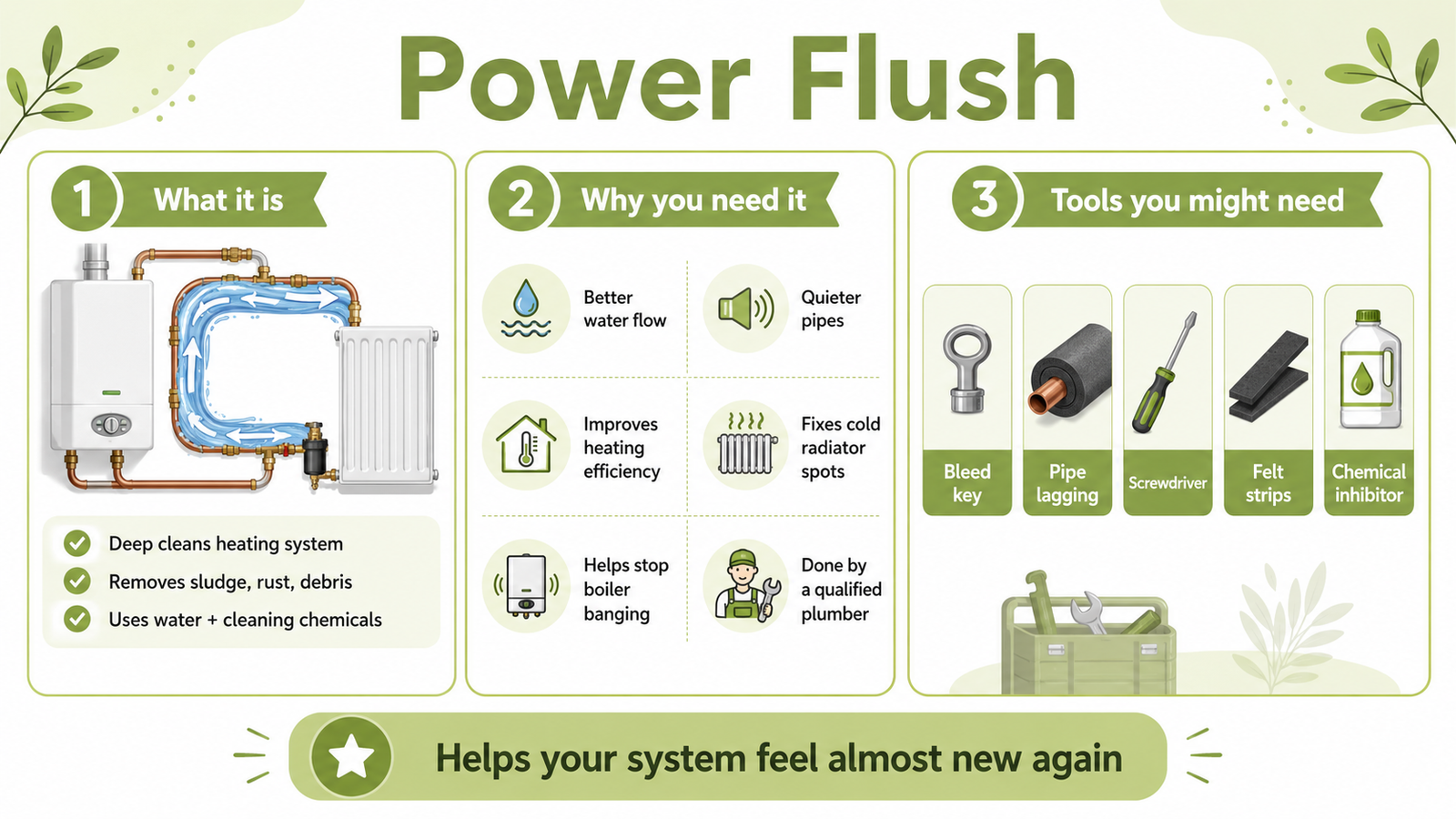
Tools You Might Need for the Job
- A standard radiator bleed key for air removal.
- Foam pipe lagging to insulate and quiet the pipes.
- A screwdriver to tighten any loose pipe clips.
- Felt strips or old carpet to cushion the pipes.
- A chemical inhibitor to keep the water clean.
Why are Thermostatic Radiator Valves Sometimes Noisy?
Thermostatic valves control the temperature of each radiator in your home. Sometimes, they create a vibrating or buzzing sound as they close. This usually happens when water flows through the valve in the wrong direction. People often call it a “chattering” noise because it sounds like teeth chattering.
You can check whether the valve sits on the correct side of the radiator. Most modern valves are bi-directional, so they work in either direction. However, older valves may need you to move them to the opposite side. This simple adjustment stops the vibration and keeps the radiator quiet.
How Does an Expansion Vessel Affect Pipe Stability?
The expansion vessel is a small tank that handles the extra pressure of hot water. If the vessel is broken, the pressure in your pipes will go up and down. This constant change in pressure causes the pipes to move and make noise. You might notice the boiler pressure gauge jumping around a lot.
Looking at the bigger picture, a healthy expansion vessel keeps the pressure very steady. If it fails, the safety valve might start leaking water outside. A plumber can check the air pressure inside the vessel to see if it works. Keeping this part in good shape prevents many different types of pipe noise. It is a key part of a quiet heating system.
Can You Use Spray Foam to Stop Pipe Vibrations?
Expanding spray foam is a great tool for holding loose pipes in place. If a pipe is vibrating inside a wall that you cannot reach, foam can help. You can spray a small amount into the gap around the pipe. The foam expands and hardens, creating a firm cushion that stops the movement.
Furthermore, you must be careful not to use too much foam at once. It expands very quickly and can put pressure on your walls if you are not careful. Use it only in small gaps to keep the pipes from rattling. This is a perfect solution for pipes that are hidden behind plasterboard. It stops the noise without you having to tear down the wall.
Why is a Magnetic Filter Important for Quiet Pipes?
A magnetic filter traps small metal and rust particles before they cause issues. Without it, sludge builds up and blocks pipes over time. This can lead to scratching, thumping or kettling noises in the boiler. Cleaning the filter during yearly servicing keeps the system clear and quiet. It also helps your heating run smoothly and last longer.
Maintenance Tips for a Silent Home
- Clean your magnetic filter every year to remove rust.
- Check the expansion vessel air pressure to keep the water steady.
- Ensure thermostatic valves are installed in the right direction.
- Use expanding foam for pipes hidden inside your walls.
- Keep the system water clean to prevent blockages and noise.
When Should You Call a Professional Plumber for Help?
You should call a plumber if the noises are very loud or if you smell gas. If you hear a loud “boom” when the boiler starts, turn it off immediately. Some noises mean a part is broken and could be dangerous. A professional has the tools to fix these issues safely and quickly.
In addition to this, a plumber can help if you have tried DIY fixes without success. They can perform a power flush or replace a broken pump for you. It is better to get help early before a small noise becomes a big leak. Safety is the most important thing when dealing with your home’s heating. A quiet system is a safe and happy system.
How Does Using a Chemical Inhibitor Prevent Pipe Noise?
A chemical inhibitor is a special liquid that you add to the heating water. It stops the inside of your pipes and radiators from rusting. If there is no rust, there will be no sludge to block the flow. This keeps the water moving silently through the whole house.
Looking at the bigger picture, the inhibitor also prevents lime buildup in the boiler. This is the best way to stop the whistling and banging of kettling. You only need to add it once every few years to keep things working. It is a very cheap way to protect your expensive heating system. Most plumbers recommend using it in every home.
Conclusion: How to Stop a Noisy Central Heating Pipe For Good?
In conclusion, a noisy central heating pipe is usually easy to fix with the right steps. Simple actions like bleeding radiators, tightening loose clips and adding insulation can make a big difference. Regular care also keeps your system efficient and quiet. If the noise continues, get help from a professional. With proper attention, you can enjoy steady heat and a peaceful home throughout the year.