No products in the cart.
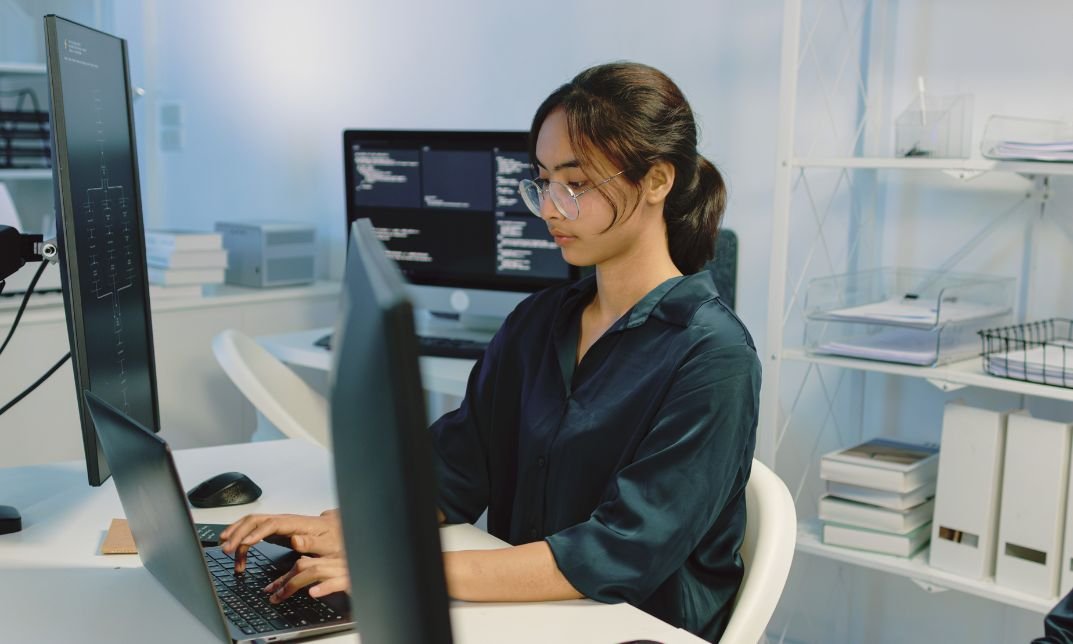
If you spend most of your working day staring at a screen, there’s a good chance your eyes have started to feel it. Maybe it’s tiredness by mid-afternoon, a bit of blurriness towards the end of the week, or headaches that seem to show up right after a long stretch on your laptop. What a lot of people don’t realise is that if you use a screen regularly for work, you’re actually entitled to have your eyes tested, and in many cases your employer has to pay for it.
This comes down to something called DSE regulations, and understanding them can save you money and catch problems with your eyesight before they start affecting your day to day life.
What Are DSE Regulations?
DSE stands for Display Screen Equipment, and the rules come from the Health and Safety (Display Screen Equipment) Regulations 1992. In short, they exist to protect people who use screens as a regular part of their job, whether that’s a desktop monitor, a laptop, or even a tablet used for several hours a day.
If your role means you’re on a screen most of the time, you’re classed as a “DSE user” under these rules. That status comes with a few rights, and one of the main ones is access to an eye test.
Is Your Employer Legally Required to Pay for an Eye Test?
Yes, if you’re a DSE user and you ask for one. Employers in the UK are required to offer eye and eyesight tests to employees who use display screen equipment as part of their normal work, and they have to cover the cost.
A common misconception is that this only applies if you already wear glasses or have a known eye condition. That’s not the case. The whole point of the test is to check whether screen use is affecting your eyes, glasses or no glasses. Another myth worth clearing up is that employers only have to pay towards designer frames or expensive lenses. In reality, they’re only obligated to cover the cost of a basic test and, if needed, basic corrective glasses suitable for screen work. Anything beyond that is usually down to you.
How to Request a DSE Eye Test at Work
Getting one arranged is usually simple. Start by asking your manager or HR team, since most companies already have a process in place, sometimes through a voucher scheme with a local optician or a preferred provider. If you’re not sure who to ask, your employee handbook or intranet often has the answer.
The test itself is a standard eye examination. The optician will check your vision, look at the overall health of your eyes, and ask about any discomfort you’ve noticed while working, things like eye strain, headaches, or dryness. It typically takes about twenty minutes.
Common Eye Problems a DSE Test Can Uncover
For a lot of people, a DSE eye test is the first eye examination they’ve had in years, and it can bring up more than expected. Some walk away finding out they’re mildly short sighted or long sighted without having noticed. Others are told they have digital eye strain, a very common issue among people who spend long hours on screens, which usually shows up as tired, sore, or dry eyes by the end of the day.
Astigmatism comes up fairly often too. It’s a condition where the surface of the eye has a slightly irregular shape, which causes blurred or distorted vision at certain distances. It’s not something screens cause, but plenty of people only discover they have it once they finally get tested. Astigmatism needs a different kind of correction to standard short or long sightedness, and for people who prefer contact lenses over glasses, toric contact lenses are the option built specifically for it. Unlike regular lenses, they’re designed to sit and stay in a fixed position on the eye, which is what corrects the irregular curve properly.
Choosing Corrective Options That Suit a Screen-Heavy Day
Whatever your eye test uncovers, it’s worth thinking about how any correction will hold up across a full day at a screen. Glasses are the simpler option for a lot of people, but contact lenses suit others better, particularly if glasses feel like a hassle with headsets, glare, or general comfort.
For anyone with astigmatism, daily contact lenses for astigmatism are a popular choice among screen workers, mainly because a fresh pair each day tends to feel more comfortable than reused lenses by the time evening rolls around. Toric daily contact lenses combine that daily convenience with the astigmatism correction itself, so you’re not compromising on either front. Whichever route you take, building in regular screen breaks and blinking more consciously (something we all forget to do when focused) makes a noticeable difference too.
Getting Fitted After Your DSE Eye Test
Once your test results are in, getting fitted with the right glasses or lenses is straightforward. Most people either go through the optician who carried out the test or take their prescription elsewhere. If you’re after lenses for astigmatism, UK opticians and online retailers alike can fit you once you have a valid, up to date prescription, so there’s no shortage of options.
Employer Checklist: Staying DSE Compliant
For employers, staying on the right side of DSE regulations isn’t complicated. It comes down to a few consistent steps:
- Assess each employee’s workstation for screen distance, lighting, and posture
- Offer eye tests to anyone who qualifies as a DSE user
- Cover the cost of basic corrective glasses if the test shows they’re needed for screen work
- Repeat eye tests periodically, since eyesight can change over time
Final Thoughts
A DSE eye test is something you’re entitled to, not a favour from your employer. Beyond ticking a compliance box, it can catch real issues, astigmatism included, before they start affecting your work, your focus, or just how you feel by the end of the day. If it’s been a while since your last check, it might be worth asking about one sooner rather than later.