No products in the cart.
How much do bricklayers get paid in the UK? The National Careers Service lists £25,000 to £45,000 per year. Skills England reports a median salary of £30,925. However, bricklayer pay varies with experience, location and work type. Employed bricklayers usually earn regular wages, while self-employed workers can set their own rates.
Some bricklayers also charge daily rates or work on price per brick. However, a project charge does not equal personal wages. Costs, materials and other expenses can reduce take-home pay. Demand for bricklayers also remains strong across the UK.
This guide covers average wages, day rates, price work and salary factors. It also explains how experience can affect earning potential.
What is the Average Bricklayer Wage in the UK?
The average wage bricklayer UK workers earn is £30,925. Skills England reports £30,925 as the median salary. The National Careers Service lists £25,000 to £45,000. Apprentices earn around £11,063, while newly qualified bricklayers earn £31,942.
Employed bricklayers earn about £40,102 yearly. Sole traders earn around £56,052, while Ltd company owners earn £59,002. So, how much does bricklayers get paid depends on experience and work type. The average wage for a bricklayer UK workers earn also changes with employment status.
How Much Do Bricklayers Get Paid Per Day?
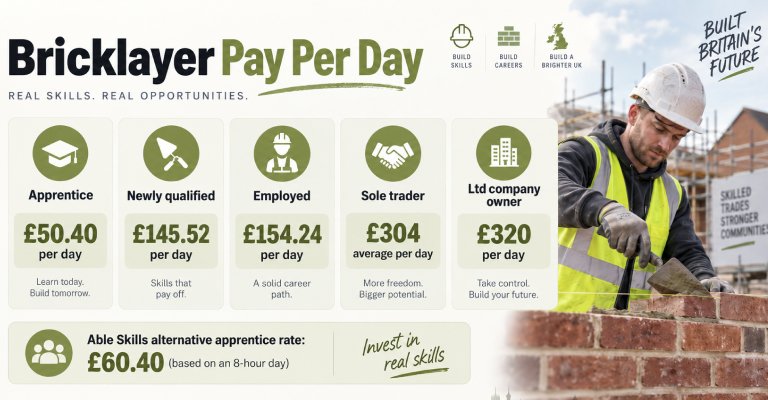
The day rate for a bricklayer depends on experience, location and contract type. These rates can differ between employment and self-employment.
- Apprentice: £50.40 for a working day
- Newly qualified: £145.52 per day
- Employed: £154.24 for a day’s work
- Sole trader: £304 on average per day
- Ltd company owner: £320 for a day’s work
Able Skills gives an alternative apprentice rate of £60.40. This figure uses an eight-hour working day. These bricklaying pay rates do not guarantee yearly income. Work gaps, expenses and contract length can affect total earnings.
Do Bricklayers Get Paid by the Brick?
Yes, some bricklayers use bricklaying price work instead of a fixed day rate. Builders often quote prices per 1,000 bricks to make larger jobs easier to price and compare. A common rate ranges from £650 to £1,500 per 1,000 bricks. This equals around £0.65 to £1.50 per brick.
However, this price usually covers the cost of laying the bricks, not the bricklayer’s personal take-home pay. Site access, wall design and working conditions can affect the final rate. Travel, tools and other costs can also reduce earnings. Bricklayers should compare price work with day rates before choosing how to charge.
How Much Do Bricklayers Get Paid Per Brick?
The price can change sharply when the brick type changes. Common bricks cost around £650 to £1,500 per 1,000, equal to £0.65 to £1.50 per brick. Engineering bricks range from £650 to £1,790 per 1,000 or £0.65 to £1.79 each. Clay facing bricks cost much more, at £2,260 to £5,000 per 1,000 or £2.26 to £5 per brick.
So, how much do bricklayers get per brick depends heavily on the brick and project. Handmade and specialist bricks can cost even more to lay. However, these figures show the customer’s laying charge, not personal wages. Therefore, how much money do bricklayers make per brick UK depends on expenses, costs and the work arrangement.
How Many Bricks Can a Bricklayer Lay Per Day?
A bricklayer can lay around 500 bricks per day in good conditions. This assumes a fully accessible site and suitable working conditions. However, daily output can change for several reasons. Brick type, wall design, site access and weather can all affect speed. Cutting and shaping bricks can also take extra time.
Higher output can improve bricklayer earnings through bricklaying price work. However, 500 bricks is only a guide. Bricklayers will not lay exactly 500 bricks every day. Skilled workers can improve their speed through experience, planning and good work methods.
How Much Can a Self-Employed Bricklayer Earn?
Self-employed bricklayers can earn more than employed workers. However, their income can change from month to month. Experience, job type and the number of projects can affect earnings. Business owners can also charge higher rates for their work. So, how much does bricklayer earn depends on how they run their business.
- A sole trader can earn around £56,052 a year or roughly £56,000.
- A Ltd company owner can earn around £59,002 a year or roughly £60,000.
- An employed bricklayer can earn around £40,102 a year.
What Costs Reduce Self-Employed Bricklayer Earnings?
A self-employed bricklayer does not keep all their business income. Regular work costs can quickly reduce the final amount. Tools, fuel, vehicle costs and insurance all affect earnings. Training, software, subscriptions and marketing can add more costs. A sole trader may spend around £7,006 on business costs.
This can leave about £37,589 from the original earnings. A Ltd company owner may spend around £10,325, leaving about £38,830. These figures are estimates, not guaranteed take-home pay. Tax and National Insurance can reduce income further. Therefore, bricklaying wages UK workers take home can differ greatly from their gross earnings.
Can Experience Increase a Bricklayer’s Earnings?
Experience can make a big difference to bricklaying wages UK workers earn. Apprentices can earn around £11,063 a year. Newly qualified bricklayers can earn about £31,942, while employed bricklayers can reach £40,102. As bricklayers gain experience, they often work faster and with greater accuracy.
Experienced workers can also take on complex projects and specialist work. Heritage brickwork is one example that needs extra care and skill. However, experience alone does not guarantee higher pay. Location, job type, skills and employment status also affect how much do bricklayers earn.
What Affects Bricklayer Pay in the UK?
Bricklayer pay UK rates can change from one job to another. Experience is important, but several other factors also affect earnings. Location, project type and employment status can all make a difference. Specialist skills and good-quality work can also help bricklayers earn more.
- Experience: More experience can lead to better-paying jobs.
- Location: London and the South East often offer higher pay. Living costs are also higher there.
- Project type: Commercial and residential projects can have different rates.
- Job type: New builds, extensions and restoration work have different needs.
- Employment type: Employed and self-employed workers can have different earnings.
- Specialist skills: Masonry and restoration skills can increase earning potential.
What Qualifications Can Help Bricklayers Earn More?
The right training can build stronger skills and open better job opportunities. A Level 2 Bricklayer apprenticeship usually takes 24 months, followed by a 3-month assessment. The Level 3 Craft Bricklayer route typically takes 18 months, plus a 3-month assessment.
College construction courses can also build useful practical skills. Training in restoration or heritage brickwork can open specialist work. Many construction sites also require a CSCS card or equivalent. These qualifications can support better bricklayer pay and stronger bricklaying pay rates.
Is Bricklaying a Well-Paid Career in the UK?
Bricklaying can be a good career if you enjoy practical work. The average wage for a bricklayer in the UK is £30,925. The National Careers Service gives a range of £25,000 to £45,000. Self-employed bricklayers can earn more, but business costs can reduce take-home pay.
The job also needs strength and skill. Bricklayers usually work 40 to 44 hours a week. They often work outdoors and travel between sites. With experience, they can take on more responsibility. They can also become self-employed or move into supervisory roles. This can create more earning opportunities over time.
What is the Future of Bricklayer Pay in the UK?
The future of bricklayer pay UK looks positive due to strong demand for skilled workers. Around 11,000 people work as bricklayers across the UK. Shortage evidence also supports continued demand, with an 18-month Temporary Shortage List recommendation.
However, demand does not guarantee higher pay for everyone. Good qualifications, experience and specialist skills can help workers find better jobs. Self-employment also offers another career route for skilled bricklayers. So, bricklaying wages UK depend on demand, skills, location and work type.
Final Thoughts
So, how much do bricklayers get paid? The official salary range sits between £25,000 and £45,000. Self-employed bricklayers can reach higher earnings, depending on their work and business setup. Day rates and price work also offer different ways to earn.
Experience, specialist skills and good qualifications can help workers find better opportunities. If you enjoy practical work, bricklaying can offer a useful career path with different ways to build your skills and income.
Ready to turn practical skills into career opportunities? Start learning with our Bricklaying Training Course.
FAQs About How Much Do Bricklayers Get Paid
1. How much should I pay a bricklayer per day?
- A bricklayer day rate in the UK can range from £145 to £320. The rate depends on experience and work type.
2. Do I need GCSE to be a bricklayer?
- You do not always need GCSEs to become a bricklayer. However, some bricklaying courses and apprenticeships require English and maths GCSEs.
3. Is bricklaying a dead-end job?
- No, bricklaying is not a dead-end career. You can gain skills, become self-employed or move into supervisory roles.
4. What is a bricklayer’s salary in the UK?
- A bricklayer’s salary in the UK ranges from around £25,000 to £45,000. Experience and work type can affect your pay.
5. Do bricklayers earn good money?
- Yes, bricklayers can earn good money in the UK. Experienced and self-employed bricklayers can earn higher incomes.
6. How hard is bricklaying?
- Bricklaying is physically demanding work. You lift materials, bend, stand for long periods and often work outdoors.

Bricklaying Training Course
Course Description :
- Certificate: Yes(Free)
- Accreditation: CPD Accredited
- Access: Lifetime