No products in the cart.
Bricklaying offers a practical career where you can build skills and shape homes. It also offers good career growth as you gain experience and qualifications. Many bricklayers start on building sites and later become self-employed. If this career interests you, the next step is learning how to enter the trade. So, how do you become a bricklayer in the UK?
Luckily, there are several ways to start your bricklaying career. You can complete an apprenticeship, study at college or learn through practical site work. Each route helps you build useful skills and gain experience. With time, you can take on bigger projects and improve your earnings.
This guide covers the main steps, training routes, qualifications and career opportunities.
What Does a Bricklayer Do During a Normal Working Day?
A bricklayer does many hands-on jobs during a normal working day. Building work starts with plans, measurements and site preparation. Careful work helps keep each wall strong, straight and neat. Good tool use also helps bricklayers complete jobs safely. Safety rules remain important throughout the working day.
- Read building plans: Follow drawings to understand what needs building.
- Measure areas: Check sizes before starting the brickwork.
- Mix mortar: Prepare mortar to join bricks and blocks.
- Lay bricks: Build walls with straight and even rows.
- Check walls: Use tools to keep walls level and straight.
- Repair brickwork: Fix broken bricks and old mortar.
Why Could Bricklaying Be a Good Career Choice?
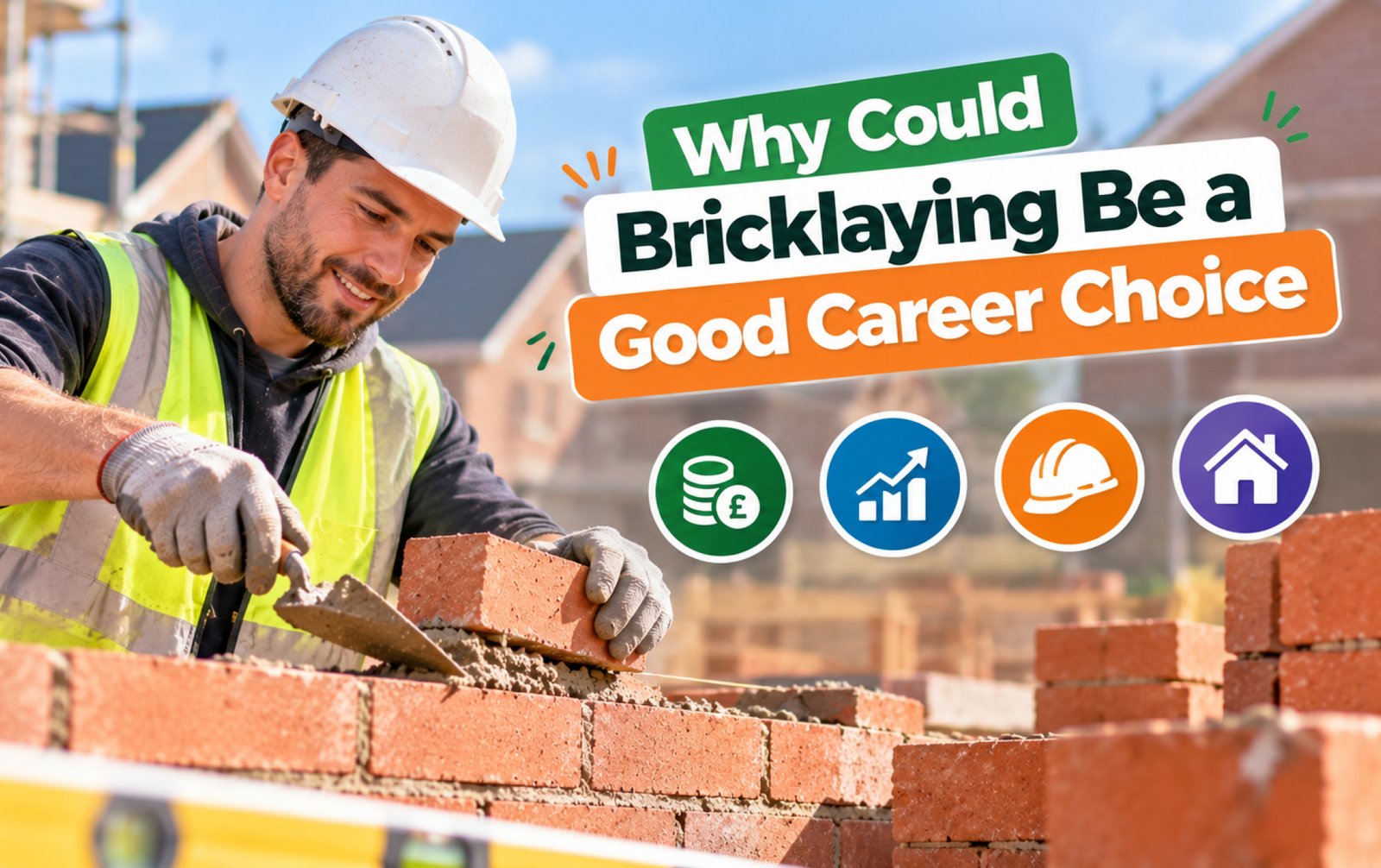
Bricklaying suits people who enjoy practical, hands-on work. You can see the results of your work each day. The job can include building homes, walls, extensions and other structures. You can also work indoors or outdoors on different sites. This variety can make the work more interesting.
Experience can help you take on more skilled work. You can learn specialist skills, such as brick restoration. Many bricklayers work for building companies or become self-employed. Self-employment can give you more control over your work. Your earning potential can also grow as your skills improve.
What Skills Do You Need to Become a Bricklayer?
Bricklaying needs good hand skills and careful work. You should be fit because the job can involve heavy materials. Teamwork helps you work well with other people on site. Good communication helps you understand tasks and follow clear instructions.
Patience helps you build walls neatly and correctly. You also need to manage your time well. Basic building knowledge can make your work much easier. Reading building plans is another useful skill for bricklayers. You can build these skills through training and work experience.
Which Qualifications Can Help You Become a Bricklayer?
You can choose from several courses to start bricklaying. A Level 1 course teaches basic building skills. A Level 2 course teaches you how to lay bricks. An apprenticeship lets you learn while working and earning money. These options can help beginners gain useful skills.
A Level 3 course teaches more advanced bricklaying skills. T Level courses can give you building knowledge and site practice. Your choice depends on your skills and career plans. Good qualifications can help you find more bricklaying jobs. They can also help you move into better roles.
How Do You Become a Bricklayer Through an Apprenticeship?
A bricklaying apprenticeship lets you learn while earning money. You work with skilled bricklayers on real building sites. This helps you learn the trade through daily practice. You also spend time at college or a training centre. A Level 2 apprenticeship teaches basic bricklaying skills.
Later, you can move to a Level 3 apprenticeship. Some courses ask for English and maths skills. The exact rules depend on the course and employer. This route suits people who enjoy practical work. You gain useful skills and work experience at the same time.
Can You Become a Bricklayer Without Formal Qualifications?
There are several ways to start a career in bricklaying. Some people begin as labourers on building sites. They learn simple tasks by working alongside skilled bricklayers. This gives them real experience and helps build their confidence. You can also take a bricklaying course or apprenticeship. However, some employers still ask for specific training or qualifications.
- Start as a labourer: Learn basic building tasks on a real site.
- Learn from others: Watch skilled workers and follow their instructions.
- Gain experience: Practise bricklaying skills and learn how sites work.
- Take training: Join a course to improve your building skills.
- Get qualifications: Recognised training can help you find more jobs.
- Check job needs: Some employers require specific skills or qualifications.
How Do You Become a Bricklayer With No Experience?
Starting without experience can feel hard, but simple steps can help. Take a beginner course to learn basic building skills. You can learn about tools, bricks, mortar and simple wall building. Look for entry-level site work and learn from skilled bricklayers.
Regular practice can improve your skills and confidence. You can also work towards a recognised bricklaying qualification. Practical experience will help you understand how building sites work. Once you gain enough skills, start applying for bricklaying jobs.
What CSCS Card Do You Need for Bricklaying Work?
A CSCS card shows your skills and training for construction work. Many building sites check cards before workers can start. You may need to pass a Health, Safety and Environment test. The card you need depends on your job and training.
Different bricklayers can need different CSCS cards. Your qualifications will help decide which card suits you. Check the latest card rules before starting work. The employer may also have extra site rules. A correct card can help you access construction sites.
How Much Can a Bricklayer Earn in the UK?
Bricklayer pay depends on experience, skills, location and employer. The National Careers Service lists starting pay at around £25,000. Experienced bricklayers can earn around £45,000 a year. More experience can help workers earn higher wages.
Some bricklayers choose self-employed work after gaining enough experience. This can offer more control over jobs and working hours. However, self-employed earnings can change from month to month. Costs such as tools, travel and insurance can also reduce take-home pay.
How Long Does It Take to Become a Bricklayer?
The time you need depends on the training route you choose. A short course can teach basic skills in a few weeks. College courses usually take longer, depending on the course type. Apprenticeships take more time because you work and learn together. Work-based training also depends on your progress and practical skills.
- Short course: Basic bricklaying skills can take several weeks to learn.
- College course: The time depends on your chosen course and level.
- Apprenticeship: This route takes longer because you work and study.
- Work-based training: Your progress depends on practice and work experience.
- Full skills: Regular practice helps you work faster and more safely.
What Career Options Can You Choose After Bricklaying?
Bricklaying experience can open several career paths in construction. You can become an experienced bricklayer and take on harder jobs. With more experience, you could become a team leader or site supervisor. Specialist work can include heritage brickwork and building repairs.
Some bricklayers choose self-employed work and take their own jobs. Others gain business skills and start their own construction company. Further training can help you learn new building skills. Experienced workers can also move into teaching or training roles. Your skills, experience and interests can help shape your next career step.
How Do You Become a Bricklayer and Build a Long-Term Career?
You can enter bricklaying through college, an apprenticeship or site work. Recognised qualifications can help you build useful skills and find jobs. Practical experience also helps you become faster and more confident. Following safety rules helps protect everyone on the worksite.
With more experience, you can learn specialist bricklaying skills. Some workers move into team leader or supervisor roles. Others become self-employed and take on their own jobs. Keep learning and improving your skills as your career grows. Good training, strong skills and real experience can help you build a lasting bricklaying career.
Final Thoughts
So, how do you become a bricklayer? Just start with a course, apprenticeship or site work. Then build your skills through regular practice and real work experience. Getting a recognised qualification can also help you find jobs. Follow safety rules and keep learning as you gain experience. Later, you can learn specialist skills or become self-employed. With the right training and effort, bricklaying can offer a rewarding career.
Looking to take your first step into bricklaying? Explore our Bricklaying Training Course and build the skills you need.
FAQs About How Do You Become a Bricklayer
1. Is 40 too old to become a bricklayer?
- Age 40 is not too late to start bricklaying. You can learn through a course, apprenticeship or site work. Your previous work skills can also help you learn faster.
2. How long does it take to train as a bricklayer?
- Training time depends on your chosen route. Short courses take weeks, while apprenticeships take longer.
3. Is it hard to be a bricklayer?
- Bricklaying can be physically demanding and needs careful work. You may lift materials, work outdoors and spend long periods standing. Training and regular practice can make the job easier.
4. Does bricklaying need GCSE?
- Some bricklaying courses and apprenticeships require GCSEs for entry. English and maths GCSEs can also be part of the requirements. However, each course and employer can have different entry rules.
5. Do bricklayers get paid good money?
- Bricklayers can earn a good income as their skills improve. The National Careers Service lists £25,000 for starters and £45,000 for experienced workers. Pay can also change by location and experience.
6. What is the 3:4:5 rule for bricklaying?
- The 3:4:5 rule helps bricklayers make a right angle. It uses measurements of 3, 4 and 5 units. This simple method helps check that corners meet at the correct angle.
7. Is bricklaying a dead-end job?
- Bricklaying can offer several ways to grow your career. You can become a supervisor, learn specialist skills or work for yourself. Some experienced bricklayers also start their own construction businesses.