Sherlock Holmes could uncover a whole case from one small clue. Today’s private detectives also look closely at small details, but they must follow the law and back up every finding. If you want to know how to become a private detective UK, start by learning research, observation and report-writing skills. You do not need a police or military background. You also do not need a general private investigator licence at present. Most people begin with suitable training and guided work experience. After that, they may join an agency, work as a freelancer or start their own business.
Now, let’s explore how to become a private detective in the UK in detail, including the key skills, training, legal rules and experience you need.
What Does a Private Investigator Do?
A private investigator gathers facts and checks claims for a client. The client may need help with a legal or business issue. In many cases, the job also covers personal matters. The terms private detective and private investigator usually mean the same thing.
A private detective in the UK may deal with tasks such as:
- Conducting surveillance and recording clear observations
- Tracing missing people, debtors or important witnesses
- Completing background and due diligence checks
- Interviewing witnesses and other relevant people
- Investigating fraud, theft or workplace concerns
- Gathering evidence and writing factual reports
Private detectives may work from an office, car or public place. Their workplace usually depends on the case. A large part of the job also involves online research and checking records. It does not always involve exciting fieldwork. In practice, clear reports often matter more than dramatic action.
How to Become a Private Detective UK: What Steps Should You Follow?
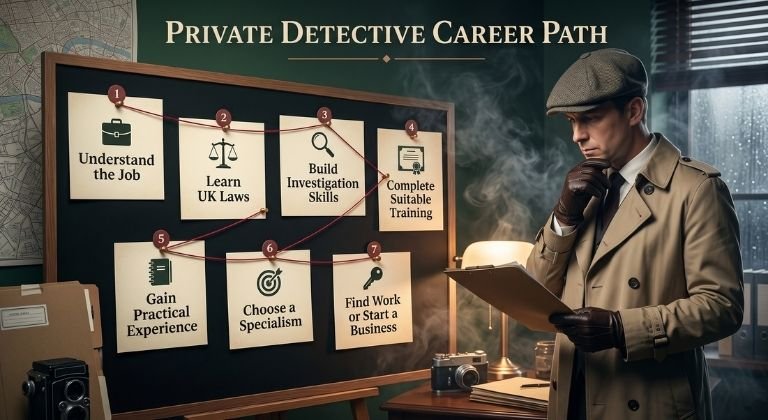
There is no single approved route into private investigation. However, a clear plan can help you avoid mistakes. It can also help you choose better training. The seven steps below show a practical UK route.
1. Understand the Real Nature of the Job
Research the job before buying any training. Read current job adverts and agency service pages. Also, learn about working hours and daily tasks. This will help you see if the career suits you.
Private investigation often includes travel, waiting and careful note-taking. Normally, you may work evenings, weekends or early mornings. Some cases can involve upset clients or tense situations. Because of this, you need patience and calm judgement.
2. Study UK Investigation and Privacy Laws
Learn the laws that affect the job. Focus on privacy, data protection, harassment and trespass. Also, learn how the rules affect online research. One poor choice can harm both you and your client.
Private detectives often collect names, addresses, photos and other details. As a result, they need a lawful reason to use that data. They must also keep it safe and delete it when needed. Clear records can help show why the work was fair.
The UK GDPR and Data Protection Act 2018 remain important. Meanwhile, the Data (Use and Access) Act 2025 changed some rules. You do not need to become a lawyer. However, you must know when to get legal help.
3. Develop Core Investigation Skills
Once you know the legal limits, start building key skills. Mainly, focus on research, observation, interviews and report writing. These skills support almost every type of case. You can practise many of them without a real client.
For example, research a company through public records. Then, put the facts into a clear timeline. Also, compare several sources before trusting one claim. This simple work can improve your judgement.
You should practise report writing from the start. A good report says what happened and when. It also explains how you found the facts. It should avoid guesses, emotion and weak claims.
4. Choose Suitable Private Investigator Training
Training can teach useful methods and legal duties. However, no course can promise work or high pay. Before you pay, read the full course plan. Also, check how the provider tests each learner.
The Level 3 Award for Professional Investigators is one current option. It covers planning, risk checks and legal methods. It also covers interviews, evidence and report writing. The course began in its updated form in January 2026.
5. Gain Practical and Supervised Experience
Training gives you knowledge, but real work builds judgement. At first, look for junior roles inside an agency. You may begin with record checks or simple research. These tasks show how real cases move forward.
Related jobs can also give you useful skills. Insurance claims work teaches you to compare facts. Meanwhile, compliance and fraud roles build research skills. Legal support work can teach you about court files.
Ask skilled investigators to review your early reports. Also, learn how they store evidence and update clients. Avoid high-risk surveillance when you are still new. Beginners should not handle dangerous work alone.
6. Choose a Suitable Investigation Specialism
After gaining basic experience, choose an area that fits you. You could focus on surveillance, fraud or tracing. Other choices include process serving and business checks. Each area needs different skills and tools.
For example, surveillance needs patience and strong observation. Business cases may need file checks and money research. Meanwhile, OSINT work uses public online sources. Digital work also needs strong data security.
7. Apply for Jobs or Prepare Your Own Business
Decide between agency work and self-employment. Agency work often gives beginners more support. You may receive case systems, templates and feedback. Because of this, it can offer a safer start.
On the other hand, self-employed detectives set their own fees. They also choose which cases to accept. However, they must find clients and manage every cost. They also need insurance, contracts and secure file storage.
How to Become a Private Detective UK with No Experience?
Yes, you can enter this career without direct experience. However, you should build useful skills before taking a real case. A short online course may teach the basics. It cannot replace good judgement and supervised work.
Police or military experience can help, but it is not required. Former officers may know more about evidence and interviews. On the other hand, journalists and legal staff also bring useful skills. Insurance, security and compliance work can help too.
There is no set private investigator apprenticeship UK route at present. Still, related investigation programmes may build useful skills. For example, public sector compliance training covers interview and case work. It does not directly qualify you as a private detective.
What Are the Private Investigator Requirements in the UK?
There is no single legal entry standard for every private investigator in the UK. However, most agencies look for honesty, clear writing and careful judgement. They may also prefer flexible working hours, reliable transport and a full driving licence. These skills help with travel, surveillance and client meetings.
Good computer skills are also important. Private investigators often use databases, secure file storage and online research tools. They must keep clear records and protect private information. Employers may also ask for references, a background check or proof of relevant training.
Do Private Investigators Need a DBS Check?
A DBS check is not compulsory for all private detectives. But some agencies or clients may ask for one. A basic DBS check shows unspent convictions. Higher checks only apply when a role meets the rules.
Since January 2026, some self-employed people can apply through an umbrella body. However, the role must still qualify for that check. Scotland and Northern Ireland use different systems. Check the rules for the area where you work.
Which Private Investigator Qualifications Can Help?
The phrase private investigator qualifications UK can confuse new learners. You do not need one set qualification for every role. However, trusted training can improve your skills. It can also show employers that you take the job seriously.
A useful course should cover planning, interviews and evidence. It should also teach clear reporting and work ethics. Meanwhile, extra study in OSINT or fraud may help. Always read the full course plan before you enrol.
Do Private Investigators Need a Licence in the UK?
No, private investigators do not currently need a general licence in the UK. Private investigation is not a separate SIA licence category. The SIA mainly licenses security work, such as door supervision, guarding, close protection and public-space CCTV. This means you can work as a private investigator without holding a general SIA investigator licence.
Some older articles mention plans for a private investigator licence UK workers would need. However, those plans did not become part of current UK law. You may still need an SIA licence if your job includes a separate licensed security task. In simple terms, the work you carry out decides whether you need a licence.
Which Laws Must Private Investigators Follow?
Private investigators must follow several UK laws when handling a case. These rules affect surveillance, personal data and online research. They also protect people from harassment, fraud and unlawful access. No single law covers all private investigation work.
Key UK laws that private investigators must follow are:
- UK GDPR: Sets rules for collecting, using and storing personal information.
- Data Protection Act 2018: Supports data protection rights and duties across the UK.
- Data (Use and Access) Act 2025: Updates parts of the UK data protection system.
- Protection from Harassment Act 1997: Covers repeated actions that make someone feel unsafe or distressed.
- Computer Misuse Act 1990: Makes hacking and unlawful access to online accounts a criminal offence.
- Fraud Act 2006: Covers dishonest claims and false representation in England and Wales.
Private investigators should collect only the information needed for a case. They must store files safely and record why their work was lawful. They cannot hack accounts, use stolen passwords or enter private property without permission.
Some legal rules differ across England and Wales, Scotland and Northern Ireland. For this reason, investigators should check the law where they plan to work. Complex cases may also need advice from a qualified legal professional.
What Powers Do Private Investigators Have?
Private investigators do not have special police powers. They cannot force people to answer questions. Demanding private records or entering private land is also not allowed. Instead, they rely on legal research and willing help.
Public-place surveillance may be lawful in some cases. Still, repeated following can become harassment. Trespass may also lead to legal action. A good investigator should check need, risk and fairness first.
Which Skills Do Private Investigators Need?
Private investigation needs research, people and writing skills. Generally, employers want calm and careful workers. They also need people who can protect private data. The skills below support most types of cases:
- Observation: Notice small details and changes.
- Patience: Stay alert during long waits.
- Research: Find and check facts from legal sources.
- Communication: Speak clearly with clients and witnesses.
- Report writing: Record facts without adding guesses.
- Discretion: Protect client and subject details.
- Critical thinking: Test claims against the facts.
- Technology skills: Use digital tools safely.
What matters most is proper evidence handling. Detectives should record when and where they found each item. They should keep original files and protect them from changes. Clear records may help a lawyer or court later.
How Much Do Private Investigators Earn in the UK?
Private investigators in the UK may earn between £24,200 and £41,711 per year on average. However, earnings can change based on experience, location and working style. Agency staff may receive a fixed salary, while freelancers often earn different amounts each month. Business owners may earn more, but they also pay higher running costs.
Typical UK private investigator salary ranges are:
- Beginner or newly qualified: £20,000 to £28,500 per year
- Experienced private investigator: £35,000 to £57,000 per year
- Senior investigator or agency owner: £70,000 to £100,000 or more
New investigators often start with research, tracing or subcontract work. As they gain experience, they may move into fraud, corporate cases or specialist surveillance. Pay may come from hourly or daily rates for freelance investigators. Still, business costs and quiet months can reduce their final income. Meanwhile, agency owners may earn more from larger cases. The owner may keep much less after paying staff, tax and marketing costs.
Where Can You Find Private Investigator Jobs?
Private investigation jobs appear under many titles. For example, you may see field investigator or surveillance operative. Fraud investigator and claims investigator are also common. Meanwhile, compliance roles can lead to business cases.
Vacancies may appear on agency sites and large job boards. LinkedIn can also show useful roles. You can also contact local agencies with a clear email. A polite message may uncover junior work.
Agency work may offer more support and steadier work. Independent work gives you more control over cases. However, it also brings more legal and financial duties. Many detectives gain agency experience first.
How Can You Start a Private Investigation Business in the UK?
To start a private investigation business in the UK, choose your services, register the business and set up secure systems. You must also protect client data, use clear contracts and follow UK business rules. A simple plan will help you control costs and avoid legal problems.
The main steps are:
- Choose a clear service and target client.
- Decide whether to trade alone or form a company.
- Check whether you must pay the data protection fee.
- Arrange suitable business insurance.
- Create contracts, terms and privacy documents.
- Set up secure case and evidence storage.
- Set clear prices and payment terms.
- Build trusted links with legal and business clients.
Most small UK businesses choose sole trader or limited company status. A sole trader setup is easier to start and manage. Meanwhile, a limited company is separate from its owners. Your choice will affect tax, paperwork and financial risk.
Before accepting a case, check the client’s identity and legal reason for the work. You should also look for conflicts of interest. If a client asks for illegal access, harassment or stolen data, refuse the case. A clear client-check process can protect your business and reputation.
Professional membership is not required by law. However, strong checks, clear rules and a complaints process can build trust. The title ‘private investigator’ is not protected in the UK. Because of this, proof of training, insurance and good practice can help clients choose you.
Startup costs will depend on your business model. You may need training, insurance, software, travel and secure storage. Start with the tools you truly need. Then, add more equipment as your client base grows.
What Are the Advantages and Disadvantages of Private Investigation?
The major advantages and disadvantages of private investigation are:
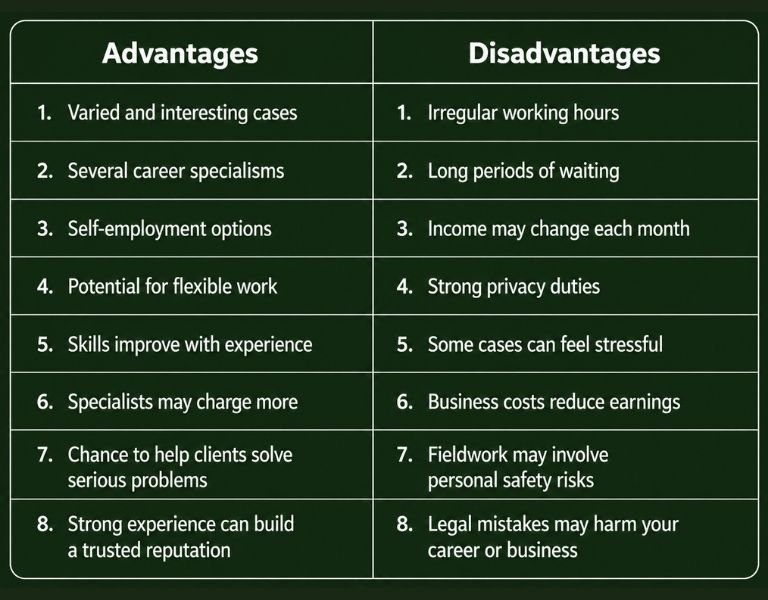
Private investigation may suit patient and independent people. It can also suit strong researchers who enjoy solving real problems. However, the work may not suit people who need fixed hours or regular income.
Is Becoming a Private Detective Worth It?
Yes, becoming a private detective can be worth it for the right person. The role offers varied work, career freedom and several specialist paths. However, it also brings long hours, legal duties and uneven income. You need patience, care and strong judgement to succeed.
Learning how to become a private detective UK clients can trust takes more than a short course. Start with legal knowledge, useful training and supervised experience. Then, build your research, observation and report-writing skills. Over time, you can join an agency, work alone or start your own investigation business.
Frequently Asked Questions (FAQs)
How Much Do Private Detectives Make in the UK?
- Private detectives may earn around £20,000 to £28,500 when starting. Experienced investigators may earn £35,000 to £57,000. Freelancers and agency owners may earn more, but their income can change each month.
What Does a Private Investigator Do Daily?
- A private investigator may check records, trace people and carry out surveillance. They also speak with clients, review evidence and write reports. Some days involve fieldwork, while others involve online research.
Are Private Detectives Legal in the UK?
- Yes, private detective work is legal in the UK. Private investigators do not need a general SIA licence. However, they must follow privacy, data protection and harassment laws.
What GCSEs Do You Need to Be a Private Investigator?
- There are no set GCSE requirements for this career. However, English, Maths and computer skills can help. Clear writing is important because investigators must prepare accurate reports.
Can Anyone Become a Private Investigator in the UK?
- Most adults can enter this career if they have the right skills and can work legally in the UK. Police experience is not required. However, employers may ask for training, references or a background check.
What Are the Downsides of Being a PI?
- The hours can be long and unpredictable. You may spend hours waiting during surveillance. Income can also change, and some cases may feel stressful.
What Disqualifies You From Being a PI?
- There is no single legal ban for all private investigators. However, serious dishonesty, illegal working methods or poor data handling can damage your chances. If the role also needs an SIA licence, criminal record and right-to-work checks will apply.

Private Investigator course
Course Description :
- Certificate: Yes(Free)
- Accreditation: CPD Accredited
- Access: Lifetime