No products in the cart.
A UK winter evening feels worse when the heating is on, yet one room still acts like it missed the memo. You touch the radiator, and the bottom feels warm, but the top stays cold. Often, trapped air is sitting inside and blocking hot water from moving properly. That simply means your radiator may just need bleeding. So, how to bleed a radiator effectively when the radiator heats unevenly? Turn the heating off, let the radiator cool, open the bleed valve slowly, and listen for the hiss. When water starts to drip, close the valve and check your boiler pressure.
Now, let’s dive deeper and explore the safe way to bleed your radiator at home in detail.
What Does Bleeding a Radiator Mean?
Radiator bleeding is the process of letting trapped air escape from a radiator. This air can stop hot water from moving properly. So the radiator may feel cold at the top, even when the heating is on. Once the air leaves, the radiator can heat more evenly.
When people hear the word “bleeding,” they often worry that they are going to drain the entire heating system. In reality, you are only letting out a small pocket of air through a tiny valve at the top of the unit. You are not removing the water that keeps your house warm; you are simply making room for it to do its job.
The simple fact is that a cold radiator is not always broken. Sometimes, it just has trapped air inside. By opening the bleed valve, you allow that air to hiss out, letting the hot water rise to the top where it belongs.
Why Does Trapped Air Make a Radiator Cold?
Trapped air usually rises to the top of the radiator. Hot water then struggles to reach that area. That is why the bottom may feel warm, but the top stays cold. This trapped air can also make the heating system work harder than needed.
Because air is lighter than water, it naturally floats to the highest point in your radiator. Since hot water enters from the pipes and tries to fill the space, it gets blocked by this “air lock.” This means the metal at the top of the radiator never gets hot, and your room stays cold.
Research suggests that trapped air can reduce radiator performance by around 6%. While that might sound small, it adds up across a whole house. Your boiler has to run for longer to reach the temperature set on your thermostat, which is neither efficient nor helpful for your energy bills.
How Do You Know Your Radiator Needs Bleeding?
Your radiator may need bleeding if the top feels cold, the room warms slowly, or you hear gurgling sounds. These signs often mean trapped air is sitting inside the radiator. Check each radiator carefully once the heating has warmed up.
The interesting thing is that your radiator often tells you what is wrong. You just need to check the signs.
Signs Your Radiator Needs Bleeding
- The top of the radiator is cold, but the bottom is warm
- Gurgling, clicking, or bubbling sounds when the heating is on
- The room takes much longer to heat up than usual
- One specific radiator is much colder than all the others in the house
- The heating is definitely on, but the room stays chilly
- The radiator feels completely cold despite the pipes being hot
What Tools Do You Need to Bleed a Radiator?
You only need a few simple tools to bleed a radiator. A radiator key opens the bleed valve. A towel and jug help catch small water drips. Some modern radiators may also work with a flat-head screwdriver.
You do not need an expensive toolkit for this job. Most radiator keys are very cheap and can be bought from local UK DIY shops, hardware stores, or even large supermarkets. If you have moved into a new home, check the top of your kitchen cupboards or the utility room, as previous owners often leave them behind.
Tools Needed
- Radiator key (standard size fits most UK homes)
- An old towel or rag to protect your carpet
- Small jug or bowl to catch water
- Cloth to wipe away any splashes
- A flat-head screwdriver (only if your valve has a slot in the middle)
Which Radiator Should You Bleed First?
If only one radiator has cold spots, start with that one. If several radiators need bleeding, check the home in a clear order. Many homes work best when you start near the boiler and move through each room.
What matters most is that you check each radiator properly, not randomly. If you have a two-storey house, the best approach is usually to start with the downstairs radiators. Begin with the one closest to the boiler and work your way along the circuit.
Once you have finished the ground floor, move upstairs and follow the same pattern. However, there is no need to bleed every single radiator in the house just for the sake of it. If a radiator is already heating perfectly from top to bottom, leave it alone. Bleeding a radiator that has no trapped air will only result in water coming out immediately, which can lower your boiler pressure unnecessarily.
How to Bleed a Radiator Effectively Without Making a Mess?
To bleed a radiator safely, turn the heating off and let the radiator cool. Then open the bleed valve slowly with a radiator key. Let the air escape. When water starts to drip, close the valve and check the boiler pressure.
If you want to bleed radiator step by step, follow this order:
- Turn off the central heating and wait for the radiators to cool down completely.
- Place your towel on the floor directly under the bleed valve.
- Hold your small jug or bowl just beneath the valve to catch any drips.
- Insert the radiator key into the square groove of the bleed valve.
- Turn the key slowly in an anti-clockwise direction.
- Stop turning as soon as you hear a clear hissing sound.
- Keep the valve open until the hissing stops and a constant trickle of water appears.
- Turn the key clockwise and make sure the valve is closed.
- Wipe away any moisture from the radiator to prevent rust.
- Once all radiators are done, check your boiler pressure gauge.
Expert note:
Most radiators only need a small valve turn. Do not open it fully. A quarter turn is usually enough to let the air out.
Safety Warning:
Never bleed a radiator while the heating is on. Hot water can splash out under pressure and burn your skin. Always wait for the system to cool.
How Do You Know If Bleeding Worked?
You will know bleeding worked when the radiator heats more evenly after the heating comes back on. The top should no longer stay cold while the bottom feels warm. You should also hear fewer gurgling sounds from the radiator.
Tested Home Check:
After bleeding the radiator, turn the heating back on for 10–15 minutes. Then check the top and bottom again. If both feel warm, the bleeding worked. If the top is still cold, there might be more air to release, or there could be a different issue with the system.
What Should the Hissing Sound Tell You?
A hissing sound means trapped air is leaving the radiator. This is normal. Keep the valve slightly open until the hissing stops and water starts to drip. Then close the valve firmly, but do not overtighten it.
The surprising part is that the sound is a good sign. It means the radiator is releasing trapped air. If you open the valve and water comes out immediately without any hissing, it means there was no air in that specific radiator. In that case, close the valve immediately. You are listening for that “gas” sound, which proves the air lock is being cleared.
What Mistakes Should You Avoid When Bleeding a Radiator?
The most common mistakes are bleeding the radiator while the heating is on, opening the valve too much, and forgetting to check boiler pressure. These small mistakes can cause burns, leaks, water mess, or pressure problems after bleeding.
The biggest issue is that many people finish too quickly and forget the pressure check. If you have several radiators with a lot of air in them, your boiler pressure will drop once that air is replaced by water from the system.
Common Mistakes
- Bleeding the radiator while the pump is running or the water is hot
- Opening the valve so far that the internal screw falls out
- Forgetting to put a towel down on the carpet or floorboards
- Leaving the bleed valve slightly loose, leading to a slow leak
- Ignoring the boiler pressure gauge after the job is finished
- Using pliers to force a stuck valve instead of a proper key
- Continuing to bleed after a steady stream of water has started
How Do You Check Boiler Pressure After Bleeding?
Boiler pressure can drop after bleeding because air and a small amount of water may leave the system. Most boilers should sit around 1.0 to 1.5 bar when off, or around 2 bar when on. Always check your boiler manual.
The fact is that bleeding is not fully done until you check the pressure gauge. Look for the small dial or digital display on the front of your boiler. If the needle has dropped into the “red” zone or below 1 bar, your heating might not turn on at all.
To fix this, you may need to use the filling loop (usually two small taps under the boiler) to let a little more water into the system until the pressure returns to the normal range. If you are not comfortable doing this, it is time to look at your manual or call someone who knows how.
What If the Radiator Still Feels Cold After Bleeding?
If the radiator still feels cold after bleeding, trapped air may not be the main issue. The problem could be a stuck TRV pin, sludge, low boiler pressure, poor balancing, or a faulty bleed valve. At this stage, check carefully before doing more.
Sometimes the thermostatic radiator valve (the dial with numbers) gets stuck. You can sometimes fix this by removing the plastic cap and gently tapping the little metal pin underneath to loosen it. If the radiator is hot at the top but cold at the bottom, this is usually a sign of “sludge” or debris sitting in the bottom of the unit.
Sludge is a buildup of rust and dirt that settles over time. It blocks the flow of water and cannot be fixed by bleeding. If you suspect sludge or if the system needs “balancing” (adjusting the flow to all radiators), you may need more advanced DIY skills or a professional.
When Should You Call a Heating Engineer?
Call a heating engineer if the radiator still stays cold, water keeps leaking, pressure keeps dropping, or you cannot find the bleed valve. You should also get help if you feel unsure about boiler controls or suspect sludge inside the heating system.
When to Get Help
- The boiler pressure keeps dropping even after you top it up
- Water keeps dripping from the bleed valve after you close it
- The radiator stays cold even after you have successfully bled the air
- The bleed valve is rounded off, stuck, or missing entirely
- The boiler displays an error code after you finish bleeding
- You feel unsure about the next step and don’t want to risk a flood
Make sure you call a Gas Safe registered engineer if the job involves gas pipes or opening the boiler casing.
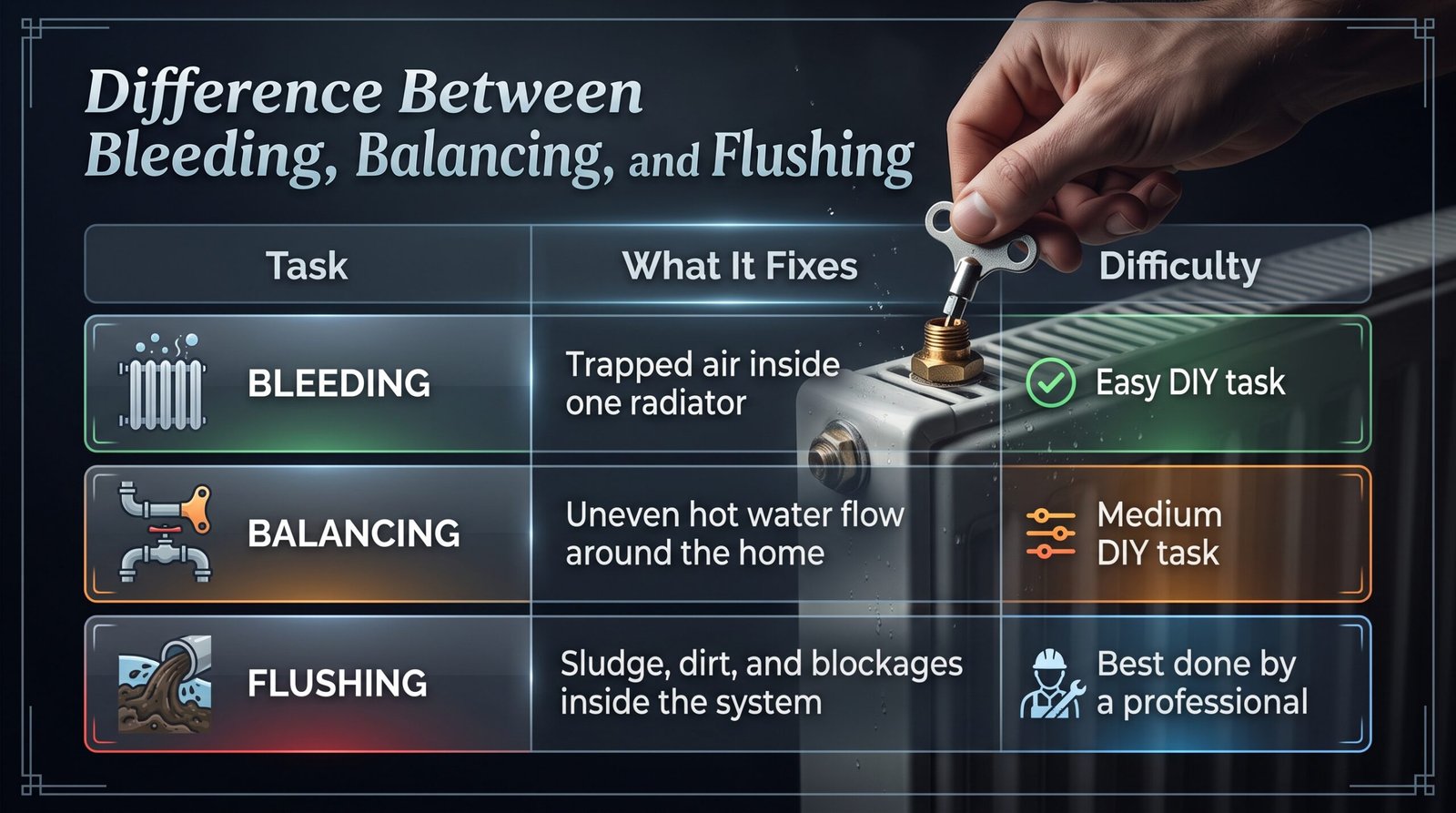
What Is the Difference Between Bleeding, Balancing, and Flushing?
Bleeding, balancing, and flushing are different heating jobs. Bleeding removes trapped air from a radiator. Balancing controls hot water flow around the home. Flushing clears sludge and dirty water from the system, which usually needs a professional.
How Often Should You Bleed Radiators in a UK Home?
Many UK homes should check radiators before winter. Some homes may need bleeding every few months, especially if cold spots or gurgling sounds return. Autumn is a good time to check, before the heating system works harder in cold weather.
The reality is that a five-minute check before winter can save a lot of cold evenings later. If you find that you have to bleed your radiators every few weeks, there might be a small leak somewhere in the system or an issue with the expansion vessel in your boiler. In a healthy system, you should only really need to do this once a year as part of your home maintenance routine.
Can Bleeding Radiators Help Reduce Heating Waste?
Bleeding radiators can help reduce heating waste by letting hot water move more freely. This may improve heat spread, reduce cold spots, and lower strain on the boiler. It may also support better comfort without changing the whole heating system.
When a radiator is full of air, it is not working at its full potential. This means you might turn the thermostat up higher to compensate for the cold spots, which uses more gas or electricity. By ensuring the metal surface is hot from top to bottom, the radiator can warm the air in the room more efficiently. The biggest benefit is that your heating can work better without changing the whole system.
How Do You Keep Radiators Working Well After Bleeding?
After bleeding, simple habits can help your radiators work better. Keep furniture away, clean dust from the radiator, check pressure, and avoid covering radiators with clothes. These small steps help warm air move around the room more easily.
Aftercare Tips
- Keep large furniture like sofas and beds away from radiators to allow air to circulate
- Do not cover radiators with wet clothes too often, as this blocks heat
- Clean dust from the radiator surface and between the fins
- Check your boiler pressure monthly to ensure it stays in the green zone
- Use your TRVs (the numbered dials) to turn down heat in unused rooms
- Book a yearly boiler service with a professional
- Check for cold spots at the start of every autumn
What Are the Final Thoughts on How to Bleed a Radiator Effectively?
How to bleed a radiator effectively becomes simple when you follow the safe order. Turn the heating off, open the valve slowly, listen for the hiss, close it when water drips, and check boiler pressure. If problems continue, get expert help.
Trapped air causes cold spots and makes your home less comfortable, but a simple radiator key makes the job much easier. Remember that a quarter turn is often enough to release the air, and you must always check the boiler pressure once you are finished. Taking these small steps will help keep your UK home warm and your heating system running as it should.
FAQs
Should you bleed radiators with heating on or off?
- Always bleed radiators with the heating off. Let them cool first. Hot water can spray out and burn your skin. A cool radiator makes the job safer, cleaner, and easier.
Is there a correct order to bleed radiators?
- Yes, there is a smart order. Start from the radiator that sits closest to your boiler. Then move room by room. In many UK homes, downstairs comes first, then upstairs.
Is bleeding one radiator enough?
- Yes, if only one radiator has cold spots. But if several radiators feel cold at the top, check them all. Do not bleed radiators that already heat well.
How long does it take to fully bleed a radiator?
- Most radiators take around 30 seconds to 1 minute to bleed. The full job takes longer if you have many radiators. Always check boiler pressure after you finish.
What happens if you bleed radiators too much?
- Too much bleeding lets water out and can drop boiler pressure. That may stop your heating from working properly. Once water starts dripping, close the valve.
What is the 30 minute heating rule?
- The 30-minute heating rule means giving your heater enough time to warm the system before judging it. After bleeding, run the heating and check each radiator again. If the top and bottom feel warm, the job worked.