No products in the cart.
How to plumb a washer? It simply means connecting your washing machine to the water supply, waste pipe and power so it runs safely at home. At first, it may look a bit technical. Still, it becomes easy when you follow clear steps in the right order.
Many people think a plumber is always needed. However, most modern washing machines are made for a simple home setup. So, with basic tools and a bit of care, you can often do it yourself.
Now, let’s dive in and see how to plumb your washing machine step by step in a simple and safe way.
What Does It Mean to Plumb a Washing Machine?
Plumbing a washing machine means setting it up so it gets clean water in, sends dirty water out, and runs safely on electricity. In simple words, you connect all the pipes and power so the machine can work without any problem.
To start with, there is the water supply. This usually connects through a cold inlet pipe that brings fresh water into the machine for washing clothes. Then comes the wastewater drainage, which takes used water out and sends it into your home’s drain system.
After that, you connect the power. Most washing machines in the UK plug into a normal socket, so this part is quick and simple. This setup is important because it helps stop leaks, protects your home, and keeps your machine working well. In most UK homes, a cold water-only connection is used, and it works perfectly for daily washing.
Can You Plumb a Washer Yourself or Call a Pro?
You can plumb a washing machine yourself when everything is already in place. If water, waste and power points are ready, the job stays simple. Freestanding machines also make things easier, so many people handle them without help.
Still, not every setup is good for DIY. Some situations need more skill and care. If there are no pipe connections, the job becomes difficult very quickly. You may need to cut or adjust pipes, which is not easy for beginners.
At the same time, integrated machines inside kitchen units need a proper fit. You must line them up well and fix them in place. So, in these cases, it is better to call a professional plumber. This keeps the job safe and helps you avoid costly mistakes later.
Now let’s talk money. DIY keeps costs low. You may spend around £0 to £20 if you already have basic tools at home. On the other hand, hiring a professional in the UK usually costs between £50 and £120, depending on the job and area.
What Tools Do You Need to Plumb a Washer?
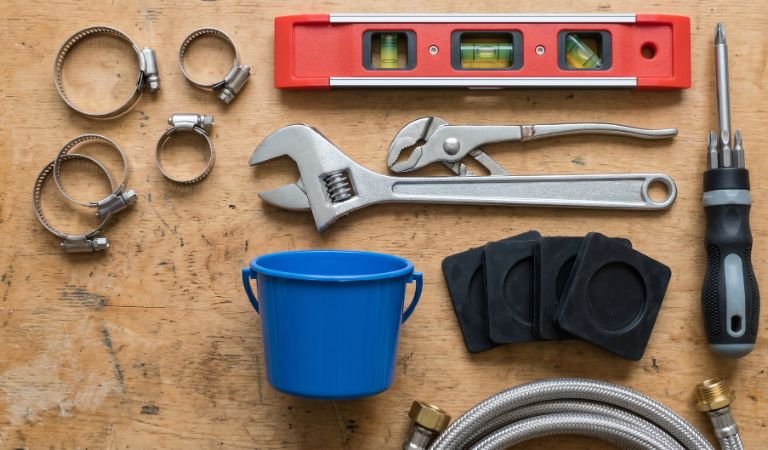
You do not need many tools to plumb a washing machine. A few basic items are enough. Still, keeping everything ready makes the job quicker and easier.
Essential tools:
- Adjustable wrench or pliers
- A bucket or tray to catch water leaks
- A spirit level to keep the machine straight
- Screwdriver for small fixes
Optional but helpful tools:
- Hose clamp for a tight and secure hose connection
- Anti-vibration pads to reduce shaking and noise
Quick tip: Keep all tools close before you start. This helps you work without stopping and keeps the whole job smooth and simple.
What Should You Check Before Installing a Washer?
Before you plumb a washing machine, check a few simple things. These checks help you avoid problems and make the whole job easier.
To start with, check the floor. It should be flat and strong. A weak or uneven floor can make the machine shake during use. Then, look at the water and drain setup. You need a nearby cold water supply and a proper drain point. Without these, the machine will not work correctly.
After that, check the power socket. Use a proper 13A wall socket in the UK. Avoid loose sockets or extension leads, as they are not safe. Then, check the space behind the machine. Make sure there is enough room for pipes and hoses. This helps you fit the machine easily and work without any problem.
Finally, always focus on safety before you begin. Turn off the water supply and unplug the machine. This simple step helps prevent leaks and keeps you safe while working.
How to Plumb a Washer Step by Step?
Step 1: Turn Off Water and Power
Start with safety first. Switch off the water at the isolating valve. Then unplug the washing machine from the socket. This helps prevent leaks and keeps you safe from electric shock.
Step 2: Disconnect the Old Machine (If Any)
If you are replacing a washer, take off the inlet hose slowly. Let any leftover water drain into a bucket. Then remove the waste hose from the drain pipe and clear the space.
Step 3: Remove Transit Bolts from New Washer
Check the back of the new machine. You will see transit bolts. These hold the drum still during transport. Remove them fully before use. If you leave them in, the machine will shake badly and may get damaged.
Step 4: Connect the Water Supply Hose
Fix the inlet hose to the washing machine. After that, connect it to the cold water tap or valve. Tighten it by hand first. Then use a wrench for a light turn. Keep it firm but do not over-tighten.
Step 5: Restore Water Supply and Check for Leaks
Slowly open the water valve. Then check all joints carefully. Look for any small drip or leak. If you spot one, tighten the connection a little more.
Step 6: Install the Drain Hose Properly
Place the drain hose into the standpipe. Keep it around 60 cm high, as this works well in UK homes. Do not push it too deep. This helps stop dirty water from coming back into the machine.
Step 7: Plug in and Position the Machine
Now plug the machine into a safe wall socket. Do not use extension leads. Then place the washer with a small gap from the wall. This gives space for hoses and airflow.
Step 8: Level the Washing Machine
Use a spirit level to check balance. Then adjust the feet until the machine sits steady. A level machine runs better. It also reduces shaking and noise.
Step 9: Run a Test Cycle
Now run an empty wash cycle. Listen for any strange sounds. Check for leaks around all connections. Also, watch how the water drains. If everything looks fine, your washing machine is ready to use.
How to Plumb in a Washing Machine Without Existing Plumbing?
It is possible, but it is more difficult than a normal setup. You need to create proper water and waste connections before you fit the machine.
To start with, you can use a self-cutting tap valve. This attaches to an existing cold water pipe and gives you a safe point to connect the washing machine hose. For wastewater, you can install a standpipe system. This gives a proper drain point so dirty water can flow out safely.
Still, this type of work is not always easy. It involves pipework and correct fittings. So if you feel unsure at any stage, it is better to call a qualified plumber.
Most importantly, always keep safety first. Turn off the main water supply before you start. If you do not feel confident with plumbing work, do not force it. A small mistake can cause leaks or water damage later.
What Are the Common Mistakes When Plumbing a Washer?
Here are the most common mistakes people make during setup:
- Not removing transit bolts before use which can cause heavy shaking and damage
- Loose hose connections that lead to leaks and water on the floor
- Wrong drain height which can stop proper water flow or cause backflow
- The machine is not level which makes it noisy and unstable during wash cycles
- Using extension cords instead of a proper wall socket which is unsafe for washing machines
How Long Does It Take to Plumb a Washing Machine?
Plumbing a washing machine does not take much time. On average, you can finish it in 30 to 60 minutes. This includes water, waste and power connections, plus basic checks at the end.
If you are doing it for the first time, expect a bit more time. A first-time setup can take up to 90 minutes. This is normal because you will go step by step and check everything carefully.
Time also depends on a few simple things. Experience plays a big role. If you have done it before, you will finish faster. Also, the existing setup matters a lot. If water and drain points are already in place, the job becomes quicker and easier.
How Much Does It Cost to Plumb a Washer in the UK?
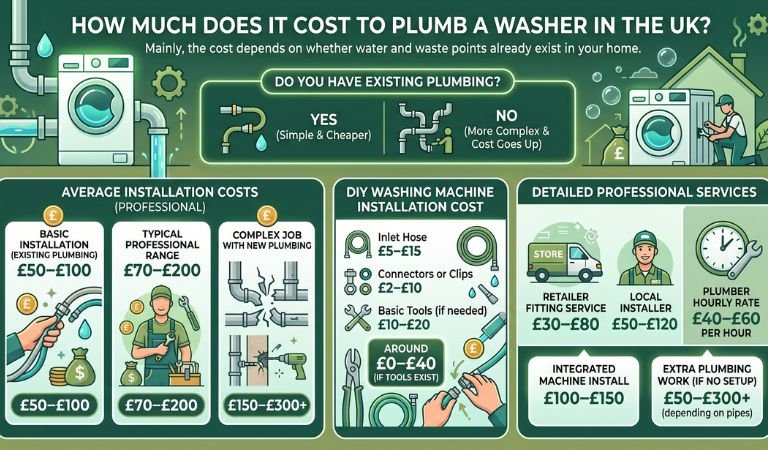
The cost to plumb a washing machine depends on one main thing. That is whether water and waste points already exist in your home. If they are ready, the job stays simple and cheaper. If not, the cost goes up.
Here’s a quick cost breakdown:
What Is the Cost of Washing Machine Installation in the UK?
- Basic installation (existing plumbing): £50–£100
- Typical professional range: £70–£200
- Complex job with new plumbing: £150–£300+
How Much Does DIY Washing Machine Installation Cost?
- Inlet hose: £5–£15
- Connectors or clips: £2–£10
- Basic tools (if needed): £10–£20
- Total: around £0–£40 (if you already have tools)
What Is the Cost of Professional Washing Machine Installation?
- Retailer fitting service: £30–£80
- Local installer: £50–£120
- Plumber hourly rate: £40–£60 per hour
- Integrated machine install: £100–£150
- Extra plumbing work (if no setup exists): £50–£300+ depending on pipes needed
In simple terms, the more ready your home setup is, the less you pay. But if new pipes are needed, the cost increases quickly.
What Safety Tips Should You Follow When Plumbing a Washer?
Safety always comes first when you plumb a washing machine. A small mistake can cause leaks, damage, or an electrical risk. So, take your time and work carefully from the start.
To begin with, turn off the water supply before you start. This stops sudden leaks while you work. After you finish, check all connections properly. Even a small drip can become a bigger problem later. After that, pay attention to the power socket. Never overload it. Always use a 13A plug socket on the wall for safety. Avoid extension leads, as they are not safe for washing machines.
Lastly, check your hoses. Good condition hoses help stop leaks and water damage. If you see cracks, stiffness, or wear, change them right away.
Final Thoughts
So, how to plumb a washer? It is simpler than it first looks. Once you follow the right steps, you can do it at home without stress.
Still, take your time with each connection. Check the water, waste and power carefully. After that, do a full safety check. This helps you avoid leaks and keeps your machine working properly.
At the end, trust yourself but stay careful. If anything feels unclear or unsafe, call a professional. A little help at the right time can stop bigger problems later.
Thinking of learning more than basic repairs? Join our Professional Online Plumbing Course and turn simple fixes into real skills.
Frequently Asked Questions (FAQs)
1. Can you plumb a washing machine yourself?
- Yes, you can. If water waste and power points are ready, it is a simple job. Many people do it at home with basic tools. But if pipes are missing or the setup is complex, a plumber is the safer choice.
2. How does a washing machine get plumbed in?
- It connects in three simple steps. Cold water goes in through the inlet hose. Dirty water goes out through the drain hose. Then it plugs into a safe wall socket for power.
3. Does it matter which hose goes where on a washer?
- Yes, it does matter. The inlet hose brings clean water in. The drain hose sends wastewater out. If you mix them up, the machine will not work properly.
4. What are common washer installation mistakes?
- People often forget transit bolts which makes the machine shake. Loose hoses can cause leaks. The wrong drain height can block water flow. Not levelling the machine also causes noise and movement.
5. What is the 30 minute laundry rule?
- It means you should not overload or rush your washing cycles. Give each wash enough time to clean properly. It helps clothes last longer and improves washing results.
6. How much will a plumber charge to install a washing machine?
- In the UK, most plumbers charge around £50 to £120 for a standard install. The price goes up if new pipe work is needed or the job is complex.
7. What do most plumbers charge per hour in the UK?
- Most plumbers charge about £40 to £60 per hour. Some may charge more in busy cities or for urgent call-outs.
Professional Online Plumbing Course
Course Description :
- Certificate: Yes(Free)
- Accreditation: CPD Accredited
- Access: Lifetime