No products in the cart.
In the UK, many newcomers ask, ‘What are the 6 principles of safeguarding? ‘ Safeguarding means preventing harm and responding fast to worries. NHS Digital recorded over 541,000 adult safeguarding concerns in 2022–23.
England’s Care Act 2014 guides adult safeguarding across services. A person-centred approach keeps dignity, choice, and wellbeing central. This guide will support care staff, educators, volunteers, managers, HR, and safeguarding leads.
What Does Safeguarding Mean in the UK?
Safeguarding is a way to keep people safe from abuse and neglect. It involves making sure that adults and children can live very healthy lives. Everyone deserves to feel safe in their home and their local community.
There is a small difference between safeguarding and specific child protection. Safeguarding is the general way we look after all children every day. However, child protection is the action we take when harm is happening.
Everyone has a big responsibility to watch out for signs of harm. Some people have special roles, like a Designated Safeguarding Lead or DSL. These experts help their teams handle difficult situations with care and skill.
Several UK laws help us understand our roles in keeping people safe. These rules build trust and follow the best standards in our country. Below is a list of the most important laws for you.
- Care Act 2014 for adult safeguarding.
- Working Together to Safeguard Children’s guidance.
- Keeping Children Safe in Education for Schools.
- DBS checks for safer recruitment of staff.
What are the 6 Principles of Safeguarding?
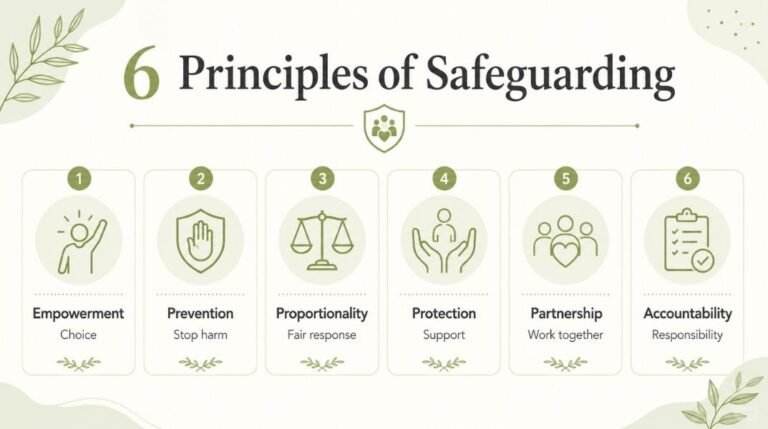
These six principles are a set of rules for making safe decisions. They provide a clear framework for everyone working in health and care.
What are the 6 principles of safeguarding (overview list):
- Empowerment: Urging individuals to make their own decisions.
- Prevention: Taking action before any harm actually happens.
- Proportionality: Using the least intrusive response to help.
- Protection: Giving support to those who need it most.
- Partnership: Working with other services to stop abuse.
- Accountability: Being honest and clear about your actions.
These principles matter because they focus on the person at all times. They help us make consistent decisions across the whole UK care system. Furthermore, they lead to much safer outcomes for every single individual.
What is the Empowerment principle in safeguarding?
Empowerment means that we give people the power to make choices. We must listen to their wishes before we take any big steps. People feel better when they have control over their own lives.
Making informed choices is a huge part of this specific safeguarding rule. For example, we always ask for consent before sharing any private news. We also think about a person’s capacity to understand a tough choice.
What is the Prevention principle in safeguarding?
Prevention is all about stopping bad things before they start to happen. We look for early signs of risk to keep everyone safe. Consequently, we can reduce the chance of harm in the future.
Training is a great way to use the prevention principle at work. Staff learn how to create very safe environments for all their clients. Moreover, risk assessments help us find and fix problems early on.
What is the Proportionality principle in safeguarding?
Proportionality means that our response must fit the level of risk. We should only get involved as much as is truly needed. Therefore, we respect the person’s privacy and their basic human rights.
Imagine a person makes a small mistake with their morning tea. We do not need to take away their kitchen rights immediately. Instead, we find a simple way to help them stay safe.
What is the Protection principle in safeguarding?
Protection is used when someone is in very great danger right now. We must take urgent action to keep that person from harm. This often involves calling for help from the local social services.
Immediate safety planning is a common way to use this principle today. We help the person find a safe place to stay very quickly. Furthermore, we follow clear routes to get more help from the police.
What is the partnership principle in safeguarding?
Partnership means that different groups work together as one big team. We share facts with families, doctors, and the local community groups. Working together makes our safeguarding efforts much stronger and more reliable.
Referrals to multi-agency teams are a great example of this teamwork. We might collaborate with groups like the local police or school staff. Because we share information, we can solve problems much faster than alone.
What is the accountability principle in safeguarding?
Accountability means being responsible for everything that you do at work. Every staff member must follow the rules and keep good records. Thus, we can show that we are doing our very best.
Audits and supervision meetings help us maintain a high level of care. We review every incident to learn how to do things better. Consequently, we build trust with the people who rely on our support.
Where Do the Six Principles Come from and How Are They Used in Adult Safeguarding?
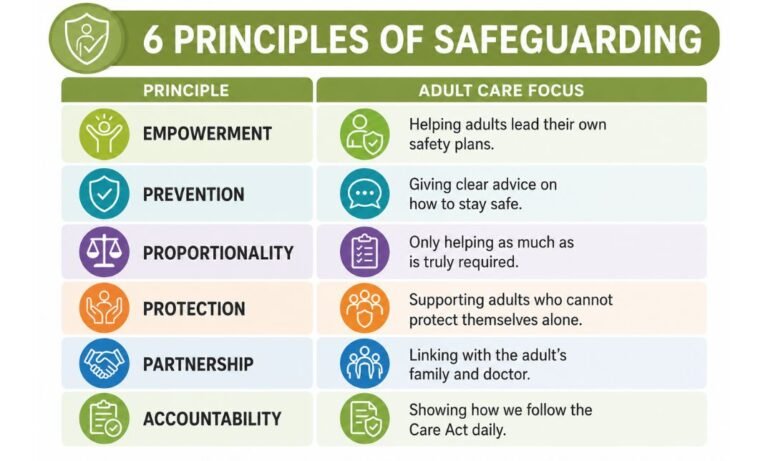
These six principles come from the Care Act 2014 statutory guidance. This law changed how we protect adults who live in the UK. It puts the person’s needs and their well-being at the centre.
“Making Safeguarding Personal” is a very important part of this adult focus. It means we talk to the person about what they want. We do not just follow a list of rules without thinking.
Well-being means thinking about a person’s dignity and their personal safety. In practice, we want people to feel happy and in control. We support their right to live a life free from abuse.
Do the Six Principles Apply to Children’s Safeguarding too?
The six principles are also very useful when we help children. However, they look a bit different in a school or club. We must think about the age of the child at all times.
Consent and capacity are different for children than they are for adults. Often, parents have the responsibility to make big choices for their kids. We must always act in the best interests of the child.
UK readers will see these principles used by their school’s DSL. When a teacher spots a problem, they follow the protection principle. Early help services in town focus mainly on the prevention principle.
How do the 6 Principles of Safeguarding Apply in real UK settings?
Using these rules in real life helps keep our neighbours safe. You can see these principles in many jobs across the country. Let us look at some practical ways they are used daily.
How are the principles applied in care homes and domiciliary care?
Care homes look after people with many different types of health needs. Staff must be very careful with medicine and a person’s money. They use empowerment to help residents feel independent and very happy.
Think about an older man who wants to visit the park. The staff should find a safe way to help him go. This uses proportionality by balancing his freedom with his safety needs.
How are the principles applied in the NHS and community health services?
Doctors and nurses are often the first to see signs of neglect. They use the partnership principle to talk with local social care teams. This ensures the patient gets the right help for their problem.
In a mental health crisis, the protection principle is very important. Medical teams work quickly to keep the person from hurting themselves. They also record everything they do to stay accountable to everyone.
How are the principles applied in schools and colleges?
Schools use the prevention principle to teach kids about staying safe online. They watch for signs that a child is being bullied or hurt. The DSL works with parents to make sure kids are safe.
If a child is in danger, the protection principle is used. The school tells the local council about the problem right away. They keep very clear notes to show they followed the law.
How are the principles applied in charities, sports clubs, and volunteering?
Charities must use safer recruitment to check all of their new volunteers. This is a form of prevention to keep bad people away. They also have rules about how many adults must be present.
Accountability is key when a charity handles a complaint about a staff member. They must investigate the issue fairly and tell the right people. This keeps the charity safe for all the children and adults.
How are the principles applied in workplaces (including HR)?
Workplaces use whistleblowing rules to help staff report bad behaviour safely. This helps everyone keep a very professional boundary at their office. HR managers use the partnership principle to work with the police.
Every single worker has a duty of care to their friends. When a risk is found, the boss may contact the DBS. This action helps to protect the public from any future harm.
What Are the Main Types and Signs of Abuse and Neglect to Watch for?
You must know what to look for to help people. Abuse is always wrong and can occur in a variety of ways. Neglect is also a serious problem that we must stop together.
- Physical Abuse: Hurting someone’s body with hits or kicks.
- Emotional Abuse: Using mean words to make a person sad.
- Sexual Abuse: Any sexual act that is not wanted.
- Financial Abuse: Taking a person’s money or their bank cards.
- Neglect: Not giving a person enough food or warm clothes.
Signs of abuse can include a person acting very scared or quiet. You might see bruises or cuts that have no good explanation. A person might stop eating or stop talking to their friends.
In the UK, we also watch for modern slavery and exploitation. Coercive control is a type of abuse that happens in many relationships. Furthermore, self-neglect is a risk for people who live all alone.
What Should You Do if You Have a Safeguarding Concern in the UK?
If you think someone is being hurt, you must act fast. In a big emergency, you should always call 999 for help. For other problems, tell your manager or your safeguarding lead.
Internal reporting is the first step in most UK workplaces today. Your DSL will help you decide if you need more help. You can also talk to the local council social care team.
- Record the facts and dates of what you saw.
- Use the exact words that the person said to you.
- Do not wait to tell someone about your big concern.
- Always stay calm and listen to the person cautiously.
Do not promise that you will keep the information a secret. You must explain that you have to tell someone to help. Never try to investigate the whole situation by yourself at home.
How Can Organisations Embed The Six Principles Into Policy, Training, And Culture?
A safe culture starts with a very strong policy for everyone. This document tells staff how to report harm and stay safe. It should be easy for every worker to read and follow. Training helps to keep the six principles in everyone’s mind daily. New staff should have an induction that explains all the rules. Regular meetings help the team remember how to spot any risks.
Safer recruitment is a very big part of a safe culture. It is important to always check references and conduct a DBS check for new staff. Effective supervision helps workers feel supported when they have a problem.
Measuring accountability can be done with regular audits and learning reviews. These checks show if the team is following the six principles. Consequently, the organisation can improve its care for everyone it helps.
What are the Most Common Safeguarding Mistakes—and How Can You Avoid Them?
Mistakes can happen when people are in a big hurry. One common error is not listening to what the person wants. You should always put the person at the heart of everything. Poor records are another mistake that can cause very big problems. Therefore, you must write down your notes as soon as possible. Clear records help the police or social workers understand the risk.
Sometimes people share too much or too little information with others. You should only share facts with the people who need them. However, you must never keep a danger a secret. Besides, thinking that a problem is just a “one-off” is a big risk. Often, small signs can lead to a pattern of serious abuse. Because of this, you should report every concern you have.
Final Thoughts
Finally, some people do not ask for help when a risk grows. If you are worried, you must tell your manager right away. Your quick action could save a life and keep someone safe. Empowerment, Prevention, Proportionality, Protection, Partnership, Accountability sum it up. Please review your settings’ policy, reporting routes, and handling steps at your earliest convenience. Those were the key facts about what are the 6 principles of safeguarding. They help you keep vulnerable people safe and healthy every day.
Please review your local policy and follow all reporting routes now. Sign up for our “Level 2 Certificate in Understanding Dignity and Safeguarding in Adult Health and Social Care” today.
FAQ
1. What are the 6 key safeguarding principles?
- The six key safeguarding principles under the Care Act 2014 are empowerment, prevention, proportionality, protection, partnership, and accountability.
2. What are the 6 R’s of safeguarding?
- The 6 R’s of safeguarding are recognise, respond, report, record, refer, and review.
3. What are the 5 main areas of safeguarding?
- The five main areas include physical abuse, emotional abuse, sexual abuse, neglect, and financial abuse.
4. What is empowerment according to the 6 key safeguarding principles?
- Empowerment means supporting individuals to make their own decisions and giving them control over their care and protection.
5. What are 6 examples of safeguarding?
- Examples include preventing abuse, reporting concerns, background checks for staff, safety training, monitoring vulnerable people, and following safeguarding policies.
6. What are the 3 C’s of safeguarding?
- The 3 C’s of safeguarding are communication, cooperation, and coordination.