No products in the cart.
Have you ever seen a huge lorry reversing on a UK building site and wondered who guides the driver safely? That key person is called a banksman but many people often ask, what is a banksman?
A banksman acts as the eyes and ears for heavy machinery drivers when their view is blocked. They use hand signals and radios to guide diggers, cranes and trucks to prevent accidents before they happen.
Safety on site is a big deal in the UK. Actually, the Health and Safety Executive (HSE) reports that vehicle movements cause nearly a quarter of workplace deaths in the UK each year. Having a trained guide on duty saves lives and keeps work moving smoothly.
In this guide, you will learn everything about their role, the rules they follow and how to become one.
What is a Banksman in the UK?
A banksman is a trained person who helps guide vehicles and machines safely around a work site. In the UK, they may also be called a traffic marshal. Their main job is to help drivers move, turn or reverse vehicles when there is a risk of hitting people, buildings or other equipment.
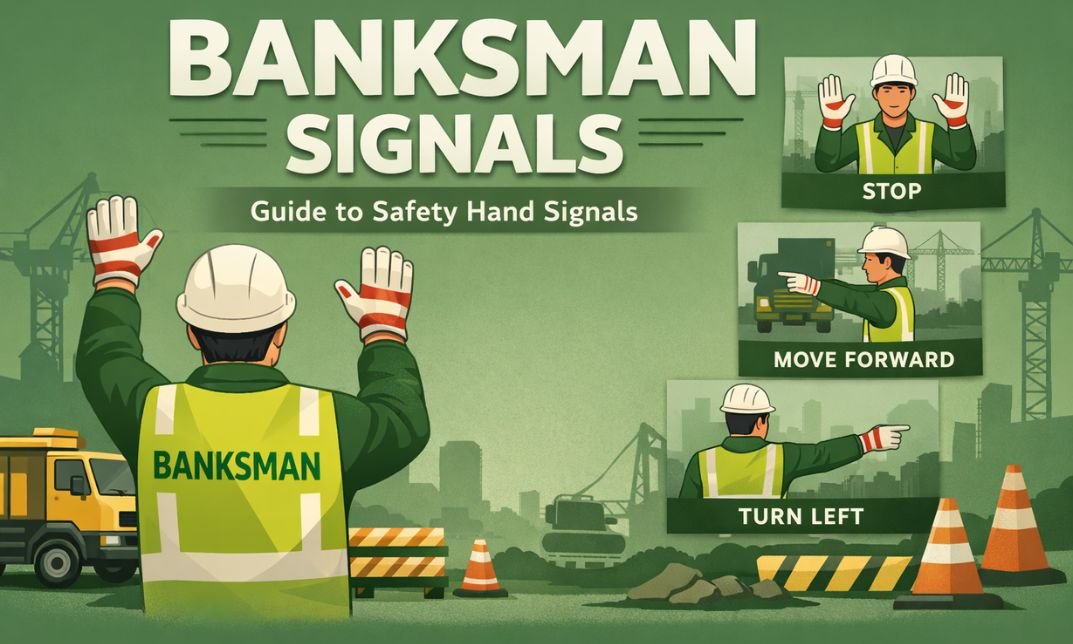
Banksmen are often used on construction sites, warehouses, loading areas and other busy workplaces. They use clear hand signals or other agreed ways to communicate with the driver. The driver and banksman should agree on the signals before the vehicle starts moving.

Safety is the most important part of the job. A banksman must stand in a safe place where the driver can always see them. If the driver loses sight of the banksman, the vehicle should stop at once. High-visibility clothing can also help the driver see the banksman clearly.
It is important to know that a banksman should not be the first choice for controlling vehicle risks. UK Health and Safety Executive (HSE) guidance says sites should first try to remove or reduce the need for reversing and keep people and vehicles apart.
What Is a Banksman Responsible for on a UK Worksite?
A banksman helps keep people and vehicles safe on a UK worksite. Their main job is to guide reversing vehicles and mobile plant. They help when a driver cannot see the area clearly. However, sites should avoid reversing where possible.
Guiding Vehicles
A banksman guides vehicles and mobile plant during movement. They help drivers reverse into a safe space. The banksman must stand where the driver can see them at all times.
Communicating With Drivers
Good communication is key to safe vehicle movement. A banksman uses clear hand signals, radios or other agreed methods. The driver and banksman should agree on the signals before work starts.
Keeping Pedestrians Safe
A banksman helps control vehicles near people. They keep pedestrians away from moving vehicles where possible. They also help maintain a safe gap between people and plants.
Spotting Hazards
A banksman must look for dangers around the vehicle. These may include people, other vehicles, walls or equipment. They should also check that there is enough space for the vehicle to move.
Stopping Dangerous Movements
A banksman must act fast if they see danger. They should give the stop signal and make sure the vehicle stops. If the driver cannot see the banksman, the vehicle should stop at once.
What Training Does a Banksman Need in the UK?
A banksman needs proper training before guiding vehicles or plant on a worksite. The Health and Safety Executive (HSE) says banksmen should be trained and competent. They should also be authorised to carry out the job.
What Does Banksman Training Cover?
A good banksman training course teaches workers how to:
- Guide vehicles safely using standard hand signals.
- Spot dangers around moving vehicles.
- Stand in a safe place while guiding a vehicle.
- Communicate clearly with drivers.
- Follow site traffic rules and safe working methods.
- Keep people away from reversing areas.
For example, CITB’s Take Control: Vehicle Marshalling course is a one-day course. It covers vehicle risks, hand signals, vehicle guidance and site traffic management. It includes both a knowledge check and a practical test.
For construction workers who need a higher-level qualification, CPCS Plant and Vehicle Marshaller A73 is a three-day course covering plant movement, hazards, communication and practical assessment.
It is also important to remember that a banksman is not always the first choice for reversing. HSE guidance says employers should reduce or remove the need for reversing where possible. A trained banksman should be used when other safety controls cannot manage the risk.
How to Become a Qualified Banksman in the UK
You can start a good career in UK construction by becoming a banksman. In this role, you direct heavy vehicles safely. You also help keep the work site safe each day.
- Choosing an Appropriate Banksman Training Course: Pick the right course. Choose training approved by UK bodies like CPCS, NPORS, or ALLMI. A simple one-day course gives you the right card.
- Meeting Employer Competency Requirements: Employers want clear communication skills. You need strong attention to detail. Also, you must stand outdoors for long shifts.
- Completing Practical and Theoretical Training: Next, you learn official HSE hand signals. You study blind spots and site dangers. Then, you practice directing real trucks in tight spots.
- Gaining Workplace Experience: After passing your test, you can start work. You will work with an experienced supervisor at first. As a result, you gain confidence on busy sites.
- Maintaining Competency Through Refresher Training: Safety rules change over time. Therefore, take a short refresher course every three years. Regular training keeps your skills fresh and safe.
- Career Progression Opportunities: This job leads to new roles in construction. For example, you can become a Slinger Signaller. Later, you can train as a Site Safety Officer.
How Much Does a Banksman Earn in the UK?
A banksman can earn around £25,000 to £35,000 per year in the UK. However, your exact pay depends on several factors. Entry-level banksmen may earn about £12 to £14 per hour. This equals roughly £24,000 to £28,000 a year for full-time work.
Experienced banksmen can earn around £14 to £18 per hour. So, they could earn about £28,000 to £35,000 each year.
Skilled workers may earn £18 to £22 per hour. As a result, their yearly pay could reach £37,000 to £45,000.
|
Banksman level |
Hourly pay |
Approx. yearly pay |
|
New starter |
£12–£14 |
£24,000–£28,000 |
|
Experienced |
£14–£18 |
£28,000–£35,000 |
|
Highly skilled |
£18–£22 |
£37,000–£45,000 |
What Can Increase Your Banksman Pay?
Several things can affect your banksman pay. Experience, location and working hours all matter.
- Experience: New banksmen may earn £12 to £14 per hour. Experienced workers may earn £15 to £18 per hour. Senior workers may earn £18 to £22 per hour.
- Location: Pay can vary across the UK. London jobs may offer £16 to £20 per hour. Smaller towns may offer around £12 to £16 per hour.
- Overtime: Extra hours can increase your weekly pay. For example, 10 extra hours at £16 adds £160. Some employers may pay more for overtime.
- Shift work: Night and weekend work may pay more. Some shifts can offer £16 to £22 per hour. Holiday shifts may also bring higher rates.
- Qualifications: Extra training can help you find better jobs. It can also improve your earning potential. Some skilled workers may earn £30,000 to £40,000+ per year.
How Much Can You Earn Each Week?
Suppose you earn £16 per hour. You work 40 hours each week. That gives you £640 per week. Over a full year, that equals about £33,280 before tax. Overtime can increase this amount further. So, gaining experience can help you earn more. Extra shifts and training can also boost your income.
When a Banksman Is Needed for Reversing Vehicles
Big trucks, lorries and vans have large blind spots. Drivers cannot always see what is behind them. Reversing these vehicles can be dangerous. A trained banksman can guide the driver and help keep people safe.
A banksman is needed when a vehicle must reverse in a tight or busy area. This can include building sites, loading areas and places where pedestrians are nearby. The banksman helps keep people away from the vehicle’s path.
A banksman is also useful when the driver has poor visibility. This may happen in heavy rain, fog, or at night. Walls, low roofs and tight corners can also block the driver’s view.
The banksman should stand in a safe position where the driver can see them. They use clear hand signals to guide the vehicle. These signals can tell the driver to move, slow down, turn, or stop.
Using a banksman can help prevent collisions. It can also protect workers, vehicles, buildings and other property from damage.
Why a Banksman Is Essential for UK Health and Safety Compliance
A banksman helps control vehicle movements on UK work sites. They guide drivers during reversing and other risky movements. Their signals help drivers move safely near people and equipment.
UK law does not always require a banksman. However, employers must check the risks at work. They must also use suitable safety controls. The Health and Safety at Work etc. Act 1974 sets key duties. It requires employers to protect workers and others from harm.
Other rules may also apply to vehicle and lifting work:
- LOLER 1998: Covers the safe use of lifting equipment.
- PUWER 1998: Includes the safe use of work equipment.
- BS 7121: Gives guidance on the safe use of cranes.
Banksmen and Workplace Accident Prevention
Reversing vehicles can be very risky on busy sites. Drivers may not see every area around their vehicles, and workers may enter these blind spots without warning.
Banksman training helps workers understand how to guide reversing vehicles safely. A trained banksman can stand in a safe position and give clear signals to the driver. They can also warn drivers about people, objects and other vehicles.
However, a banksman should not replace other safety measures. Employers should first look for ways to reduce the need for reversing. One-way routes can help avoid unnecessary reversing, while barriers can keep people away from moving vehicles.
Effective banksman training should also cover safe positioning, communication, hand signals and the risks associated with vehicle blind spots.
Cameras and sensors can provide extra support too. Safe walkways can keep workers away from vehicle routes. Good lighting can also improve visibility.
These steps can help reduce collisions and injuries. They can also protect vehicles, equipment and other property.
Conclusion on What Is a Banksman
To summarise, we have explored the question of banksman. They are the heroes of site safety in the UK. By guiding vehicles, they prevent accidents and save many lives. They follow strict laws and use specialised hand signals daily. Furthermore, they wear bright PPE to stay visible and safe.
Professional training is not just a choice; it is mandatory. If you want to work on UK sites, just get certified. This small step opens many doors for your new career. You will become a valuable member of any construction team. Everyone has a part to play in keeping the site safe.
FAQs About What is a Banksman
1. How much does a banksman earn?
- Banksmen in the UK often earn between £12 and £20 an hour. However, pay can change based on experience, location and employer.
2. Do you need a qualification to be a banksman?
- Banksman work normally requires suitable training. Many employers also look for a recognised course before hiring.
3. What is another name for a banksman?
- A banksman may also be called a signaller, vehicle marshal, or traffic marshal, depending on the job.
4. Is a banksman a legal requirement?
- Not always. It may be required where risk assessments identify a need for vehicle guidance.
5. What jobs pay £500 an hour?
- Highly experienced specialist doctors, lawyers, consultants and business professionals may charge £500+ per hour.
6. How much does a banksman course cost?
- A banksman course in the UK commonly costs around £50–£150, depending on the provider and course type.
7. How long does a banksman course take?
- Most basic banksman courses can be completed in half a day to one day.
8. Is a slinger the same as a banksman?
- No. A banksman guides vehicles or lifting operations, while a slinger attaches and guides loads for lifting.
Level 3 Banksman Course
Course Description :
- Certificate: Yes(Free)
- Accreditation: CPD Accredited
- Access: Lifetime