No products in the cart.
Let us start by clearing something up. No doctor writes “two weeks at sea” on a prescription pad. Travel is not a treatment, and a cruise is not a therapy.
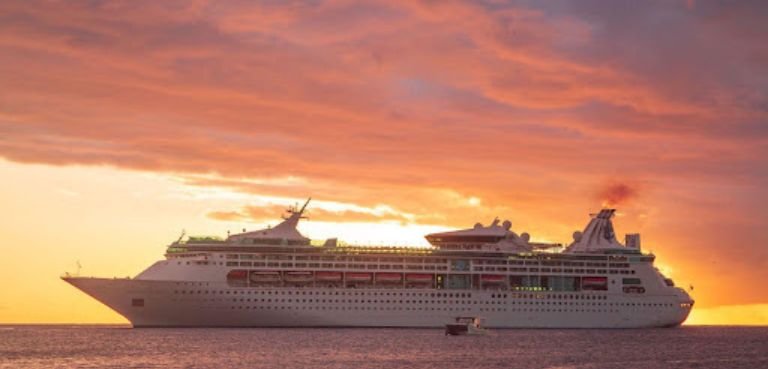
But there is a real pattern behind the phrase. When someone’s health starts shaping how they travel, rather than whether they travel, cruises come up in the conversation again and again.
Sometimes that advice comes from a GP. More often it comes from a family member, a district nurse, or a care worker who has watched other families work through the same problem.
So why this particular format? The answer has far less to do with sea air than most people assume. It is mostly about logistics, physiology, and where the nearest hospital happens to be.
What Does “Medically Advised Travel” Actually Mean?
In practice, it rarely means a clinician has recommended a holiday. It usually means one of three things.
- A person has been told they are well enough to travel, with conditions attached.
- A person is recovering and wants a break that will not set them back.
- A person has a long-term condition, and the usual holiday format has stopped working.
The medical step in all three cases is the same. You get an honest assessment of what your body can currently tolerate. Everything else follows from that.
And here is where sea travel becomes interesting. Flying carries a physiological cost that sailing simply does not. The Civil Aviation Authority’s guidance for clinicians explains that aircraft cabins are pressurised to the equivalent of roughly 5,000 to 8,000 feet, which lowers available oxygen.
For most people that is unremarkable. For someone with a respiratory or cardiac condition, it can be the deciding factor. Trapped gas expands too, which is why flying is often restricted after certain surgery.
A ship has none of that. You remain at sea level for the entire journey. Thus, for a specific group of travellers, the barrier that rules out flying does not exist at sea.
Why Does a Luxury Mediterranean Cruise Come Up So Often?
Because of geography, mostly. Mediterranean ports sit close together, so the ship is rarely more than a few hours from a sizeable town with a proper hospital.
Compare that with an ocean crossing or a polar itinerary, where you may be days from anywhere. The difference matters enormously if something goes wrong.
There is also a practical UK advantage. A UK GHIC gives UK residents access to necessary state healthcare across the EEA on the same basis as a local resident. It is free, lasts up to five years, and covers a great many Mediterranean ports of call.
Do note the NHS is blunt about its limits. A GHIC is not travel insurance and never covers repatriation.
Moreover, the climate is gentle, sailings are short, and the seas are calmer than the Atlantic in most seasons. Hence a luxury Mediterranean cruise tends to be the first thing anyone suggests. Silversea, for instance, groups its itineraries by region, which lets you check port-to-port distances before you commit to anything.
That last habit is worth building. The gap between stops tells you more about medical access than any brochure copy will.
What Does a Ship Genuinely Solve?
Quite a lot, and the reasons are unglamorous.
You unpack once:
Multi-city trips mean repeated packing, transfers, and unfamiliar rooms. A ship removes all of it. Your things stay put while the scenery changes, which is a significant saving of energy for anyone with limited reserves.
The environment is predictable:
Same bed, same bathroom layout, same route to dinner. Familiarity reduces falls and reduces anxiety. For someone with cognitive changes or poor balance, that consistency is genuinely protective.
Pacing is built in:
Sea days exist. You can skip a port entirely and lose nothing, which is far harder to do when you have prepaid a hotel and a train.
Catering is structured:
Dietary requirements are handled through a system rather than negotiated fresh in every restaurant, in a language you may not speak.
Step-free design is common:
Lifts, wide corridors, and accessible cabins are standard on modern ships. Older European towns are frequently not accessible at all.
What Does a Ship Not Solve?
This is the part that gets skipped, and it deserves equal space.
A ship’s medical centre is not a hospital. The CDC’s Yellow Book chapter describes onboard facilities as broadly comparable to an ambulatory care centre. Some offer more, including dialysis, but capability varies enormously by ship.
The same chapter reports that about 95% of acute illnesses and injuries are managed onboard. The remainder require evacuation ashore, which carries its own delays and risks.
Roughly half of all passengers attending a ship’s medical centre are over 65. Respiratory illness is the most common complaint, at 30% to 40% of visits.
Closed environments also spread infection efficiently. Norovirus accounts for more than 90% of confirmed gastrointestinal outbreaks at sea.
Then there is cost. Onboard treatment is not included in your fare, and it is billed separately.
Who Should Pause and Take Advice First?
Some circumstances warrant a proper conversation rather than a booking.
- Recent surgery, or any condition that is currently unstable rather than well controlled.
- Anyone dependent on oxygen, dialysis, or equipment the ship must be told about in advance.
- Immunosuppression, where an outbreak carries a much higher cost.
- Pregnancy beyond roughly 24 weeks, which most lines will not carry.
Insurance deserves particular care here. The government’s travel insurance guidance warns that without appropriate cover you can be liable for emergency costs running into thousands of pounds, and that undeclared conditions, including mental health conditions, can invalidate a policy outright.
Declare everything. An awkward phone call is cheaper than an uninsured evacuation.
How Do You Check Properly Before Booking?
Work through this in order.
Ask your clinician the specific question. Not “can I go on holiday” but “can I be more than two hours from a hospital, for this many days.”
Expect a fitness-to-travel request. Lines commonly ask for a doctor’s letter. The final decision rests with the line’s medical department, not your GP.
Ring the line’s special needs team before paying. Ask what the ship can actually do, not what the website implies.
Apply for a GHIC and buy insurance too. They cover different things, and you want both.
In Summary
Cruises come up in these conversations for sound structural reasons. You stay at sea level, you unpack once, the environment stays predictable, and in the Mediterranean you are rarely far from a hospital.
None of that makes a cruise medically advisable in itself. It makes it a format that removes several ordinary obstacles, while introducing a few particular ones.
If you work in health or social care, this is a question families will ask you. The useful answer is never simply yes or no. It is to send them back to their clinician with a sharper question, and forward to the cruise line with a specific list.
This article is general information and is not medical advice. Always speak to your GP or specialist about your own circumstances before booking travel.