No products in the cart.
Workplace first aid helps you act quickly when someone gets hurt or feels unwell at work. Quick help can stop a small injury from getting worse. Every workplace needs people who know basic first aid and emergency steps. Good planning also helps workers stay calm during an emergency.
First aiders can help with small injuries and give quick help during serious emergencies. They can also check first aid kits and tell managers about missing supplies. Proper training helps workers know what to do and stay safe. With the right skills, you can help someone until medical help arrives.
This guide covers first aid at work, key duties, useful skills and basic safety steps.
What is Workplace First Aid?
first aid in the workplace means giving quick help when someone gets hurt or becomes ill at work. It can help control an injury and keep someone safe before medical help arrives. This support can make a big difference during an emergency. Employers must provide suitable first aid arrangements for their workers.
These can include trained first aiders, first aid kits and suitable facilities. The level of first aid provision depends on workplace risks. The Health and Safety (First-Aid) Regulations 1981 set key duties for employers. Good first aid helps create a safer workplace.
What Does UK First Aid Law Require?
The Health and Safety (First-Aid) Regulations 1981 set the main first aid rules for UK workplaces. Employers must make sure workers can get first aid when they need it. They must provide the right first aid kit, equipment and facilities. They also need enough trained first aiders when the workplace needs them.
Employers may also choose an appointed person to look after first aid. They must tell workers about the first aid arrangements. Self-employed people also need suitable first aid equipment. However, the law does not set one fixed number of first aiders for every workplace. The right number depends on the workplace and its risks.
How Do You Check What First Aid Your Workplace Needs?
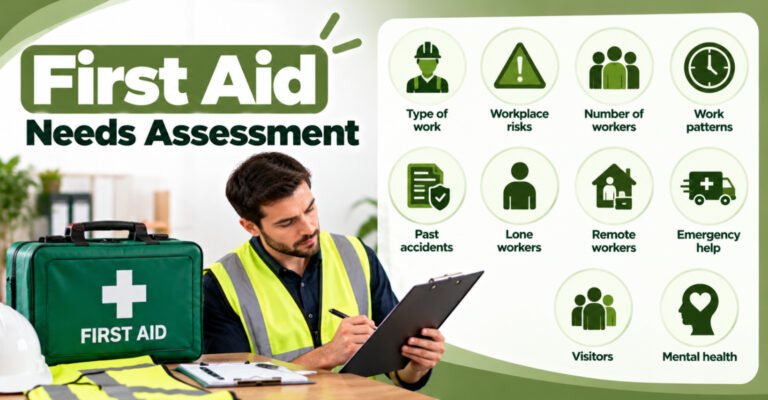
A first aid needs assessment helps you choose the right first aid support. It looks at your work, workers and workplace risks. It also checks past accidents and possible health problems. This helps you plan suitable first aid for emergencies.
- Type of work: What tasks do workers do?
- Workplace risks: What injuries or illnesses could happen?
- Number of workers: How many people work there?
- Work patterns: Do people work at different times or shifts?
- Past accidents: What injuries or health problems happened before?
- Lone workers: Does anyone work alone?
- Remote workers: Does anyone work away from the main workplace?
- Emergency help: How quickly can medical help reach the workplace?
- Visitors: Could customers or members of the public need help?
- Mental health: Could workers need mental health support?
How Many First Aiders Does a Workplace Need?
There is no fixed legal number of first aiders for every workplace. Employers should check their own needs before deciding how many first aiders they need. They should look at workplace risks, staff numbers and working hours. They should also consider staff who work away from the main workplace. Sickness, holidays and other absences can reduce first-aid cover too.
St John Ambulance gives useful guidance for planning first-aid cover. For higher-risk workplaces, it suggests 1 first aider for every 50 employees. For lower-risk workplaces, it suggests 1 for the first 25 employees, then 1 more for every 100 employees. These numbers are guidance only. They are not fixed legal requirements.
What Does an Appointed Person Do?
An appointed person helps keep workplace first-aid arrangements in place. They check first-aid kits and make sure supplies are ready to use. They also look after first-aid facilities and know how to get help quickly. If someone needs urgent medical care, they can call the emergency services. An appointed person does not need formal first-aid training.
Their job is to manage first-aid arrangements, not provide treatment. A workplace can have more than one appointed person. This helps maintain cover when people are working. The person should remain available during working hours. Employers can include an appointed person when their first-aid needs assessment shows this is suitable.
What Should Be in a Workplace First Aid Kit?
There is no single HSE list for every first aid in the workplace. The contents should match your workplace risks and needs. For a low-risk workplace, the kit should include sterile plasters, eye pads, triangular bandages and safety pins. It should also have large and medium sterile wound dressings, disposable gloves and a first-aid guidance leaflet.
The number of items can change based on your workplace needs. You may also need a separate travelling first-aid kit for workers who work away from the main site. BS 8599 gives guidance on kit sizes and contents. However, the law does not require employers to follow this standard.
How Should You Maintain a First Aid Kit?
Workplace emergency first aid kit should stay clean, complete and ready to use. Regular checks help you find missing or expired items early. Keep the kit somewhere workers can reach quickly during an emergency. Workers should also know where to find it and how to use it. Your first-aid needs assessment should guide the supplies you keep.
- Check sterile items regularly and replace expired products.
- Replace used or damaged items as soon as possible.
- Follow the manufacturer’s advice for items without expiry dates.
- Keep non-sterile items clean and safe to use.
- Check travelling and mobile kits for off-site workers.
- Add extra equipment when workplace risks require it.
Which Workplace First Aid Training Do You Need?
Workplaces mainly use two types of first-aid training: EFAW and FAW. Emergency First Aid at Work (EFAW) takes 1 day. It teaches basic emergency first aid and helps workers deal with common workplace emergencies. First Aid at Work (FAW) takes 3 days. It covers more injuries, illnesses and emergency situations than EFAW.
Your workplace needs assessment should help you choose the right course. Some workplaces may need trained first aiders with the wider FAW skills. FAW also has a 2-day requalification course. Both EFAW and FAW certificates stay valid for 3 years. Employers should review their first-aid needs before choosing a course.
What Does First Aid Training Teach?
First aid training teaches you how to help during emergencies. You learn CPR, AED use, choking response and severe bleeding control. It also covers wounds, burns, fractures, major injuries and allergic reactions. You learn how to check a casualty and call for help.
Training includes simple practice, roleplay, quizzes and questions. Learners also need to show that they can use key first aid skills safely. From May 2026, training includes how to deal with life-threatening bleeding. Some training providers may also offer Good Samaritan insurance with their course.
How Long Does a First Aid Certificate Last?
A workplace first aid certificate lasts 3 years. First aiders should renew their training before the certificate expires. The 2-day requalification course helps them review important first aid skills. It also gives them a chance to practice and update their knowledge. This helps first aiders stay ready to help during workplace emergencies.
However, first-aid skills need regular practice. St John Ambulance recommends refresher training every year. It also says skills can start to fade after 6 months without practice. Refreshers can cover CPR, AED use and severe allergic reactions. Remember: 3 years for the certificate, 1 year for refreshers and 6 months for skill fade.
What About Home and Shared Workplaces?
Home and shared workplaces need simple first-aid plans too. The right setup depends on where people work and the risks they face. Low-risk home workers can usually rely on normal home first-aid supplies. However, travelling workers may need extra support, such as a vehicle first-aid kit. A needs assessment can help employers decide what each worker needs.
- Home workers should have suitable first-aid arrangements for their work.
- Travelling workers may need a first-aid kit in their vehicle.
- Self-employed people in shared spaces can make joint arrangements.
- Co-working spaces can agree on shared first-aid facilities.
- Employers can use written agreements when sharing first-aid arrangements.
- Remote and hybrid workers may need different arrangements based on location.
Can You Take Workplace First Aid Training Online?
Yes, some workplace first aid courses offer online learning. These courses often use blended learning. You complete the theory online and practise first aid skills in person. Online lessons can teach basic emergency steps, casualty checks and other useful knowledge. However, you still need hands-on practice for CPR and AED use.
The course collection includes 4 blended courses and 2 e-learning options. Course formats can differ between providers. Not every workplace first aid course can happen fully online. Practical training helps you learn how to respond safely during a real emergency. It also lets you show that you can use key first aid skills correctly.
How Should You Choose First Aid Training?
Choose a provider that has the right skills and experience. HSE does not usually approve workplace first-aid courses. Employers should choose a competent provider that meets their workplace needs. HSE lists four provider options:
- Regulated qualifications
- Voluntary approval schemes
- Independent providers
- Recognised Voluntary Aid Societies
These societies include St John Ambulance, British Red Cross and St Andrew’s First Aid. Check the course content, practical training and certificate before booking. Most importantly, choose training that matches your first-aid needs assessment and workplace risks.
Final Thoughts
Good workplace first aid starts with a simple plan. Employers should check the risks at work and keep the right first aid supplies. They should also train enough first aiders. Regular kit checks help keep supplies ready. Regular training helps workers remember how to give first aid. When everyone knows what to do, workers can get help quickly.
Want to build your first aid skills? Explore our Workplace First Aid Training course and take the next step towards safer workplace support.
FAQs About Workplace First Aid
1. What is the law on first aid in the workplace?
- The Health and Safety (First-Aid) Regulations 1981 cover workplace first aid in the UK. Employers must provide suitable first aid equipment, facilities and people based on workplace needs.
2. Do workplace first aiders get paid?
- Workplace first aiders do not always receive extra pay. Their pay depends on their employer, job role and workplace policy.
3. What are the 3 aims and 4 rules of first aid?
- First aid aims to save life, prevent further harm and support recovery. Stay calm, check for danger, call for help and give proper care.
4. What are the 5 basic first aid procedures?
- The five basic steps are checking the scene, checking the casualty, calling for help, giving first aid and monitoring the person. Always follow suitable first aid guidance.
5. What are the 3 C’s in basic first aid?
- The three Cs are Check, Call and Care. Check the situation, call for emergency help and provide suitable care until help arrives.
6. What is the golden rule of first aid?
- The key rule is to stay calm and make sure you do not make the injury worse. Check the situation first, then give safe and suitable first aid.

Workplace First Aid Training
Course Description :
- Certificate: Yes(Free)
- Accreditation: CPD Accredited
- Access: Lifetime