No products in the cart.
Did you know that food poisoning affects millions of people across the country? There are over 2.4 million foodborne illness cases in the UK each year. This massive number shows why keeping food safe is a major goal. If you run a small cafe or a busy food factory, you must protect your customers. The best way to do this is by using a special system called HACCP. The HACCP 7 principles system helps you keep customers healthy and safe.
This system stands for Hazard Analysis and Critical Control Points. It sounds tricky, but it is just a clear plan to stop food dangers. In our guide we will break down the system into easy steps. You will learn how to follow the law and keep your food fresh. Let us explore these essential rules together.
What Are the HACCP 7 Principles?
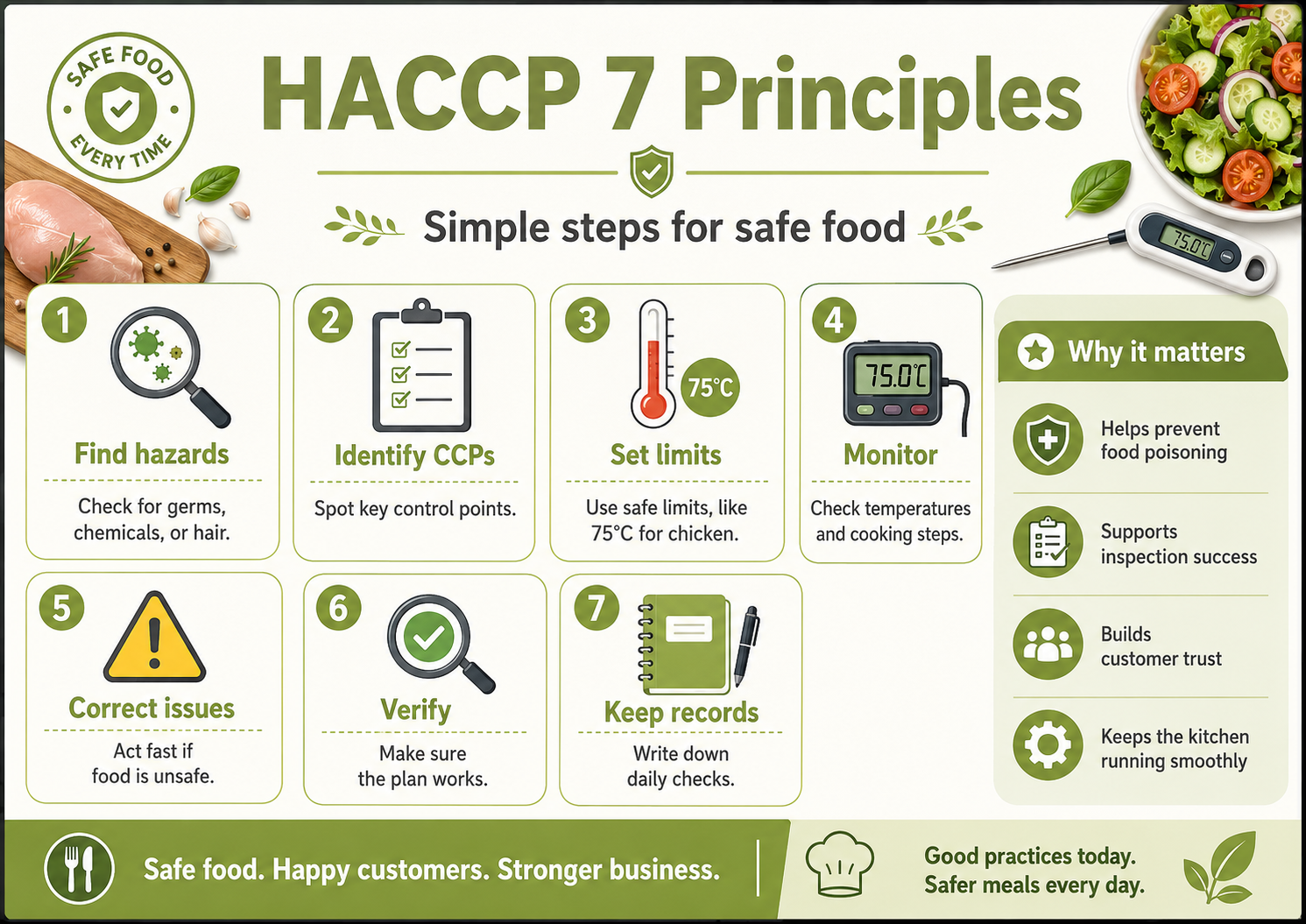
The HACCP system is a great way to keep food safe. Seven simple steps help you stop dangerous kitchen germs. These principles protect your customers and keep your business legal:
- Find the dangers: Look for bugs, chemicals, or hair in your food.
- Locate vital points: Spot the critical steps where you must stop these dangers.
- Set strict rules: Pick safe limits, like cooking chicken to 75°C.
- Check your food: Monitor your cooking steps and take food temperatures regularly.
- Fix any errors: Act quickly if your food gets too warm.
- Test your plan: Double-check that your safety system really works.
- Write everything down: Maintain detailed notes of your daily kitchen checks.
Why does this system matter?
Using these steps stops food poisoning before it can start. You will easily pass your local kitchen inspections. Customers will trust your shop because they know your meals are safe. This simple plan keeps your business running smoothly every day.
What Is Principle 1: Find the Dangers?
You must look closely at your food journey. A hazard is anything that can make your food unsafe to eat. For example, raw meat contains dangerous germs that cause bad stomach aches.
Generally, there are three main types of hazards in a kitchen. Biological hazards include tiny living germs like bacteria or viruses. Chemical hazards include strong cleaning sprays that accidentally touch food. Then, physical hazards are objects like hair, glass or plastic pieces. Consequently identifying these hazards keeps your ingredients pure and safe.
What Is Principle 2: Locate Vital Points?
Next, you need to find your critical control points. People usually call these steps CCPs for short. A CCP is a specific moment where you must prevent a hazard. If you skip this step, the food becomes dangerous.
For instance, cooking raw chicken is a very common CCP. Cooking kills the bad bacteria so people do not get sick. Chilling fresh milk in the fridge is another great example. Therefore, finding these exact points helps you focus your energy where it matters most.
What Is Principle 3: Set Strict Rules?
Now, you must set strict rules for each CCP. These rules are called critical limits. A critical limit is a clear boundary that keeps food safe. Usually, these limits involve exact numbers for temperature, time, or pH levels.
For example, cooked meat must reach a certain temperature to kill germs. In the UK, this safety temperature is usually 75°C or hotter. Alternatively, your fridge must always stay at 5°C or below. Therefore, these numbers leave no room for guessing in the kitchen.
What Is Principle 4: Check Your Food?
Once you have rules, you must watch them closely. Monitoring means checking that your food stays within safe limits. Usually, this involves using a clean probe thermometer to check meat.
Furthermore, you must decide who will do these checks every day. Your kitchen staff should be well-trained for this job. After checking, they must write the numbers down in a logbook. Consequently, you will always have proof that your food is safe.
What Is Principle 5: Fix Any Errors?
Sometimes, things go wrong in a busy kitchen. For instance, a fridge might break down and get too warm. A corrective action is the exact step you take to fix a mistake.
You must throw away any food that became unsafe. Next you must fix the broken fridge immediately. Finally you should write down exactly what happened in your report. Doing this prevents the same mistake from happening again next week.
- Stop the error as soon as you notice it.
- Fix the problem using your pre-made safety plan.
- Record the incident to teach your kitchen team.
What Is Principle 6: Test Your Plan?
Now, you must double-check your entire safety plan. Verification means proving that your HACCP principles system actually works well. It is like double-checking your homework before giving it to a teacher.
First you can do regular internal audits of your kitchen. Second you must calibrate your food thermometers to ensure accuracy. Finally look over your temperature records to spot any weird patterns. Consequently, this step ensures your safety system never gets weak or lazy.
What Is Principle 7: Write Everything Down?
The final principle is all about keeping clear paperwork. You must document everything that happens in your food business. This paperwork includes temperature charts, cleaning schedules, and staff training logs.
Accurate records are helpful when local health officers visit your shop. They will ask to see your food safety paperwork immediately. Therefore, having organised files proves that you run a professional, legal business. It also protects you if a customer ever complains about sickness.
Why is HACCP a Legal Requirement for UK Food Operators?
Every food business in the UK must follow strict laws. The Food Standards Agency, or FSA, oversees these important rules. Under UK food hygiene regulations, you must have a food safety management system. This rule applies to everyone who handles or sells food. You cannot skip this step if you sell food to the public.
These laws come from retained EU rules and current UK legislation. The government wants to ensure that all meals are totally safe to eat. Therefore, local authorities check every business to see if they follow the law. You must write down your safety plan to show you are doing things right.
How Do the HACCP 7 Principles Protect your UK Food Business?
The primary goal of these principles is to stop people from getting sick. Dangerous germs can multiply fast if food sits out in the warm air. Cross-contamination happens when bacteria travel from raw meat to ready-to-eat meals. This system stops these mistakes before they can hurt your customers.
A strong plan also safeguards your brand reputation. Imagine if a customer gets ill from eating your food. Even worse, you could face huge legal penalties or product recalls. These issues can ruin a business overnight.
|
Business Benefit |
What It Means For You |
|
Fewer Sick Customers |
Your food stays safe and delicious. |
|
Great Reputation |
People trust your shop and come back. |
|
No Legal Trouble |
You pass every government inspection easily. |
|
Less Wasted Food |
You catch errors early and save money. |
How Do You Identify the Specific Hazards in Your Food Production?
Before you can fix a problem, you must know what it is. In food safety, a hazard is anything that can make food unsafe. UK allergen laws, like Natasha’s Law, require businesses to track ingredients closely. You must know exactly what goes into every dish you prepare.
Here are four main types of food hazards you need to know:
- Biological: Harmful bacteria, viruses and moulds.
- Chemical: Cleaning sprays, pest poisons or chemical weed killers.
- Physical: Hair, broken glass, plaster bits or metal shavings.
- Allergenic: Ingredients like nuts, milk or eggs that cause allergies.
Conducting a risk assessment means mapping the journey of your food. You must look at every step from delivery to final service. Check the temperature when the delivery van arrives at your door. Look at how your staff store goods in the fridge. This careful check helps you spot where things might go wrong.
How Do You Monitor Your Critical Control Points ?
A Critical Control Point, or CCP, is a vital step in your kitchen. It is the exact point where you must stop a hazard. To find these points, you can use a helpful tool called a decision tree. This tool asks questions regarding each cooking stage.
For example, think about cooking a raw chicken breast. Cooking is a CCP because the heat kills dangerous bacteria. If you do not cook it well, the bacteria will survive. Therefore, you must control this step perfectly every single time.
|
Food Step |
Is It a CCP? |
Why? |
|
Receiving Food |
Yes |
You must check if the food arrived cold. |
|
Storing Food |
Yes |
The fridge must stay below 5°C to stop germs. |
|
Chopping Veggies |
No |
Good hygiene helps, but it is not a final kill step. |
|
Cooking Meat |
Yes |
High heat destroys dangerous bacteria completely. |
What Are the Common Challenges?
Many small businesses struggle with the sheer amount of paperwork. Managers often feel overwhelmed by daily logs and temperature sheets. For simple operations, the FSA provides standard packs called “Safer Food, Better Business.” These packs are great, but larger kitchens need a deeper plan.
Another big challenge is training your team members properly. Staff might forget to write down temperatures during a busy lunch rush. You must ensure that everyone receives UK-recognised training. A Level 2 or Level 3 Food Safety certificate is standard.
To fix these issues keep your system as simple as possible. Create clear checklists that take only a few minutes to fill out. Talk to your team daily about why these rules matter. When staff understand the reasons they follow the plan much better.
How Does the HACCP Plan Impact the Local Food Hygiene Rating?
Environmental Health Officers or EHOs visit your business to check safety. They look closely at your kitchen cleanliness and food handling habits. They also demand to see your food safety paperwork. They want clear evidence of regular monitoring and quick corrective actions.
Can you get a 5-star rating without a written safety plan? The answer is an absolute no. EHOs score you on your “Confidence in Management”. If you lack written records, your score will drop instantly. Even a spotless kitchen can fail without proper documentation.
A high rating sticker on your window attracts more customers. People feel safe when they see that big green number five. On the other hand, a low score scares hungry people away. Your written safety plan is the backbone of a successful business.
What Documentation Do You Need to Stay Compliant with UK Law?
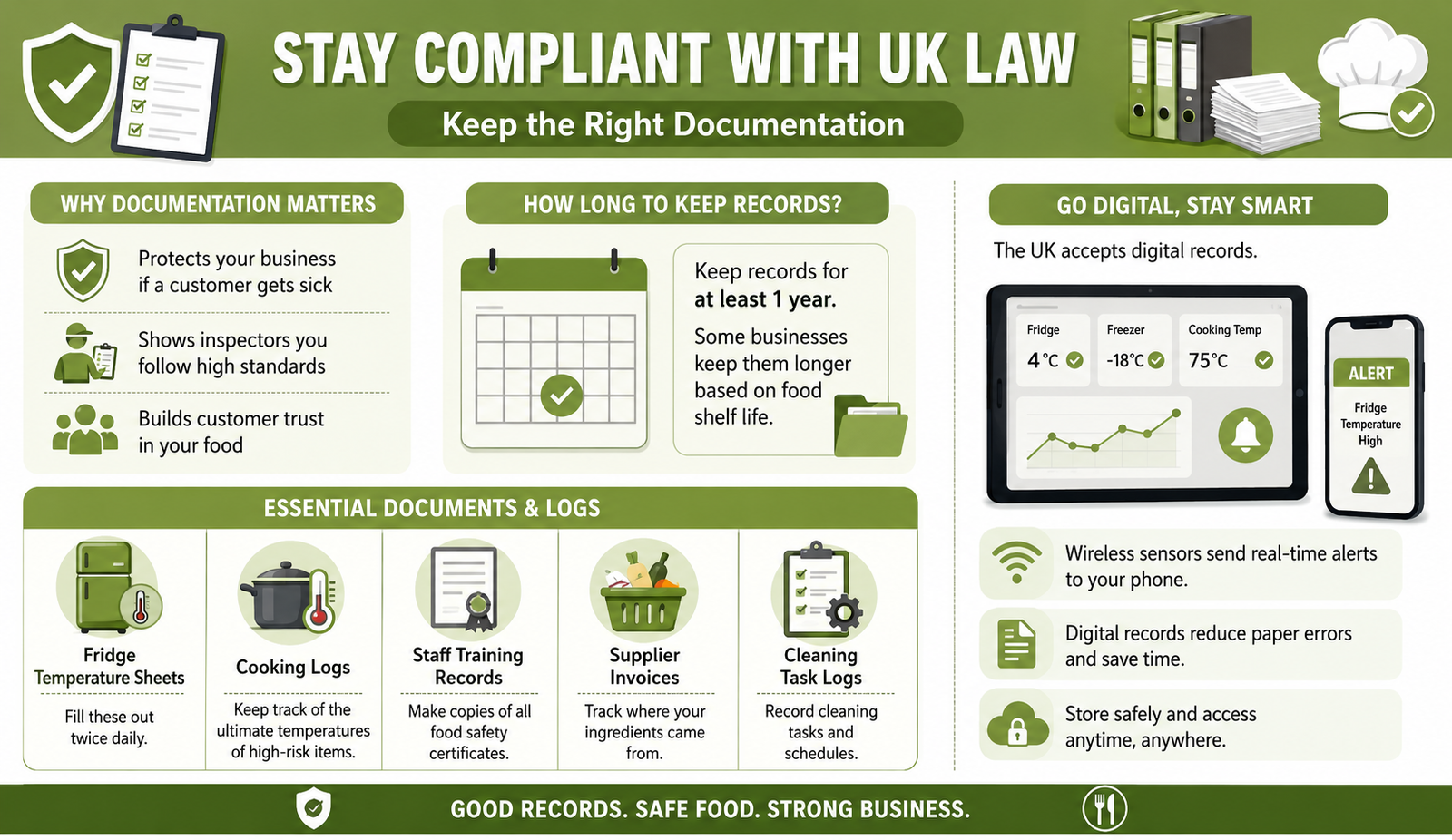
You must keep a clear paper trail to prove your food is safe. This paperwork protects you if a customer claims they got sick. It shows the inspectors that you care about high standards. You need logs for fridge temperatures, cooking temperatures, and cleaning tasks.
How long should you keep these logs and records? Best practices suggest holding onto them for at least one year. Some businesses keep them even longer based on food shelf life. You must store them in a safe, dry place where they will not get ruined.
- Fridge Temperature Sheets: Fill these out twice daily.
- Cooking Logs: Keep track of the ultimate temperatures of high-risk items.
- Staff Training Records: Make copies of all food safety certificates.
- Supplier Invoices: Track where your ingredients originally came from.
Authorities in the UK now generally accept digital record-keeping. These days automatic wireless sensors and smart digital apps are used in many kitchens. If a refrigerator malfunctions, these tools notify your phone. Digital methods eliminate errors on paper documents and save time.
How Often Should You Verify Your Food Safety System?
Your safety plan is not something you write once and forget. You must review and verify the system on a regular schedule. Verification means checking that your plan actually works in real life. You can do this by running audits or testing food samples.
Certain events trigger an immediate review of your entire plan. For example buying new cooking equipment means you must update your steps. Changing your menu items also requires a fresh hazard check. Finally you must adapt if UK food legislation changes.
Authorities in the UK now generally accept digital record-keeping. These days automatic wireless sensors and smart digital apps are used in many kitchens. If a refrigerator malfunctions, these tools notify your phone. Digital methods eliminate errors on paper documents and save time.
Conclusion
In conclusion the HACCP 7 principles protect your customers and your business. They form the backbone of modern UK food safety. By following these techniques, you can prevent dangerous kitchen mistakes.
Now, you can take action to secure your business. Download our free, UK-compliant HACCP template today. Alternatively, you can book a professional food safety consultation with our team.
Always keep your HACCP plan alive and updated. Ultimately, active records are your best shield during any unexpected audit. Keep your standards high, and your business will thrive!
FAQs
1. What are the 7 principles of HACCP?
- The 7 principles of HACCP are hazard analysis, identifying critical control points (CCPs), setting critical limits, monitoring CCPs, taking corrective actions, verifying the system and keeping accurate records.
2. What are the 5 C’s of food safety?
- The 5 C’s of food safety are Cleaning, Cooking, Chilling, Cross-contamination prevention and using safe food sources (often called “Choice” or “Care”).
3. What is a CCP in HACCP?
- A Critical Control Point (CCP) is a process step that prevents, eliminates or reduces a food safety concern to an acceptable level.
4. What are the 12 steps in HACCP?
- The 12 HACCP steps include five preparation stages forming the team, describing the product, identifying its use, creating a flow diagram and confirming it on-site followed by the 7 HACCP principles.
5. How do you explain HACCP in an interview?
- You can say: “HACCP is a preventive food safety system that identifies, controls and monitors hazards throughout food production to keep food safe for consumers.”
6. What are the 7 principles of food safety?
- The 7 principles of food safety (HACCP) are a systematic approach used by food companies to identify, prevent, and control biological, chemical and physical hazards during the food handling process.
7. What are the 6 P’s of food safety?
- The 6 P’s of food safety are People, Premises, Processes, Products, Procedures and Pest control. These areas help maintain safe food operations.
8. What are the 5 pillars of food safety?
- The 5 pillars of food safety are Clean, Separate, Cook, Chill and use Safe food and water. These basic practices help prevent foodborne illness.

Level 2 HACCP Training Course For Catering and Retail
Course Description :
- Certificate: Yes(Free)
- Accreditation: CPD Accredited
- Access: Lifetime