No products in the cart.
Burning rubbish in garden may seem like an easy way to clear unwanted waste. However, UK law sets clear rules about garden fires. Some fires can cause smoke problems for neighbours. You may also face complaints or legal action. Therefore, check the rules before lighting a fire in your garden.
Garden waste, unwanted furniture and other household items may seem suitable for a garden fire. The rules depend on the type of waste and how you burn it. Also, thick smoke can cause problems for nearby homes and roads.
This article covers what you can burn, what you must avoid and the fines you could face.
Is Burning Rubbish in Garden Illegal in the UK?
Burning rubbish in your garden is not always illegal in the UK. However, you must follow certain rules. The Environmental Protection Act 1990 says you must not cause pollution or harm people’s health. Too much smoke can also disturb your neighbours. In some cases, it can count as a statutory nuisance.
Also, smoke must not block roads or put drivers at risk. Your local council can investigate complaints and take action. So, having a small garden bonfire is not always against the law. However, burning rubbish that creates harmful smoke can cause serious problems.
What Can You Burn in Your Garden Legally?
Before lighting a bonfire, separate garden waste from household rubbish. You can burn dry leaves, twigs, branches and hedge cuttings. Clean, dry and untreated wood is another option. However, avoid wood with paint, varnish or chemical coatings. These materials can release harmful smoke when burnt.
Dry garden waste creates less smoke than wet leaves or fresh branches. Also, you do not need to register the D7 waste exemption to burn your own garden waste. However, this does not mean you can burn all types of rubbish. You must still follow rules on smoke, pollution and public health.
What Rubbish Should You Never Burn in Your Garden?
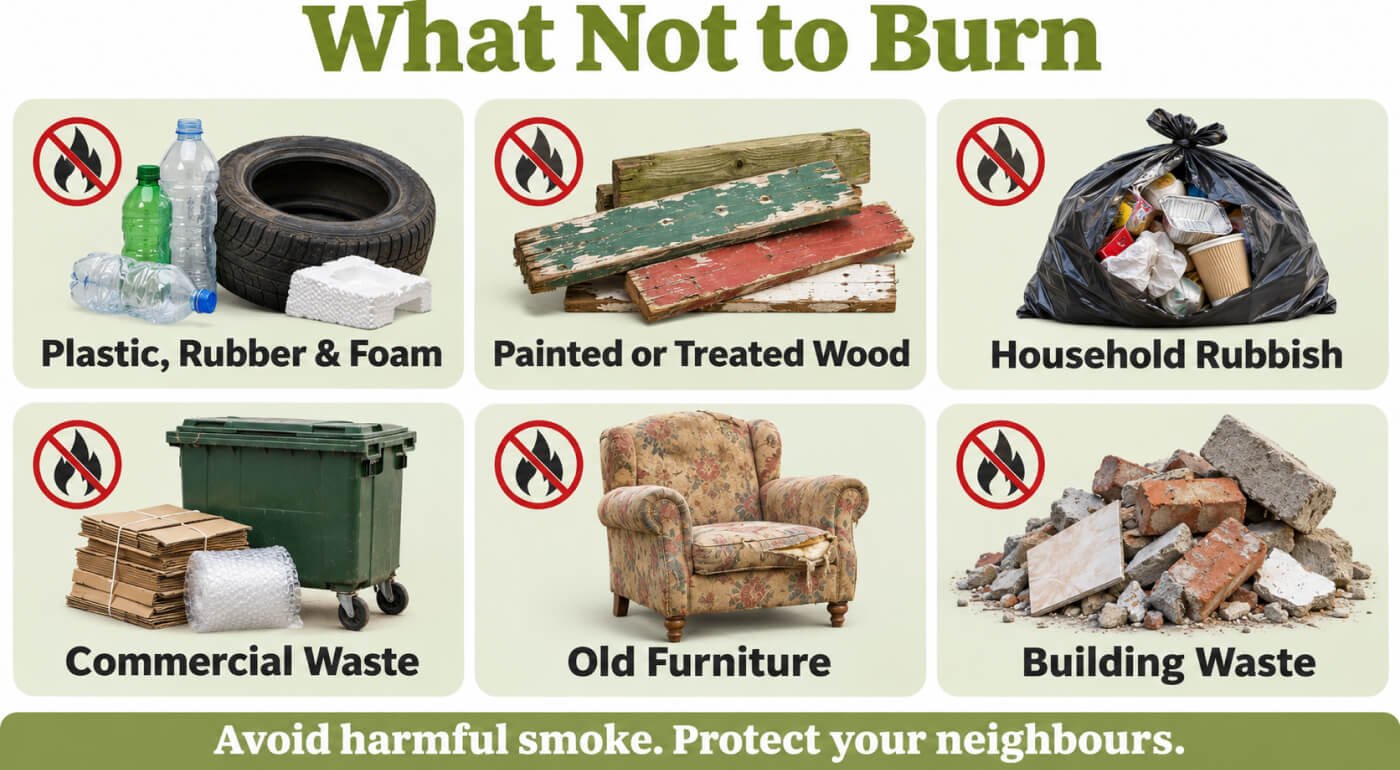
Some types of rubbish release harmful smoke when burnt. They can pollute the air and affect your neighbours’ health. Therefore, avoid burning household rubbish or materials with harmful chemicals. The legal rules depend on the type of waste and the situation. Here are five types of rubbish to avoid burning:
- Plastic, rubber and foam: Release harmful fumes and thick smoke.
- Painted or treated wood: Can release harmful chemicals when burnt.
- Household rubbish: Mixed waste and food packaging cause air pollution.
- Commercial waste: Must follow separate waste disposal rules.
- Old furniture: May contain foam, glue, plastic and treated wood.
- Building waste: MDF, chipboard, laminate flooring, insulation and plasterboard can release harmful substances.
Can You Burn Cardboard, Paper, Wood and Wet Leaves?
Cardboard and paper can burn easily, but recycling is a better option. You can recycle old boxes, newspapers and unwanted paperwork. This avoids extra smoke and reduces waste. Clean, dry and untreated wood is more suitable for garden fires. However, avoid wood with paint or chemical coatings.
Wood with nails is not always unsuitable for burning. The nails are not the main concern. Paint and chemical treatments matter more. Also, wet leaves produce more smoke and burn poorly. Therefore, let leaves dry before burning them. You can also add suitable leaves to your compost bin.
Can You Get Fined For Burning Rubbish in Your Garden?
You can face legal action if your garden bonfire causes problems. However, lighting a bonfire does not automatically lead to a fine. Excessive smoke can disturb neighbours and cause a nuisance. Smoke drifting across roads can also put drivers at risk. Ignoring a valid abatement notice can lead to prosecution.
Some reference articles mention fines of up to £5,000 for certain domestic nuisance offences. However, this is not an automatic fine for burning rubbish. A complaint, an abatement notice and a criminal offence are different things. The penalty depends on the relevant law and circumstances.
What Happens if Your Neighbour Reports Your Bonfire?
Your neighbour can report your bonfire to the local council if smoke causes problems. The council may then review the complaint. An environmental health officer may visit and investigate the situation. They will check how much smoke the fire produces. They will also consider how it affects nearby homes and residents.
The council will check if the smoke causes serious problems for nearby homes or people’s health. Officers will also check how often the smoke appears and how long it lasts. One complaint does not mean you have broken the law. However, the council may send you an abatement notice if it finds a serious problem.
What is an Abatement Notice and What Happens if You Ignore it?
An abatement notice is a formal warning from your local council. It tells you to stop or reduce a problem, such as harmful bonfire smoke. Councils use these notices under the Environmental Protection Act 1990. Section 80 gives them the power to deal with smoke nuisance. Here is what you need to know:
- The notice: It may stop you from having more garden bonfires.
- Smoke control: You may need to reduce or stop the smoke.
- Legal duty: You must follow the notice unless you have a reasonable excuse.
- Ignoring the notice: This can lead to prosecution and a financial penalty.
- Right to appeal: You can challenge the notice within 21 days.
- Court process: You must send your appeal to the appropriate court.
Can You Burn Rubbish in a Smoke Control Area?
A Smoke Control Area is a place where councils limit smoke from chimneys. Homes must use authorised fuels or DEFRA-approved appliances. Breaking these rules can lead to a £300 fine for chimney smoke in England. Buying unauthorised fuel for a non-approved appliance can cost £1,000.
However, these penalties do not automatically apply to garden bonfires. You can still have a garden bonfire in these areas. However, you must avoid causing smoke nuisance or pollution. Check your local council’s smoke control map before burning rubbish.
What is the Safest Time to Have a Garden Bonfire?
The best time for a garden bonfire is usually mid-morning on a calm weekday. Avoid windy, wet or foggy weather. These conditions can spread smoke towards nearby homes or stop it from clearing. Also, avoid early mornings, evenings, weekends and bank holidays where possible.
These are simple safety tips, not fixed legal rules. UK law does not set a specific time for garden bonfires. Before lighting a fire, check the weather and make sure conditions are safe. It is also a good idea to let your neighbours know in advance. This allows them to close their windows and take their washing inside.
How Can You Prevent Smoke Pollution and Bonfire Accidents?
Garden bonfires can cause smoke pollution and serious accidents. Thick smoke can affect nearby homes and make breathing difficult. It can also worsen asthma and other breathing problems. Flames may spread to fences, buildings and nearby property. Follow these simple garden bonfire safety tips to reduce risks:
- Burn dry materials: Avoid wet waste, plastic and household rubbish.
- Keep fires small: Don’t let flames grow out of control.
- Stay nearby: Never leave a bonfire unattended, even when it smoulders.
- Keep children and pets away: Maintain a safe distance from the fire.
- Avoid unsafe locations: Stay away from fences, buildings and flammable materials.
- Control the smoke: Keep smoke away from roads. Stop adding materials if smoke becomes excessive. Consider neighbours with breathing problems.
What are the Best Alternatives to Burning Garden Rubbish?
You have several ways to dispose of garden waste without lighting a bonfire. Home composting works well for leaves, grass cuttings and soft plant waste. You can also use your council’s garden waste collection service. Check local charges and collection dates before booking. Alternatively, take suitable branches, leaves and other garden waste to a recycling centre.
For large garden clear-ups, hire a small or four-yard skip. It can take branches, soil, turf and old garden furniture. Check accepted items before booking. You can also hire a garden clearance team to remove unwanted waste. These options reduce smoke, fire risks and neighbour complaints.
Final Thoughts on Burning Rubbish in Garden
Burning rubbish in garden often looks like a quick way to clear unwanted waste. However, you must follow UK rules and avoid causing smoke problems. Choose safer ways to remove household waste whenever possible. Also, keep your neighbours and local area in mind. A little care can prevent complaints, fines and unnecessary trouble.
Want to learn more about fire risks and safety? Join our Fire Safety Course and build your knowledge today.
FAQs About Burning Rubbish in Garden
1. Can I report my neighbour for burning rubbish?
- Contact your local council if your neighbour’s fire creates too much smoke. The council can investigate complaints and take action.
2. What time can I burn wood in my garden?
- UK law does not set fixed times for garden bonfires. However, avoid burning wood when smoke could disturb your neighbours.
3. Can I burn old paperwork in my garden?
- Recycling old paperwork is a better choice than burning it. Paper fires can create smoke and cause problems for neighbours.
4. Can I burn cardboard in my garden in the UK?
- You can burn small amounts of clean cardboard to start a fire. However, recycling cardboard is safer and better for the environment.
5. Are you allowed to burn rubbish in your front garden?
- You can have a garden bonfire, but you must avoid smoke pollution. Never burn waste that could harm people or disturb neighbours.
6. What is the safest way to burn paper outside?
- Use a small amount of dry paper to start a fire. Keep it away from buildings, fences and trees. Never leave the fire unattended.