No products in the cart.
Prevent Blocked Drains at Home with a few simple habits that protect your plumbing and save money. A blocked drain can disrupt your home with slow drainage, foul odours and unexpected water damage. Fortunately, most blockages are easy to avoid with regular care and proper waste disposal. Simple daily habits can keep your drains clear for years.
The problem is more common than many people realise. Around 94% of sewer blockages are caused by wet wipes, fats, oils, grease and other unsuitable items entering the drainage system.
This guide explains simple tips to keep your drains clear, protect your plumbing and prevent costly repairs.
Why is Preventing Blocked Drains Important for Your Home?
Preventing clogs is the best way to save money and avoid stress. UK water companies deal with over 300,000 blockages every single year. Most of these happen because people put the wrong things down the sink. If you take care of your pipes, you won’t need to call a plumber. This keeps your home clean and your repair bills very low. It only takes a few minutes of effort each week to protect your plumbing.
How Does Cooking Grease Damage Your Home Pipes?
Cooking grease is a major enemy of your kitchen plumbing. When fat is hot, it looks like a harmless liquid. However, it turns into a hard wax when it cools down inside your pipes. This wax catches food bits and grows into a large “fatberg”. Eventually, no water can get past this solid mass. Always pour your extra grease into a jar instead of the sink. This simple change will keep your kitchen pipes very healthy.
Why Should You Never Rinse Food Scraps Down the Sink?
Food scraps like rice and pasta are very dangerous for your drains. These items expand when they get wet and act like a sponge. They fill up the space in your pipes and stop the water flow. Even small crumbs can stick to grease and create a thick plug. You should always scrape your plates into the bin before washing them. This habit ensures that nothing solid enters your delicate drainage system.
Can Coffee Grounds Cause a Serious Pipe Blockage?
Many people think coffee grounds are fine because they are small. In reality, coffee grounds do not dissolve in water at all. They are heavy and settle at the bottom of your pipe traps. Over time, they pack together like wet sand and become very hard. This creates a solid wall that is very difficult to clear out. You should use coffee grounds in your garden as fertiliser instead.
Why is Boiling Water Good for Your Kitchen Drains?
Boiling water is a free and easy tool for your home maintenance. It helps to melt away the soft grease that sticks to pipe walls. You should pour a full kettle of hot water down your sink once a week. This heat turns solid fats back into liquid so they can wash away. It is a great way to keep your pipes clear without using chemicals. This small task takes very little time but offers big benefits.
How Does a Mesh Strainer Keep Your Pipes Clear?
A mesh strainer is a small tool that sits over your drain hole. It acts as a guard that catches hair and food bits. You can buy these strainers for a very low price at most stores. Once the strainer is full, you simply empty it into the bin. This stops debris from ever reaching the inside of your plumbing. It is the easiest way to prevent blocked drains at home today.
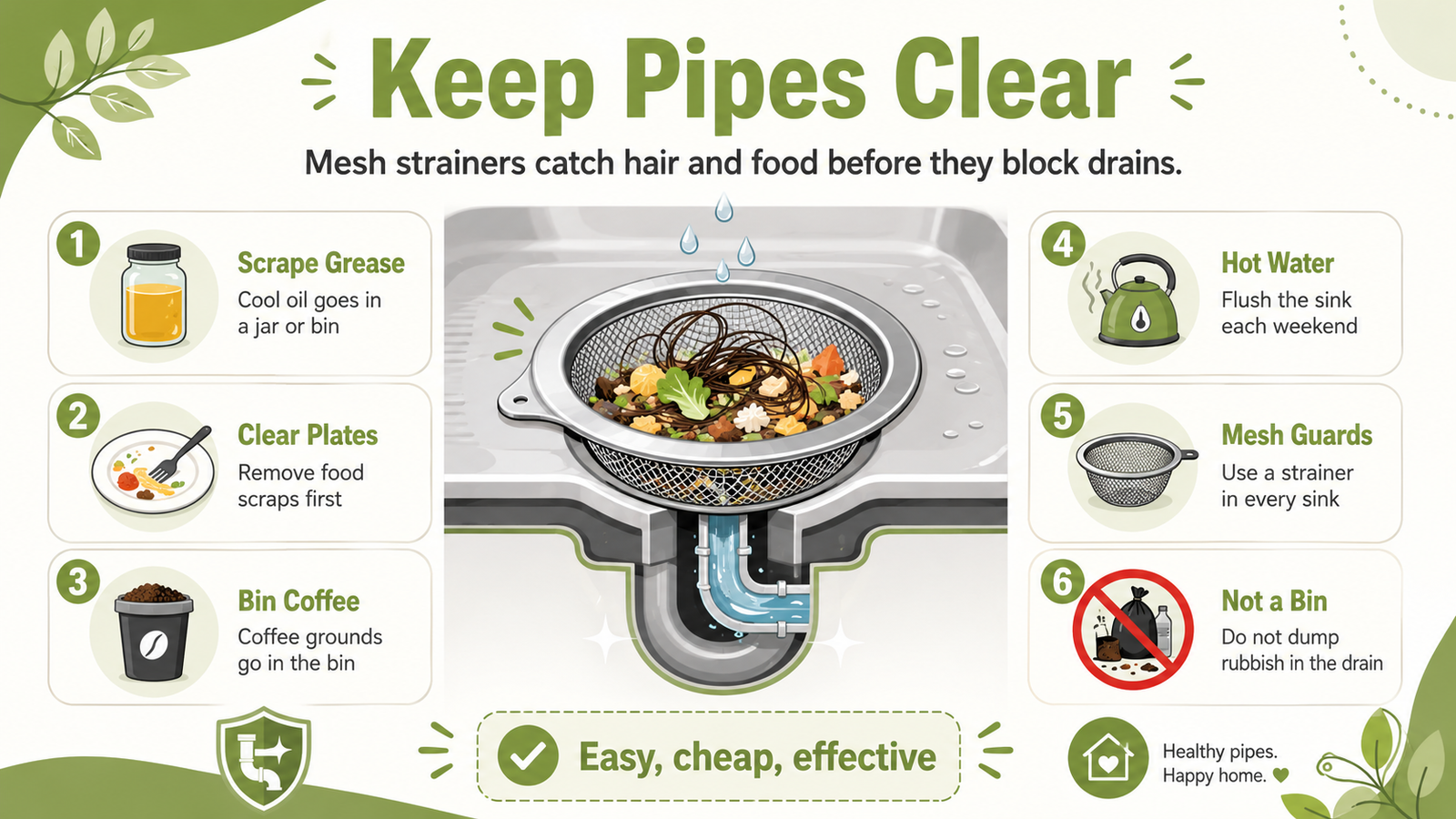
- Scrape all grease: Put cooled cooking oil in a jar or the bin.
- Clear your plates: Always remove food scraps before you start the dishes.
- Dump coffee wisely: Use old coffee grounds for your plants or the bin.
- Use hot water: Flush your kitchen sink with boiling water every weekend.
- Install mesh guards: Use a strainer in every sink to catch small debris.
- Avoid the sink: Never treat your kitchen drain like a rubbish bin.
Why are Wet Wipes Bad for Your Bathroom Toilet?
Wet wipes are a leading cause of sewer blockages in the UK. Many wipes say they are “flushable”, but they do not break down. Unlike toilet paper, they stay solid and catch on the edges of pipes. They quickly form a thick mat that stops everything from moving. You should always put used wipes in a small bathroom bin instead. This protects your toilet from overflowing and causing a big mess.
How Does Human Hair Create a Clog in the Shower?
Human hair is very strong and does not dissolve in water easily. When you shower, loose strands fall down the drain and get stuck. These hairs tangle together to form a net inside the pipe. This net then catches soap bits and skin cells every day. Soon, a thick and slimy clog stops the water from draining away. Using a silicone hair catcher is the best way to solve this.
Can Soap Scum Build Up Inside Your Bathroom Plumbing?
Soap scum forms when bar soap mixes with the minerals in your water. This creates a waxy coating on the inside of your bathroom pipes. This coating makes the pipes rough and very sticky for other waste. Hair and dirt stick to the scum much faster than on clean pipes. You can reduce this buildup by switching to liquid body wash. Liquid soap dissolves better and keeps your pipes much smoother.
Why is Dental Floss Dangerous for Your Drainage System?
Dental floss is made of very tough plastic or nylon string. It does not break apart, even after many years in the water. When you flush it, the floss acts like a fishing line. It wraps around other objects and ties them together into a bundle. This creates a very strong blockage that a plunger cannot always fix. Always throw your used dental floss into the rubbish bin instead.
Should You Flush Sanitary Products Down Your Toilet?
You should never flush any sanitary products down the toilet at home. These items absorb water and expand in size. If they get stuck in a pipe bend, they will expand and block it. They act like a big sponge that stops all water from passing through. This can lead to an immediate and very messy toilet overflow. Use a lidded bin for these items to keep your plumbing safe.
Does Liquid Soap Help Prevent Blocked Drains at Home?
Switching to liquid soap is a smart move for your plumbing health. Bar soaps leave a heavy residue that turns into a hard crust. Liquid soaps and gels are much thinner and wash away very easily. They do not leave behind the sticky film that catches hair and dirt. By making this small change, you help keep your pipes clean for longer. Your bathroom will stay fresh and your drains will move much faster.
- Bin the wipes: Never flush a wet wipe, even if the box says you can.
- Catch the hair: Use a silicone guard to stop hair from entering the drain.
- Switch to liquid: Use liquid soap to avoid the buildup of waxy soap scum.
- Trash the floss: Keep dental floss out of the toilet to avoid pipe nets.
- Dispose of pads: Use a bathroom bin for all sanitary and hygiene products.
- Limit the paper: Do not use too much toilet paper in a single flush.
How Do Natural Cleaners Protect Your Home Pipes?
Natural cleaners help keep your drains clean. They create a fizzing action that helps break down light grease and dirt. This method is very safe for your family and your plumbing system. It does not use any toxic fumes or dangerous liquids. You can do this once a month to keep your pipes smelling fresh. It is a cheap way to maintain your home without any risk.
Why Should You Avoid Using Harsh Chemical Cleaners?
Many store-bought drain cleaners contain very strong acids that are dangerous. These chemicals can actually melt thin plastic pipes if used too often. They also create a lot of heat that can damage your pipe joints. These liquids are also very harmful to your skin and your eyes. It is much better to use a plunger or natural cleaners instead. Protecting your pipes from these acids will make them last much longer.
What Do Gurgling Sounds Tell You About Your Drains?
Gurgling sounds are an early warning that a blockage is forming. This noise happens when air is trapped behind water in the pipe. The air bubbles through the water as it tries to escape the clog. If you hear this sound, you should act immediately to clear the pipe. Using a plunger right away can often fix the problem before it gets worse. Paying attention to these sounds can save you from a major flood.
How Can You Teach Your Family About Drain Safety?
Everyone in your home needs to know the rules of the drain. Children often flush things like toys or wipes because they do not know better. You should explain that only the “three Ps” go down the toilet. These are pee, poo, and toilet paper. Creating a simple list of rules can help everyone remember what to do. When the whole family helps, your plumbing stays in much better condition.
Why is a Plunger the Best Tool for Small Clogs?
A plunger is a very effective tool for moving a stubborn blockage. It uses air pressure to push and pull the clog until it breaks. You should always have a plunger ready under your kitchen or bathroom sink. Make sure there is enough water to cover the base of the plunger. Use firm and steady movements to create a strong suction force. This tool can often solve a problem in just a few minutes.
Can Hard Water Create Limescale in Your Plumbing?
Hard water has many minerals like calcium that can build up over time. This buildup is called ‘limescale’, and it makes your pipes very narrow. The rough surface of the scale catches hair and food bits very easily. You might notice white crusty marks around your taps if you have hard water. A water softener helps reduce mineral build-up and keeps your pipes in better condition. Keeping your pipes smooth is key to preventing blocked drains at home.
- Try natural fizz: Use baking soda and vinegar to refresh your pipes.
- Skip the acid: Avoid corrosive cleaners that can damage your plumbing.
- Listen for air: Use a plunger if you hear gurgling noises from the sink.
- Educate the kids: Teach everyone in the house what is safe to flush.
- Keep a plunger: Always have this tool handy for sudden plumbing emergencies.
- Check for scale: Use a descaler if you live in a hard water area.
How Do Autumn Leaves Block Your Outdoor Drains?
In the autumn, falling leaves can become a big problem for your garden. Wind blows these leaves onto your outdoor drain covers and grates. When it rains, the leaves turn into a thick and heavy sludge. This sludge stops the rainwater from flowing away from your house foundation. You should sweep these leaves away at least once a week during the fall. Keeping these grates clear protects your home from flooding and dampness.
Why Do Tree Roots Grow Inside Underground Pipes?
Tree roots naturally grow towards water and nutrients in the soil. They can find tiny cracks or gaps in your old underground pipes. Once a root gets inside, it grows very fast because of the constant water. This creates a thick mass that blocks all waste from leaving your house. Roots are very strong and can eventually break your pipes completely. You should try to keep large trees away from your main sewer lines.
How Does Winter Weather Affect Your Home Drainage?
Cold weather can freeze the water inside your pipes. As the water expands into ice, it can crack both metal and plastic pipes. This leads to major leaks once the ice melts in the spring. You should insulate any exposed outdoor pipes with foam tubes before winter starts. Keeping your heating on a low setting also helps prevent pipes from freezing. Proper winter care is a vital part of protecting your home plumbing.
When Should You Request a CCTV Drain Survey?
A CCTV survey uses a tiny camera to look deep inside your pipes. This is a great idea if you have a blockage that keeps coming back. The camera can show if there are broken joints or tree root issues. It helps plumbers identify problems quickly, making repairs faster and more efficient. You will get a clear picture of exactly what is happening underground. This helps you fix the right problem without digging up your entire garden.
Why is Regular Maintenance Better Than Emergency Repairs?
Regular maintenance is much cheaper than calling a plumber on a Sunday night. Taking five minutes a week to clean your drains prevents big disasters. You can plan your maintenance, but you cannot plan for a sudden flood. Small habits keep your pipes in perfect condition for many years to come. You will avoid the stress of a dirty bathroom or a smelly kitchen. Consistent care is the best investment you can make for your property.
How Can You Spot a Blockage in the Main Sewer?
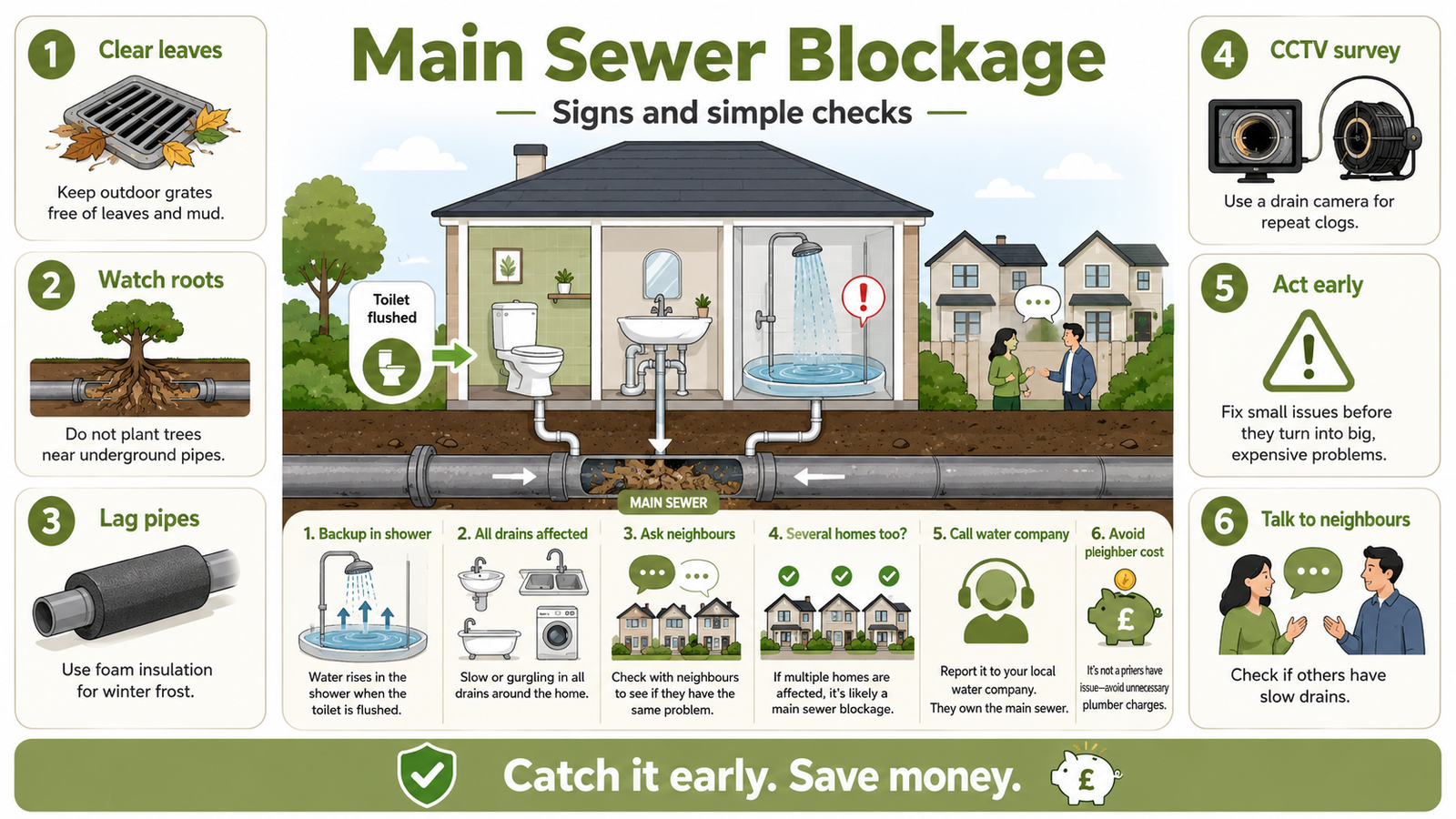
A main sewer blockage is a serious issue that affects every drain in your house. You might see water backing up into your shower when you flush the toilet. This happens because the waste has nowhere else to go in the main pipe. You should check with your neighbours to see if they have the same problem. If multiple houses are affected, the local water company needs to fix it. Knowing this can help you avoid the cost of hiring a private plumber.
- Sweep the leaves: Keep all outdoor grates clear of garden debris and mud.
- Watch the roots: Do not plant trees too close to your underground pipes.
- Lag your pipes: Use foam insulation to protect your plumbing from winter frost.
- Get a camera: Use a CCTV survey to find the cause of recurring clogs.
- Act early: Fix small problems before they turn into expensive emergencies.
- Talk to neighbours: Check if others have slow drains to find main sewer issues.
Does Professional Cleaning Help Your Pipes Last Longer?
Having your drains cleaned by a pro once every few years is very helpful. They use special tools like high-pressure water jets to scrub the pipes. This removes the hard scale and old grease that a plunger cannot reach. It leaves your pipes looking like they are brand new on the inside. This professional service can add many years to the life of your plumbing system. It is a great way to ensure your home stays free of clogs.
Why is Preventing Blocked Drains Better for the Earth?
When you protect your drains, you are also helping the local environment. Blocked sewers can overflow and send dirty water into local rivers and streams. This hazardous waste can harm fish and other wildlife in your community. Also, avoiding chemical cleaners keeps toxic substances out of the water cycle. By using natural methods, you are making a greener choice for your home. Simple plumbing care is a win for you and for nature.
How Can You Finalise Your Home Drain Care Plan?
To keep your pipes perfect, you should create a simple monthly checklist. Mark a day on your calendar to check all your strainers and grates. Spend a few minutes flushing the kitchen sink with boiling water. Remind your family members about the rules of what they can flush. These small steps will become a natural part of your home routine. Learning how to prevent blocked drains at home is the best way to keep your house happy.
Final Thoughts
In the end, how to prevent blocked drains at home is easier than many people think. Simple habits, regular cleaning, and careful waste disposal can stop most blockages before they start. By taking a few minutes to care for your drains, you can avoid expensive repairs, protect your plumbing and keep your home running smoothly.
Professional Online Plumbing Course
Course Description :
- Certificate: Yes(Free)
- Accreditation: CPD Accredited
- Access: Lifetime