No products in the cart.
A sports first aid box helps teams treat injuries quickly during games or training. First aid kit keeps essential medical items ready for cuts, sprains and minor accidents. Also, coaches and players can respond quickly and give quick treatment in emergencies. A well-prepared sports first aid kit box improves safety on the field.
In addition, it supports quick recovery and reduces the risk of injury. First, it includes bandages, wipes and basic medical tools. First aid kits help teams stay prepared for unexpected situations. Therefore, every sports team should keep one nearby. With proper use, it builds confidence and keeps players safe during every match or practice session.
Why Do You Need a Sports First Aid Box?
Sports activities always carry a small risk of injury. It helps you act fast when accidents happen. Also, it gives quick support for cuts, sprains and bruises. Moreover, it reduces panic and keeps everyone calm during sports.
With proper supplies, you can treat minor injuries immediately. In addition, it supports safety in schools, clubs and playgrounds. First aid kits can prevent small injuries from becoming serious problems. Overall, it keeps players safe and ready to continue activities.
How Do You Pick a Durable Sports First Aid Kit?
Choosing a durable sports first aid kit is important for safety. First, check the material of the bag. Strong, water-resistant fabric works best. Look at the contents inside the kit. Make sure it includes basic medical supplies. Take a glance at the contents inside the kit. Ensure it includes basic medical supplies.
Also, check for an easy-storage and quick-access design. In addition, choose a kit that is lightweight and portable. Moreover, ensure items are well-organised in separate compartments. Always prefer kits that follow sports safety standards.
Which Items Belong on a First Aid Kit List?
A first aid kit helps you act fast during small injuries or emergencies. It keeps basic medical items ready when accidents happen at home, school or outdoors. So you can treat cuts, burns or pain before medical help arrives. Check the kit regularly and replace used items. Here is a simple list of important items every first aid kit should have.
- Adhesive bandages: Use them for small cuts and scrapes. They stop bleeding and protect the skin.
- Antiseptic wipes: Clean wounds quickly and reduce infection risk after injuries.
- Sterile gauze pads: Cover larger wounds and help control bleeding safely.
- Disposable gloves: Keep hands clean and protect against germs during treatment.
- Scissors and tape: Help cut bandages and secure dressings firmly.
What Does First Aid for Sports Look Like?
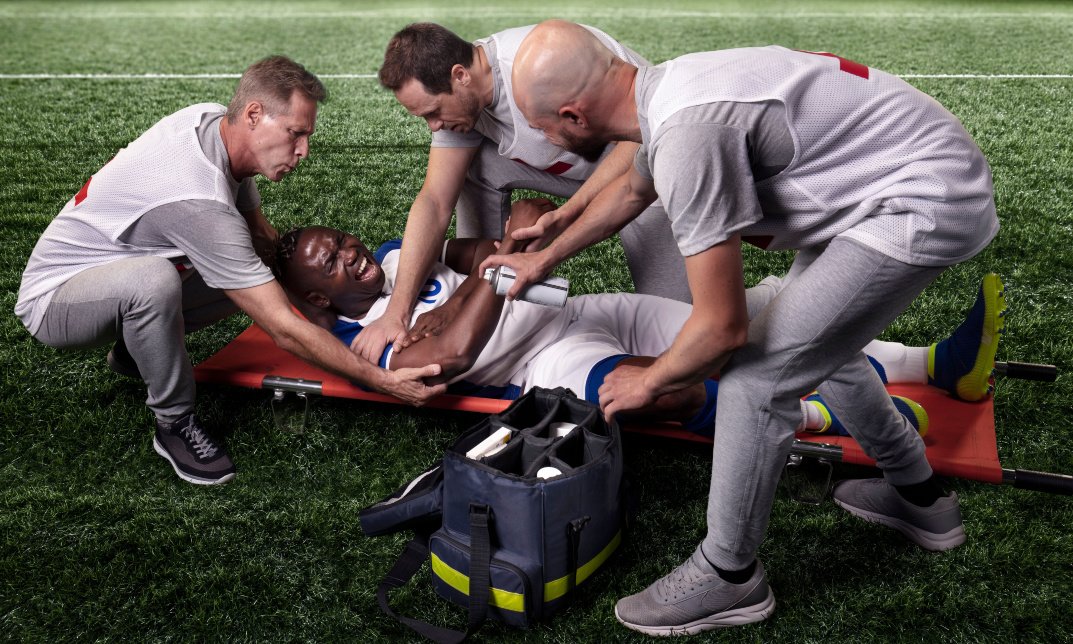
It means quick care when someone gets hurt during sports. So, we check the player calmly and look for pain, bleeding or swelling. Then, we stop the activity and move them to a safe place nearby. After that, we clean small wounds and use ice to reduce swelling. Also, we support the injured part with a bandage if needed.
Meanwhile, we do not let the player continue playing the game. At the same time, we watch the person until help arrives. Good sports first aid keeps players safe and prevents serious harm. This simple care helps reduce damage, speeds recovery and keeps everyone confident during sports activities in school or outdoor games.
If you want more simple guides and basic safety steps, check our blog on “What Are the 3Ps of First Aid?”
How Can You Manage Sports First Aid Kits?
You can manage a sports first aid kit with simple daily habits. First, check all items before every training or match. Keep supplies in a clean and dry box. Also, arrange items so anyone can find them fast. Use labels for bandages, wipes and medicines.
Replace if any items are missing. Check expiry dates every month and remove expired products. Keep a checklist so nothing gets forgotten during restock. Train coaches and players on basic kit use.
Store the kit in an easy-to-reach safe place. Review the kit after every season for improvements. Finally, assign one person to manage the kit regularly. This keeps everyone safe during sports activities every time.
Where Should You Store Your Sports First Aid Box?
Proper storage of the sports first aid kit box is very important. Keep it easy to reach during games. Place it near the field or the gym. Everyone should know the location. This helps in the fast treatment of injuries. It improves safety during sports activities.
Choose a clean, dry and cool place. Keep away from heat and water. Use a marked cabinet or container. Quick access helps in injury time. It also prevents damage to medical items. Good storage builds discipline in a team. Always keep it ready for emergencies.
Who Needs to Check the Supplies Every Month?
Monthly supply checks keep every kit ready in any emergency moment. Regular checks help you spot missing items before emergencies happen. It also helps spot expired or damaged supplies. Different people share this duty. Each group has a clear role. Regular checks improve safety in sports and workplaces.
- School sports coach checks kits before training and matches in sports settings.
- Workplace first aid officer reviews supplies and expiry dates monthly for safety.
- The gym or club manager ensures full stock and safety readiness properly.
- Team leaders report missing items and keep records updated regularly and systematically.
- The health and safety officer monitors compliance and overall kit condition checks.
When is an Injury Too Big for Your Kit?
Some injuries are too serious for a basic first aid kit. In these moments, you must act fast and stay calm. Your kit can only handle small and simple problems. If you see deep cuts, heavy bleeding or broken bones, the injury is too big. Also, if someone faints or does not respond, you need emergency help right away.
Chest pain, serious burns or head injuries also go beyond first aid. A kit can only give early support before professionals arrive. So, do not try to fix serious injuries on your own. Call emergency services immediately. Then give basic care and keep the person safe until help arrives.
How Can You Teach Teammates about Pitch Safety?
Teaching teammates about pitch safety starts with simple communication. First, you explain basic rules clearly before any game or training. Keep your words short and easy so everyone understands. Next, show them safe actions on the field.
For example, point out hard ground, wet areas or unsafe equipment. This helps teammates learn by seeing. After that, remind them to wear proper gear like boots and shin guards. Also, encourage them to report any danger right away.
You can also lead by example during practice. Always follow safety rules yourself. Finally, hold short safety talks before sessions. This keeps everyone alert and reduces accidents on the pitch.
Final Thoughts
Overall, a sports first aid box keeps players safe during any activity. It helps you act fast when small injuries happen. So, you can stop pain from getting worse. It also supports quick recovery before medical help arrives. Always keep it ready, complete and easy to reach. Safety in sports starts with good preparation and the right first aid box.
Ready to become confident in sports safety and first aid kit use? Enrol in our “Sports First Aid Course” and stay safe in the field.
FAQs
1. What should be in a sport first aid kit?
- A sports first aid kit should include bandages, plasters, antiseptic wipes, an ice pack and gloves for quick injury care.
2. Is it a legal requirement to have a first aid box?
- Yes, many workplaces and sports settings must keep a first aid box to follow health and safety rules.
3. What is basic sports first aid?
- Basic sports first aid means giving quick help for small injuries like cuts, sprains and bruises.
4. What are 10 items that should be in a first aid kit?
- A basic kit has plasters, bandages, gloves, wipes, scissors, tape, gauze, antiseptic cream, an ice pack and safety pins.
5. What are 20 items in a first aid box?
- A full box includes plasters, bandages, gauze, tape, scissors, gloves, wipes, cream, an ice pack, a thermometer and more basic tools.
6. What are the 3 C’s in basic first aid?
- The 3 C’s are Check, Call and Care to help manage emergencies safely.
7. What are 12 items in a first aid kit?
- A 12-item kit includes plasters, bandages, gauze, gloves, wipes, tape, scissors, cream, an ice pack, pins, a mask and a thermometer.
8. What are 20 items in an emergency kit?
- An emergency kit includes first-aid supplies, a flashlight, water, food, a blanket, a whistle, gloves, tape and basic survival tools.
9. What are 15 items in a first aid kit?
- A 15-item kit includes plasters, bandages, gauze, tape, gloves, scissors, wipes, cream, an ice pack, a thermometer, a mask, pins and more.
10. What to stock up before war?
- Before a war, people stock food, water, medicine, first aid supplies, flashlights, batteries and essential survival items.
Sports First Aid Course
Course Description :
- Certificate: Yes(Free)
- Accreditation: CPD Accredited
- Access: Lifetime