No products in the cart.
Traditional Thai massage is a unique type of body therapy that focuses on stretching, pressure, and movement. It is done fully clothed, usually on a floor mat, and does not use oils. Instead, the therapist uses hands, elbows, knees, and feet to press and stretch your body. If you are wondering What is a traditional Thai massage, it is a healing practice that combines acupressure, assisted yoga-like stretches, and energy line work to relax the body and improve flexibility.
In the UK, this therapy is growing in demand. Around 11% of adults use professional massage at least once a year, which is about 5.9 million people every year. This shows how popular massage therapy has become for stress relief and wellbeing. Traditional Thai massage helps reduce muscle tension, improve energy flow and support overall relaxation for both body and mind.
In this blog, we will explore what traditional Thai massage is and why it is becoming so popular.
What Is a Thai Massage and How Does It Work?
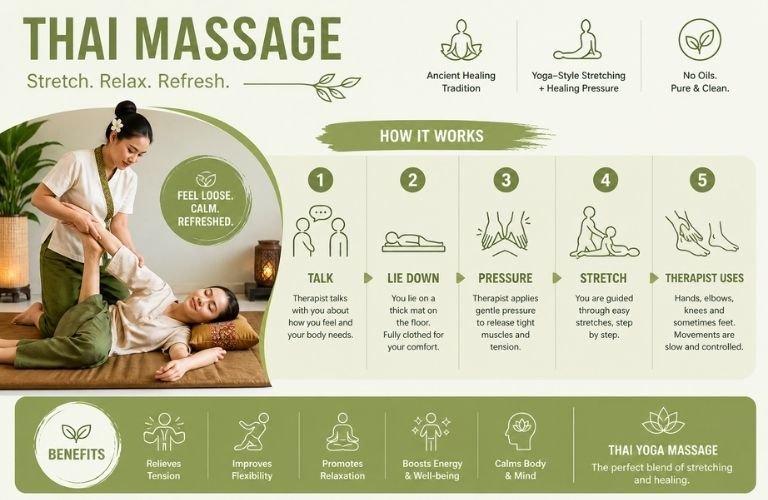
Thai massage is a simple body therapy that helps you feel loose, calm, and refreshed. It uses stretching, pressure, and slow movement to relax your body. First, the therapist talks with you about how you feel and what your body needs. Then you lie on a thick mat on the floor. You stay fully clothed, so you feel comfortable from the start.
Next, the therapist begins to apply gentle pressure on different parts of your body. They slowly press tight muscles and help your body relax. After that, they guide you into easy stretches, step by step. It feels a bit like someone helping you do yoga. The therapist uses hands, elbows, knees and sometimes feet. Each movement is slow and controlled. This helps release tension and improve flexibility.
There are no oils used in Thai massage. That keeps the session clean, simple, and focused. Many people also call it Thai yoga massage because it mixes yoga-style stretching with healing pressure.
What Are the Origins and History of Thai Massage?
Thai massage has a long history that goes back more than 2,000 years. It started in ancient Thailand and grew from old healing traditions. People used it to keep the body healthy and balanced. At first, it came from simple natural healing ideas. People believed the body had energy lines. They thought pain and illness come when this energy gets blocked. So, they used massage and stretching to fix it.
Next, Buddhist medicine shaped Thai massage a lot. Monks learned and practised it in temples. They used it to help sick people and to support healing. They also passed this knowledge from teacher to student. This helped Thai massage grow slowly but strongly.
Over time, Thai massage developed in different parts of Thailand. Each area added small changes and techniques. Even today, it still keeps its traditional style, but it also fits modern wellness needs. People around the world now use it for relaxation, flexibility and stress relief.
What Techniques Are Used in Thai Yoga Massage?
Thai yoga massage uses a mix of simple techniques that help your body relax, stretch, and feel lighter.
- Assisted yoga-style stretching: The therapist gently moves your body into easy stretches. It feels like guided yoga and helps improve flexibility.
- Pressure point therapy: The therapist presses certain points on your body. These areas often feel tight. This pressure helps release pain and tension.
- Rhythmic body movements: The therapist moves your body in a slow and steady rhythm. This helps your body relax deeply and feel calm.
- Energy line work (Sen lines): The therapist works along energy lines in your body. This helps improve energy flow and brings balance.
Each technique works together to relax your body, reduce stress, and improve overall wellbeing.
How Much Does Thai Massage Cost?
In the UK, Thai massage prices depend on session length and location. Here is a simple guide:
- 30 minutes: Around £35 to £45
- 60 minutes (1 hour): Around £50 to £65
- 90 minutes (1.5 hours): Around £80 to £95
- 120 minutes (2 hours): Around £100 to £120
Prices can change depending on where you go. Big cities like London and high-end spas usually cost more. Smaller towns often offer lower prices. Overall, the longer the session, the higher the price.
What Are the Benefits of Thai Yoga Massage?
Thai yoga massage offers many benefits for both the body and mind. It helps you feel calm, relaxed, and more balanced in your daily life.
Stress and anxiety relief
First, this massage helps calm your mind. The slow stretches and gentle pressure reduce stress. As a result, you feel more peaceful, lighter, and less anxious after the session.
Better flexibility and mobility
Next, the therapist gently stretches your body. This helps improve flexibility and makes your joints move more easily. Over time, your body feels more open, loose, and free.
Pain and muscle tension relief
It also helps reduce muscle pain and tightness. The therapist focuses on sore areas with gentle pressure. So, your muscles slowly relax, and stiffness starts to go away.
Improved blood circulation
The stretching and movement help improve blood flow. This gives your body more energy and helps you feel fresh and active.
Overall, the benefits of Thai yoga massage support your whole wellbeing. It relaxes your body, eases tension, and brings a deep sense of calm to your mind.
What Types of Thai Massage Are There?
Thai massage comes in different types. Each type helps your body in a simple and natural way. You can choose the one that suits your needs, comfort, and mood.
Traditional Thai massage uses stretching and pressure. The therapist gently moves your body into easy yoga-like stretches. This helps release tight muscles, reduce pain, and improve flexibility. It also helps your body feel light and active.
Thai oil massage uses warm oil on your skin. The therapist gives slow and soft strokes all over your body. This helps your muscles relax deeply. It also improves blood flow and gives a very calming feeling.
Thai foot massage focuses on your feet, ankles, and lower legs. The therapist presses special points that connect to other parts of your body. This helps reduce tiredness, improves sleep, and makes your whole body feel refreshed.
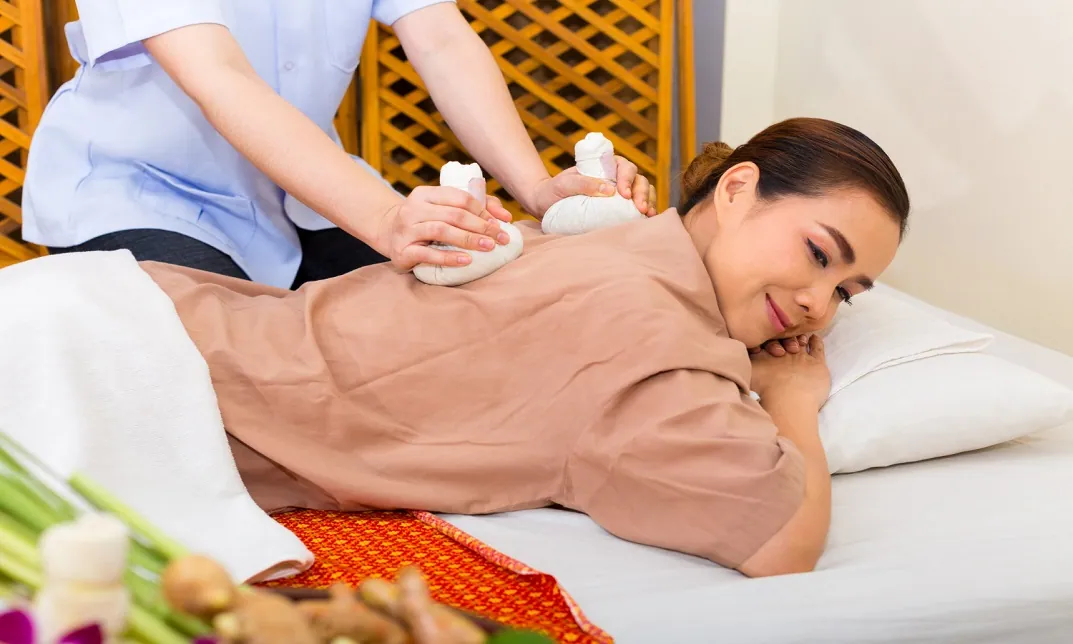
Herbal compress massage uses warm cloth bags filled with herbs. The therapist presses these warm packs on your body. The heat and herbs help reduce pain, relax stiff muscles, and improve blood circulation. It also gives a warm and soothing feeling.
Each type of Thai massage offers comfort, relaxation, and natural healing in its own way.
What Should You Expect During a Thai Massage Session?
A Thai massage session feels calm, simple, and very natural. You do not rush anything, and your body slowly relaxes step by step.
- What to wear: You wear loose, comfy clothes like a T-shirt and trousers. You stay fully dressed the whole time. This helps you feel relaxed and at ease.
- How long it takes: Most sessions last between 60 and 90 minutes. Some people choose shorter or longer sessions based on their needs. The time allows your body to fully loosen up.
- What the therapist does: The therapist works with slow pressure and gentle stretching. They move your body into easy positions and press tight areas. Every movement feels controlled and steady.
- How you may feel afterwards: After the massage, your body may feel light and relaxed. Many people feel less stress and more flexibility. You may feel a bit sore, but this usually goes away quickly.
Who Should Try Thai Massage and Who Should Avoid It?
Thai massage works well for many people, especially those who feel stressed, tired, or have tight muscles. It also suits people who sit for long hours or do physical work. The stretching and pressure help the body feel fresh, loose and more active.
However, Thai massage does not suit everyone. You should avoid it if you have recent injuries, serious bone problems, or are recovering from surgery. In these cases, the body needs more time to heal before any deep stretching or pressure.
It is also important to think about your health before trying it. If you have any medical conditions, you should speak to a doctor first. Pregnant women should also be careful and always inform the therapist. A trained therapist can adjust the session to make it safe and comfortable for you.
Are There Any Side Effects of Thai Massage?
Thai massage is usually safe, but your body may feel a few small changes after it.
Some people feel mild muscle soreness after the session. This happens because the therapist stretches tight muscles. It feels similar to light exercise pain and usually goes away in a day or two. You may also feel very relaxed, sleepy, or a little tired. Some people feel light and calm, while others feel more flexible. These are normal body reactions.
After the massage, drink water to help your body recover. Also, tell your therapist if you feel pain during the session. If you have health problems or injuries, speak to a doctor before trying Thai massage.
Final Thoughts
Traditional Thai massage is a natural way to relax. It uses gentle stretching and light pressure to help you feel less stressed. This simple therapy makes your muscles feel loose and helps your body move more easily. Over time, it calms your mind and improves your flexibility. It is a great, easy way to feel better and stay healthy every day.
If you want to understand What is a Thai Massage and How it Improve Flexibility and Relaxation, this guide is a great start. Visit our website, Wise Campus to explore more easy and helpful wellness articles. Take one step today toward better relaxation and a healthier, more balanced life.
FAQs
1. What does traditional Thai massage include?
It includes stretching, acupressure and slow body movements. The therapist uses hands, elbows, knees and feet to relax muscles and improve flexibility.
2. Do I take all my clothes off for a Thai massage?
No. You stay fully clothed. You wear loose, comfortable clothes provided or your own.
3. Can Thai massage lower blood pressure?
Yes, it may help reduce stress and relax the body, which can support lower blood pressure in some people.
4. Does Thai massage help arthritis?
It may ease stiffness and improve movement, but you should consult a doctor first.
5. Does Thai massage include groin?
Yes, but only with professional care and consent, using gentle stretches when needed.
6. What is a red flag in massage?
Painful pressure, lack of consent, or inappropriate behaviour are red flags.
7. What does B2B mean in massage?
It usually means “business to business,” not a massage technique.
8. What should I expect at my first Thai massage?
Expect stretching, light pressure, and a calm session. You may feel relaxed, loose and refreshed afterward.
Thai Massage Therapy & The Techniques for Pain Relief
Course Description :
- Certificate: Yes(Free)
- Accreditation: CPD Accredited
- Access: Lifetime